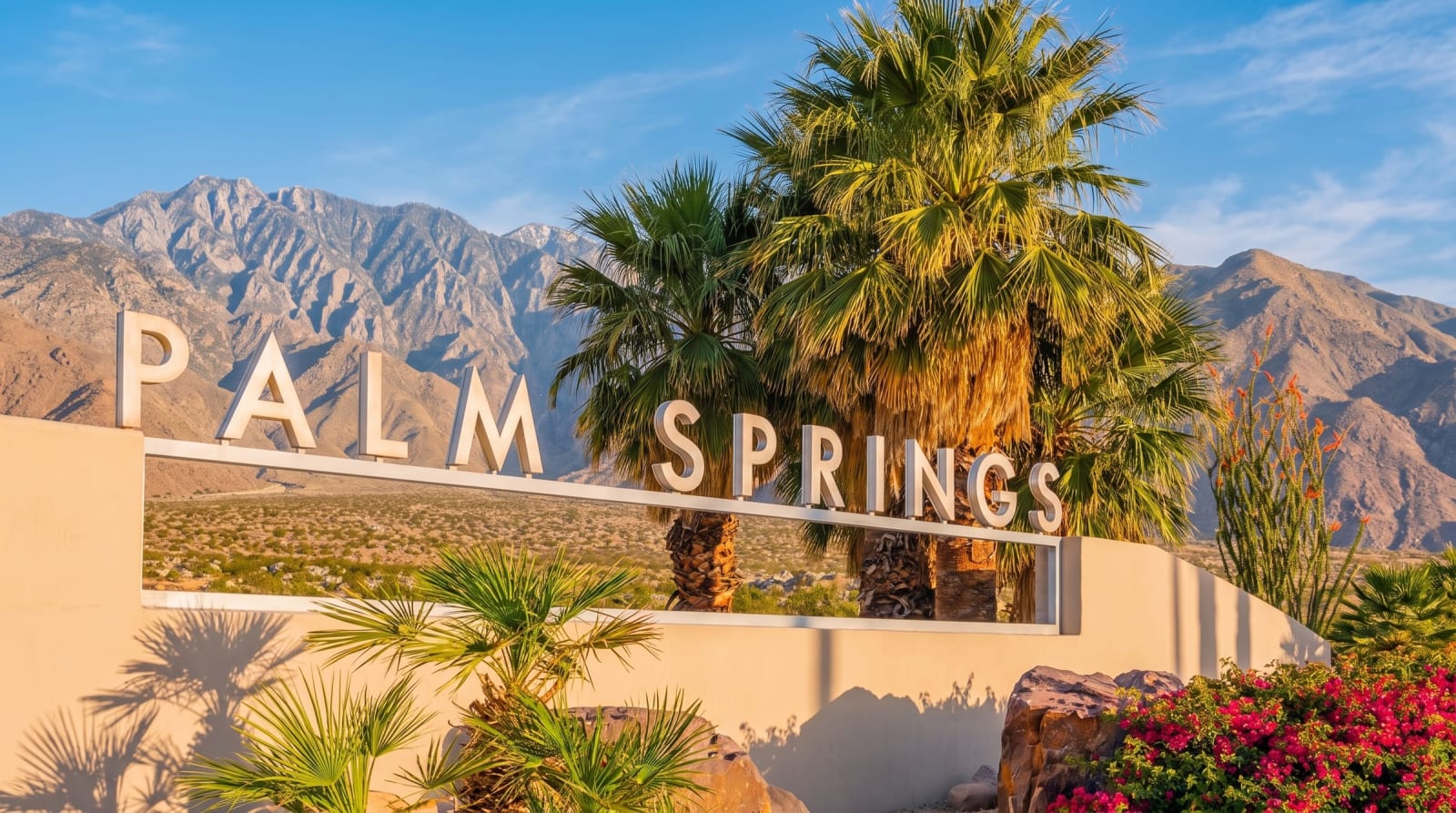
55+ Communities in Coachella Valley / Palm Springs
California
Explore 13 active adult and retirement communities in Coachella Valley / Palm Springs, California — with real photos, pricing, amenities, and resident insights for each.
Golf Capital of the West & America's mid-century desert playground — See why retirees are choosing Coachella Valley and Palm Springs
About Coachella Valley / Palm Springs
The Coachella Valley — anchored by Palm Springs and stretching east through Cathedral City, Rancho Mirage, Palm Desert, Indian Wells, La Quinta, Indio, and Coachella — is one of the deepest 55+ markets in the country, with more than 100 golf courses and a dense cluster of resort-style adult communities purpose-built for retirees. The pull for retirees is straightforward: 350+ days of sunshine a year, dry desert air that's easier on arthritis and respiratory conditions than humid climates, and an active-lifestyle infrastructure — golf, pickleball, tennis, hiking, spa culture — that's been refined over five decades of catering to snowbirds and full-time residents.
Read moreShow less
The 55+ community landscape is remarkable for its range. Sun City Palm Desert (nearly 5,000 homes, Del Webb) and Sun City Shadow Hills in Indio (around 3,400 homes, historically the lowest HOA fees in the valley) are the affordability anchors. Del Webb Rancho Mirage is the newer master-planned option. On the luxury end, Trilogy at La Quinta and Trilogy at the Polo Club (Shea Homes) bring resort-club amenities and culinary programming, while Griffin Ranch delivers Toll Brothers estate homes with a full amenity clubhouse. Palm Desert and Rancho Mirage tend to sit in the sweet spot for retirees weighing amenities against price; La Quinta and Indian Wells skew higher-end; Indio and Desert Hot Springs are where you go for more house per dollar.
Healthcare is a genuine strength for a metro this size. Eisenhower Health in Rancho Mirage — the valley's only not-for-profit hospital and repeatedly ranked among America's top 100 hospitals — anchors a network of more than 100 clinic locations across every city in the valley. Desert Regional Medical Center in Palm Springs is the region's only Level II trauma center and hosts the Comprehensive Cancer Center, and JFK Memorial in Indio rounds out the acute-care coverage. Palm Springs International (PSP) is a genuinely pleasant small-hub airport with roughly 30 nonstop domestic routes and seasonal international service — easy for family visits, easy for the snowbird lifestyle.
Where the honesty comes in is summer. From late June through September, daytime highs routinely sit between 105°F and 115°F, with overnight lows often above 80°F. It's dry heat, but it's real heat, and it reshapes how you live half the year. Retirees who thrive here either accept the indoor-pool-and-early-morning rhythm from June to September or leave for cooler climates — the classic Coachella Valley snowbird pattern. If you can plan around the summer, the other eight months are among the most enjoyable retirement weather in North America.
Coachella Valley / Palm Springs's cities, ranked for retirees
how we rank →From our Best Places rankings of every U.S. retirement city — cost of living modeled for a typical buyer, weather from 20 years of hourly data.
| City | US rank | Cost of living | Weather | 55+ residents |
|---|---|---|---|---|
| Indio | #253 | $4,793/mo | #222 of 858 | 29% |
| Palm Desert | #306 | $5,162/mo | #203 of 858 | 53% |
Re-rank these around your own budget and ideal temps on the California rankings or across the entire US.
Browse 13 55+ communities in Coachella Valley / Palm Springs
Open in browser →Click any community for a quick preview, or open the full page.
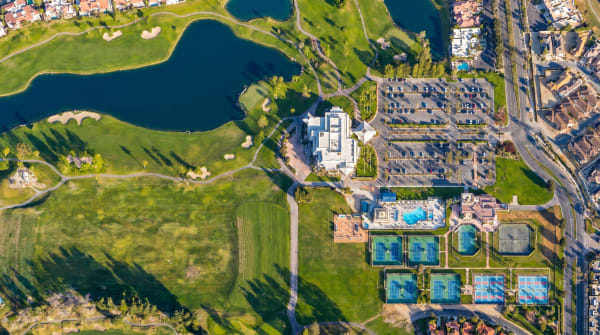
PGA West
Coachella Valley / Palm Springs
$300K – $1M+
 55+
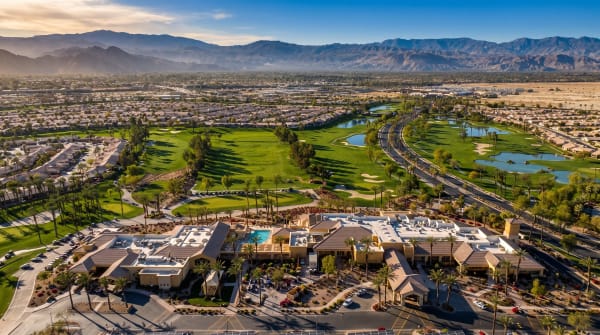
55+Sun City Palm Desert
Coachella Valley / Palm Springs
$350K – $1M+
 55+
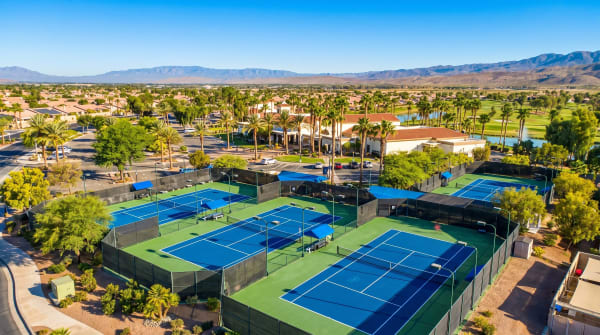
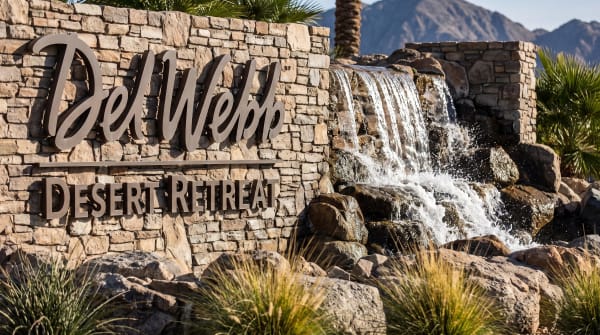
55+Sun City Shadow Hills
Coachella Valley / Palm Springs
$300K – $800K
 55+
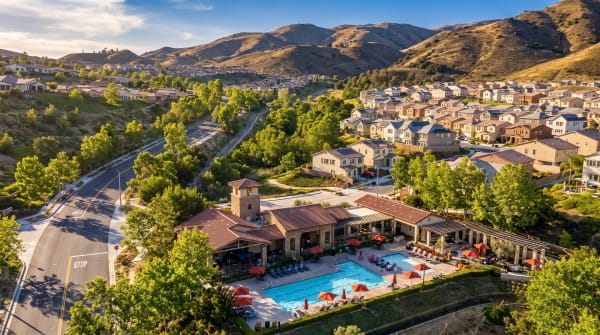
55+Del Webb Desert Retreat
Coachella Valley / Palm Springs
$450K – $750K
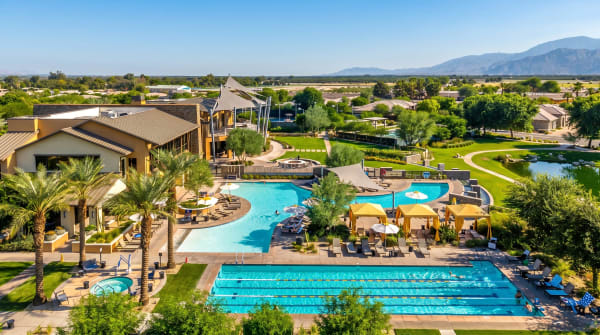
Terramor
Coachella Valley / Palm Springs
$550K – $1M+
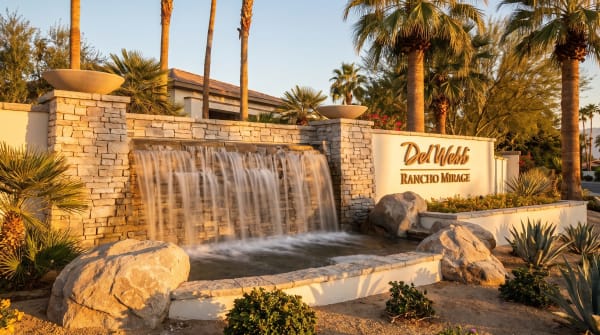
Trilogy at the Polo Club
Coachella Valley / Palm Springs
$500K – $1M+
 55+
55+Del Webb Rancho Mirage
Coachella Valley / Palm Springs
$550K – $1M+
Terra Lago
Coachella Valley / Palm Springs
$400K – $1M+
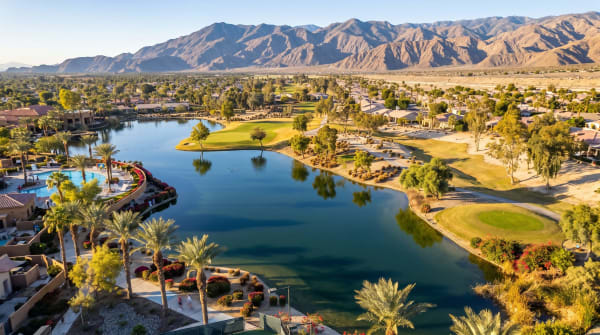 55+
55+Trilogy at La Quinta
Coachella Valley / Palm Springs
$500K – $1M+
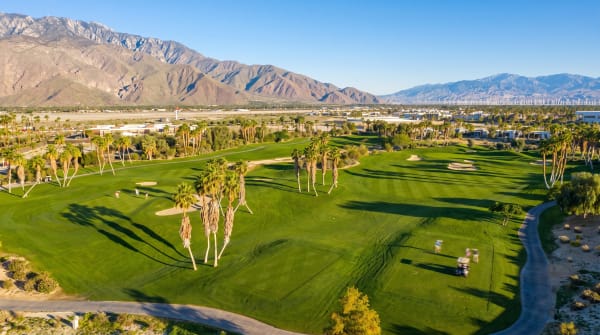
Escena
Coachella Valley / Palm Springs
$950K – $1M+
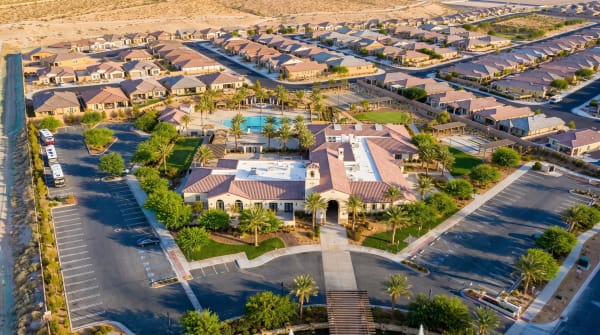 55+
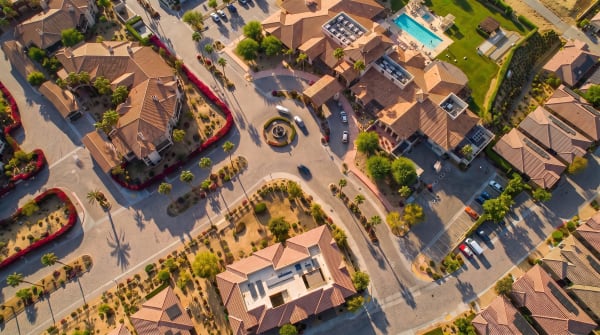
55+Four Seasons at Terra Lago
Coachella Valley / Palm Springs
$400K – $650K
 55+
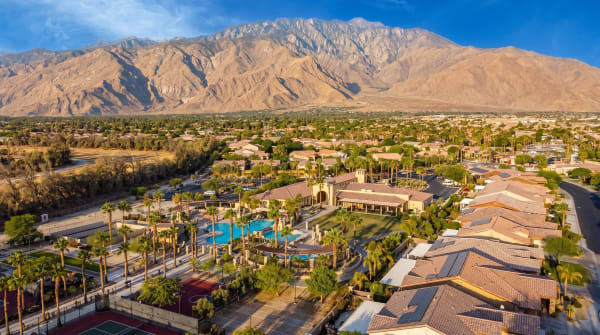
55+Villa Portofino
Coachella Valley / Palm Springs
$250K – $800K
 55+
55+Four Seasons at Palm Springs
Coachella Valley / Palm Springs
$450K – $700K
Compare 13 communities at a glance
Price, HOA, and 55+ at a glance — sign in to score every community against your preferences.
Pros of retiring here
- No state tax on Social Security benefits
- Proposition 13 caps assessed value growth at 2% per year
- Proposition 19 lets homeowners 55+ transfer their low tax base to a new California home
- 350+ days of sunshine per year
- Dry desert air — easier on arthritis and respiratory conditions
- 120+ golf courses — Golf Capital of the West
- Eisenhower Health in Rancho Mirage — top-100 U.S. hospital
- Desert Regional Medical Center — only Level II trauma center in the valley
- Deep 55+ community options across every price point
- Palm Springs International Airport (PSP) — 30 nonstop routes, low-stress terminal
- Active pickleball, tennis, and spa culture
- Strong LGBTQ+ community and welcoming social scene
- Eight months of near-perfect outdoor weather
- Mid-century architecture and vibrant arts scene
- Proximity to Joshua Tree, Coachella Music Festival, and both LA and San Diego
Things to consider
- Summer highs routinely 105–115°F from late June through September
- Overnight lows often stay above 80°F in July and August
- Overall cost of living roughly 20–25% above the national average
- Housing 40–45% above the national average
- California fully taxes pension, IRA, and 401(k) withdrawals at 1–13.3%
- Groceries and everyday goods run 15–20% above national average
- Gas prices among the highest in the U.S. (~$5+/gallon)
- San Andreas and San Jacinto faults run through the valley — real earthquake risk
- Wildfire and poor air quality days affect insurance availability statewide
- High sales tax — 8.75% in Palm Springs, up to 8.96% elsewhere in the valley
- Winter and holiday tourism traffic on Highway 111
- Many courses and clubs require pricey memberships
Cost of Living
The Coachella Valley runs roughly 20–25% above the national average overall, though it's noticeably cheaper than coastal California — most cost-of-living indices place Palm Springs about 9–13% below the California state average and comfortably below Los Angeles or San Diego on housing. The headline pressure point is housing: home prices run roughly 40–45% above the U.S. average, with the median single-family home in Palm Springs around $587,000 in 2025. Groceries run about 15–20% above the national average (desert logistics add markup), utilities about 7–9% above (summer AC bills are the reason), and transportation about 10–12% above, driven by California gas prices that averaged around $5.50/gallon in mid-2025. Healthcare, notably, runs right at or slightly below the national average — a genuine bright spot for retirees.
Retiree Specific: California does not tax Social Security benefits — the state fully exempts them from state income tax, which is a meaningful annual savings for retirees on fixed incomes. The catch is that California fully taxes withdrawals from traditional IRAs, 401(k)s, and pensions (including out-of-state pensions) at ordinary progressive rates from 1% to 13.3%, with no special retiree pension exclusion. California has no estate tax and no inheritance tax. On property tax, California's approach is unusual: Proposition 13 caps the base property tax rate at 1% of assessed value and limits annual assessment growth to 2% per year, so long-term owners effectively have a built-in "senior freeze" that other states offer only to 65+ homeowners. Proposition 19 (2021) lets homeowners age 55+ transfer their existing low Prop 13 base-year value to a replacement home anywhere in California, up to three times — a significant lever for retirees downsizing from a long-held coastal home into a Coachella Valley community. There's also a flat $7,000 Homeowners' Exemption (worth about $77/year). Sales tax in Palm Springs city limits is 8.75% as of 2025 (7.25% state + 0.5% Riverside County transportation + 1% local district); other Coachella Valley cities range up to about 8.96%.
Additional Considerations: Summer electric bills are the sleeper cost — running AC against 110°F+ days from June through September routinely pushes monthly utility bills well above what retirees relocating from milder climates expect. Many of the valley's 55+ resort communities carry HOA dues that include cable, internet, and access to golf/clubhouses, but higher-tier clubs (PGA West, Griffin Ranch, and country-club-tied communities) layer additional membership fees on top. California's homeowners insurance market has tightened statewide due to wildfire exposure — while the immediate Coachella Valley isn't a top wildfire zone, statewide premium pressure and carrier pullback affect availability and pricing. Earthquake insurance is a separate policy most retirees will want to price given the San Andreas and San Jacinto faults run directly through the region.
Notable places in and around Coachella Valley / Palm Springs
1 signature destinations within 75 miles
Other 55+ regions in California
Where is Coachella Valley / Palm Springs?
- Cities:
- Palm Springs, Palm Desert, Indio, La Quinta, Rancho Mirage, Cathedral City, Desert Hot Springs, Indian Wells, Bermuda Dunes, Coachella, Yucca Valley, Twentynine Palms
- Counties:
- Riverside County, San Bernardino County
- ZIP codes:
- 92234, 92240, 92241, 92253, 92260, 92262, 92264, 92270, 92276, 92210, 92211, 92203, 92201, 92236, 92274, 92284, 92252, 92277, 92278
55+ communities in Coachella Valley / Palm Springs: common questions
How many 55+ communities are in Coachella Valley / Palm Springs?
There are 13 active adult and 55+ communities in Coachella Valley / Palm Springs featured on Explore55Plus, with real photos, pricing, amenities, and resident insights for each.
How much do homes in 55+ communities in Coachella Valley / Palm Springs cost?
Homes in retirement and active adult communities in Coachella Valley / Palm Springs range from $250K to $1M, depending on the community, home type, and whether it's a new build or resale.
Are all 55+ communities in Coachella Valley / Palm Springs age-restricted?
No. Of the 13 communities in Coachella Valley / Palm Springs, 8 are age-restricted (typically one resident 55+) and 5 are open to all ages — so you can choose either an age-restricted or an all-ages active adult community.
Are there new-construction 55+ communities in Coachella Valley / Palm Springs?
Yes — 7 of the 13 communities in Coachella Valley / Palm Springs have new-construction homes available, alongside resale options in established neighborhoods.