
55+ Communities in San Francisco Bay Area
California
Explore 12 active adult and retirement communities in San Francisco Bay Area, California — with real photos, pricing, amenities, and resident insights for each.
World-class healthcare, Mediterranean climate & Prop 13 protection for long-time owners — See why retirees are choosing the San Francisco Bay Area
About San Francisco Bay Area
The San Francisco Bay Area is the most expensive place to retire in California, and for retirees who can make the math work — or who already own here — it's also one of the most rewarding. This is the region of UCSF, Stanford, and Kaiser: UCSF Health tied for the #1 hospital in California and ranked among the top 10 nationally for geriatrics, cancer, neurology, and rheumatology, with Stanford Health Care, Sutter/California Pacific Medical Center, John Muir Health, and El Camino Hospital rounding out one of the deepest healthcare markets in the country. For a retiree managing complex conditions, that access alone changes the calculus.
Read moreShow less
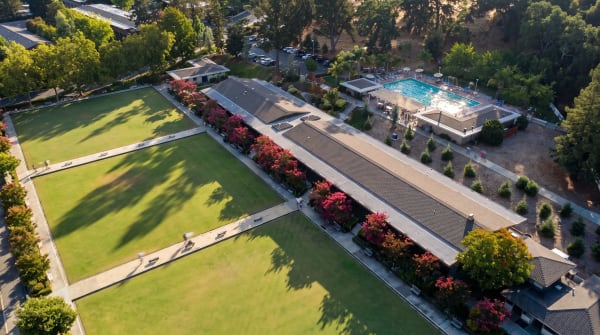
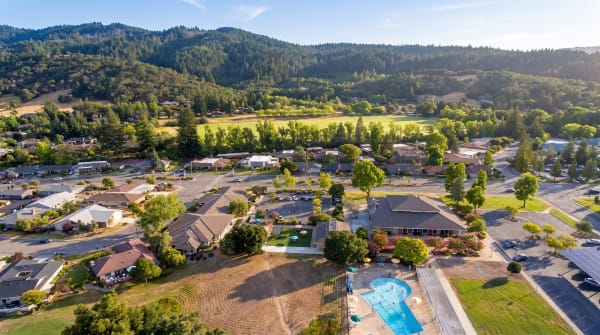
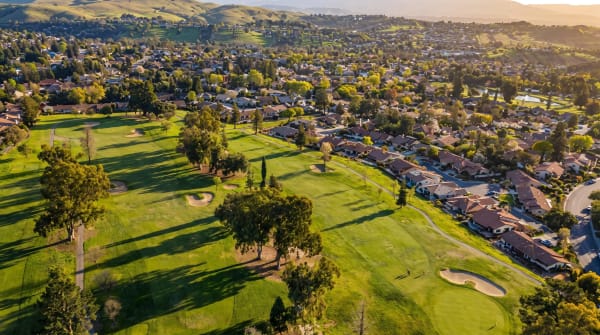
The 55+ community landscape is smaller than what you'd find in Florida or Arizona, but the anchor communities are serious. Rossmoor in Walnut Creek — 6,678 homes across 1,800 acres, two golf courses, five pools, and more than 180 clubs — is the East Bay's dominant active adult community and sits minutes from downtown Walnut Creek and BART. The Villages Golf & Country Club in the Evergreen foothills of San Jose spreads more than 2,500 condos, townhomes, and single-family homes across 1,200 acres. Santa Rosa's Oakmont Village is the North Bay's answer, with wine country at the doorstep. Beyond those, retirees choose sub-areas: Walnut Creek, Danville, Pleasanton, and Alamo in the East Bay; Los Gatos, Morgan Hill, and Foster City on the Peninsula and South Bay; Santa Rosa, Petaluma, Sonoma, and Napa in the North Bay wine country.
The climate is the pull most retirees don't want to give up. The Bay Area's Mediterranean weather — dry, mild summers and wet, cool winters — is consistently rated among the best in the country, though the region is a patchwork of microclimates: foggy and cool on the coast, warmer inland in Walnut Creek or San Jose, hotter still in the North Bay valleys where Santa Rosa hits summer highs around 85°F. The trade-off is real: wildfire risk has increased across the region, insurance is in a genuine crisis (see Cost of Living), and everyone lives with earthquake awareness.
Who this region is especially right for: retirees who already own a Bay Area home under Proposition 13's protection, retirees with adult children and grandchildren in the area, and retirees whose priorities are elite medical care, cultural depth, and access to coast, wine country, and Sierra Nevada within a short drive. It's not the region to move to for tax savings — but if fit matters more than price, the Bay Area is hard to beat.
San Francisco Bay Area's cities, ranked for retirees
how we rank →From our Best Places rankings of every U.S. retirement city — cost of living modeled for a typical buyer, weather from 20 years of hourly data.
| City | US rank | Cost of living | Weather | 55+ residents |
|---|---|---|---|---|
| Santa Rosa | #472 | $5,753/mo | #266 of 858 | 31% |
| Brentwood | #490 | $5,161/mo | #227 of 858 | 28% |
| Antioch | #494 | $4,740/mo | #235 of 858 | 28% |
| Pittsburg | #634 | $5,020/mo | #259 of 858 | 27% |
| Concord | #651 | $5,979/mo | #303 of 858 | 30% |
| Petaluma | #666 | $6,145/mo | #359 of 858 | 37% |
| Napa | #693 | $6,503/mo | #271 of 858 | 32% |
| Walnut Creek | #746 | $6,752/mo | #284 of 858 | 41% |
| Gilroy | #773 | $6,448/mo | #273 of 858 | 24% |
| Richmond | #774 | $6,061/mo | #488 of 858 | 27% |
| Hayward | #782 | $6,607/mo | #438 of 858 | 28% |
| Oakland | #792 | $6,707/mo | #490 of 858 | 26% |
| San Leandro | #796 | $6,716/mo | #495 of 858 | 32% |
| Dublin | #813 | $7,311/mo | #315 of 858 | 18% |
| San Rafael | #813 | $7,506/mo | #481 of 858 | 34% |
| Berkeley | #813 | $9,093/mo | #461 of 858 | 26% |
| San Jose | #813 | $9,260/mo | #219 of 858 | 27% |
| Alameda | #813 | $7,773/mo | #483 of 858 | 30% |
| Redwood City | #813 | $10,677/mo | #490 of 858 | 25% |
| South San Francisco | #813 | $8,555/mo | #675 of 858 | 33% |
| Union City | #813 | $8,395/mo | #391 of 858 | 33% |
| San Ramon | #813 | $7,680/mo | #309 of 858 | 25% |
| Daly City | #813 | $7,910/mo | #793 of 858 | 34% |
| Mountain View | #813 | $8,461/mo | #291 of 858 | 22% |
| Fremont | #813 | $9,401/mo | #291 of 858 | 26% |
| Milpitas | #813 | $8,802/mo | #289 of 858 | 25% |
| San Mateo | #813 | $9,884/mo | #557 of 858 | 28% |
| Pleasanton | #813 | $8,356/mo | #283 of 858 | 30% |
| Livermore | #813 | $7,626/mo | #267 of 858 | 29% |
| Sunnyvale | #813 | $11,161/mo | #260 of 858 | 23% |
| Santa Clara | #813 | $10,441/mo | #255 of 858 | 22% |
| Cupertino | #813 | $13,467/mo | #239 of 858 | 29% |
| Palo Alto | #813 | $15,955/mo | #408 of 858 | 34% |
| San Francisco | #813 | $10,250/mo | #695 of 858 | 30% |
Re-rank these around your own budget and ideal temps on the California rankings or across the entire US.
Browse 12 55+ communities in San Francisco Bay Area
Open in browser →Click any community for a quick preview, or open the full page.
 55+
55+Rossmoor
San Francisco Bay Area
$200K – $1M+
 55+
55+Oakmont Village
San Francisco Bay Area
$350K – $1M+
 55+
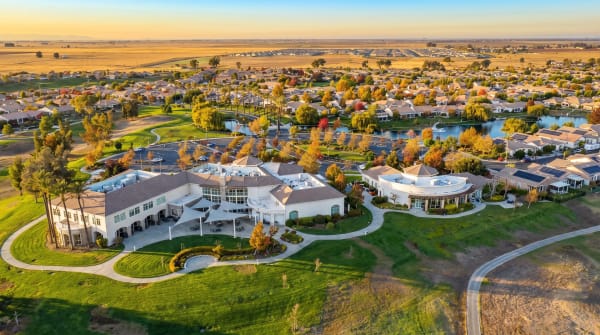
55+Trilogy at Rio Vista
San Francisco Bay Area
$300K – $500K
 55+
55+The Villages Golf Country Club
San Francisco Bay Area
$450K – $1M+
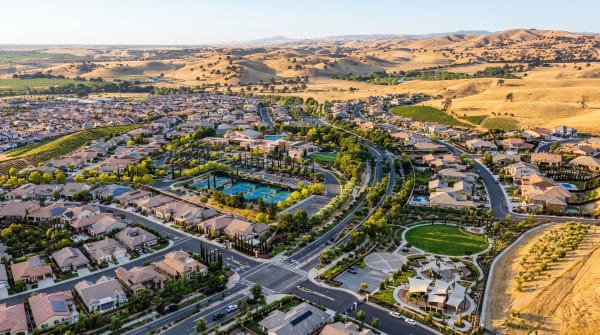 55+
55+Trilogy at the Vineyards
San Francisco Bay Area
$750K – $1M+
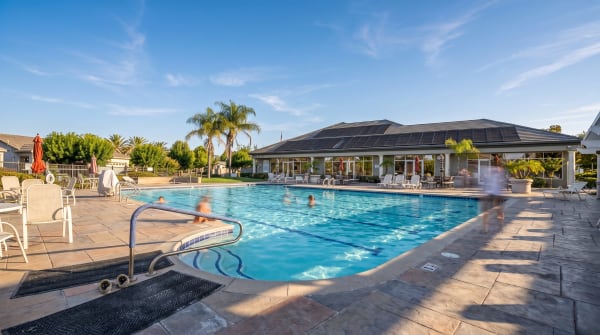 55+
55+Summerset
San Francisco Bay Area
$500K – $950K
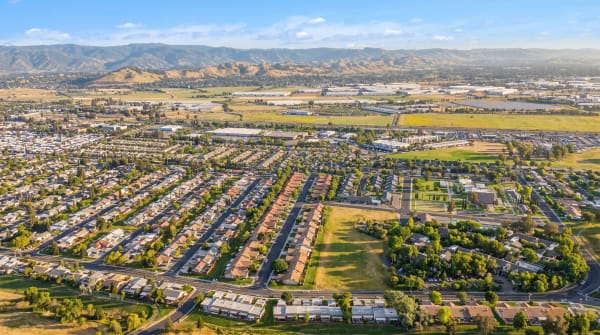 55+
55+Leisure Town
San Francisco Bay Area
$250K – $550K
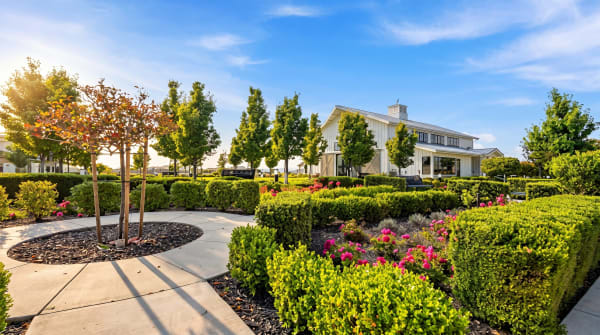 55+
55+Liberty
San Francisco Bay Area
$300K – $500K
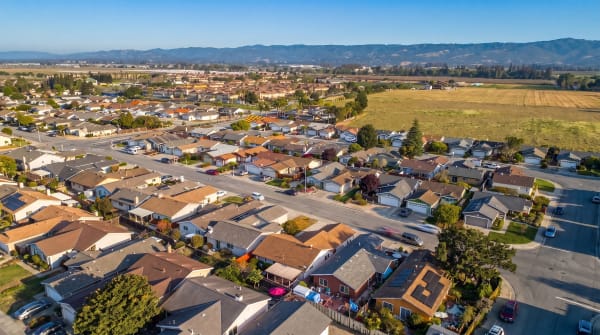 55+
55+Bay Village
San Francisco Bay Area
$400K – $700K
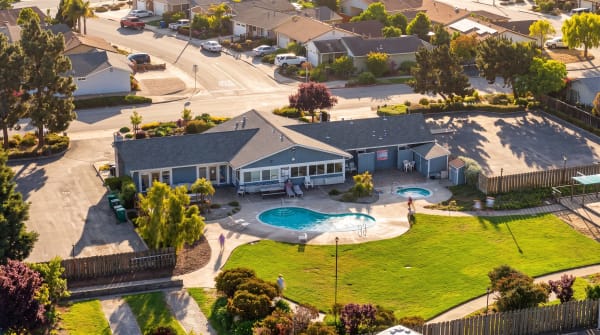 55+
55+Pajaro Village
San Francisco Bay Area
$450K – $800K
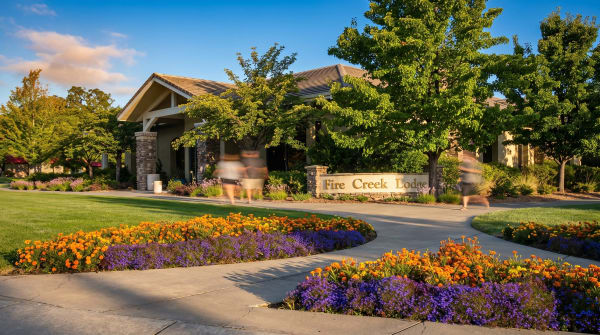 55+
55+Clover Springs
San Francisco Bay Area
$500K – $800K
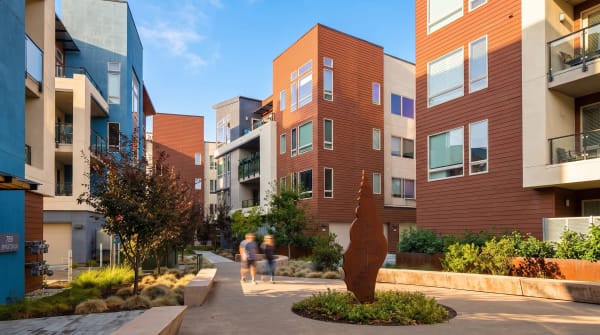 55+
55+Foster Square
San Francisco Bay Area
$1M+ – $1M+
Pros of retiring here
- World-class healthcare — UCSF, Stanford, Kaiser, Sutter
- UCSF ranked among top 10 nationally for geriatrics
- Mediterranean climate rated among the country's best
- Proposition 13 caps property tax increases at 2% per year
- Prop 19 lets homeowners 55+ transfer their tax base statewide
- California does not tax Social Security benefits
- No state estate or inheritance tax
- Rossmoor, The Villages, and Oakmont anchor the 55+ options
- SFO, OAK, and SJC — three major airports
- BART, Caltrain, and ferries reduce dependence on driving
- Coast, wine country, and Sierra Nevada all within reach
- Deep cultural scene — museums, symphony, opera, pro sports
- Railroad Retirement benefits also exempt from state tax
Things to consider
- Highest housing costs in the continental US
- Median home price in San Francisco County around $1.5M
- Cost of living roughly 64%–78% above the national average
- Pensions, IRA, and 401(k) withdrawals fully taxed up to 13.3%
- Homeowners insurance crisis — non-renewals and rate hikes
- California FAIR Plan enrollment up 43% in 15 months
- Earthquake risk requires separate insurance
- Wildfire risk in hillside and wildland-interface neighborhoods
- Sales tax reaches 10%+ in some Bay Area cities
- Traffic congestion and long commutes
- Summer coastal fog can be gray for weeks
- Homelessness visible in urban cores
- High income needed to buy in without existing equity
Cost of Living
The San Francisco Bay Area is one of the most expensive places to retire in the United States. San Francisco's overall cost of living runs roughly 64% above the national average per Redfin and RentCafe (higher per some indices — Salary.com pegs it at 89%). Housing is the driver: San Francisco housing costs run roughly 154%–161% above the national average, with the median sale price in San Francisco County around $1.5M as of late 2025 (Redfin). Utilities run 47%–58% above national, groceries 16%–21% higher, transportation 41%–43% higher, and healthcare 24%–26% higher. Outside San Francisco proper, costs step down meaningfully — Oakland's median one-bedroom rent runs well below San Francisco's, and Sonoma, Napa, and eastern Contra Costa are the most attainable Bay Area sub-areas. County-level median sale price limits (HUD, 2025-2026) give a useful rank: San Mateo $931K, Marin and San Francisco $926K, Santa Clara $888K, Alameda $788K, Napa $707K, Contra Costa $703K, Sonoma $698K.
Retiree Specific: California does not tax Social Security retirement, disability, or survivor benefits — a meaningful shield for retirees whose primary income is Social Security. However, pensions (including CalPERS/CalSTRS and out-of-state pensions), traditional IRA and 401(k) withdrawals, and annuity income are all fully taxed as ordinary income at California's progressive rates from 1% to 13.3% — one of the highest top brackets in the country. Roth IRA qualified withdrawals are tax-free at both federal and state levels. California has no state estate or inheritance tax. Property taxes are governed by Proposition 13: the base rate is 1% of assessed value, and annual assessment increases are capped at 2% — a powerful protection for long-time owners. Effective Bay Area rates typically land at 1.20%–1.28% once local bonds, parcel taxes, and Mello-Roos CFDs are added. Proposition 19 (2020) allows homeowners age 55 or older to transfer their Prop 13 assessed value to a replacement home anywhere in California, up to three times in a lifetime — meaningful for downsizing retirees who want to stay in California without a property tax reset. Starting in tax year 2025, California added a partial exemption of up to $20,000 for military retirement pay and up to $20,000 for Survivor Benefit Plan payments. California's base sales tax is 7.25%, but Bay Area cities routinely exceed 9.25%, with some cities reaching 10.75%.
Additional Considerations: California's homeowners insurance market is in a full crisis. Nearly 400,000 policies have been canceled since 2021, seven of California's top twelve insurers have limited new policies or paused renewals, and California FAIR Plan enrollment (the insurer of last resort) has grown 43% in 15 months. Bay Area homeowners in hillside and wildland-interface neighborhoods — Marin, the East Bay hills, Napa, Sonoma — are the most exposed. State Farm was approved in mid-2025 for an average 17% emergency rate hike on roughly one million California policies. Regulators expect further rate increases of about 16% by end of 2026. Earthquake coverage is a separate policy (California Earthquake Authority) and is not included in standard homeowners insurance. Newer master-planned communities may carry Mello-Roos assessments that add materially to the tax bill. Utility costs run well above national averages, driven by PG&E rates. For retirees on Social Security plus a modest IRA draw, the Social Security exclusion is a real benefit — but retirees with substantial pension or IRA income will pay meaningfully more in California than in a no-income-tax state.
Notable places in and around San Francisco Bay Area
4 signature destinations within 75 miles
Other 55+ regions in California
Where is San Francisco Bay Area?
- Cities:
- San Francisco, San Jose, Oakland, Walnut Creek, Concord, Fremont, Santa Rosa, Petaluma, Sonoma, Napa, Brentwood, Morgan Hill, Los Gatos, Alamo, Danville, Pleasanton, Livermore, Hayward, San Mateo, Redwood City, Palo Alto, Mountain View, Gilroy, Foster City, Belmont
- Counties:
- San Francisco County, Alameda County, Contra Costa County, Santa Clara County, San Mateo County, Sonoma County, Napa County, Marin County
- ZIP codes:
- 94102, 94109, 94110, 94114, 94117, 94118, 94122, 94123, 94132, 94501, 94536, 94538, 94539, 94541, 94544, 94550, 94551, 94566, 94568, 94588, 94596, 94597, 94598, 94520, 94521, 94523, 94531, 94553, 95020, 95030, 95032, 95037, 95046, 95112, 95118, 95120, 95123, 95124, 95125, 95401, 95404, 95405, 95407, 94952, 94954, 95476, 94558, 94559, 94507
55+ communities in San Francisco Bay Area: common questions
How many 55+ communities are in San Francisco Bay Area?
There are 12 active adult and 55+ communities in San Francisco Bay Area featured on Explore55Plus, with real photos, pricing, amenities, and resident insights for each.
How much do homes in 55+ communities in San Francisco Bay Area cost?
Homes in retirement and active adult communities in San Francisco Bay Area range from $200K to $1M, depending on the community, home type, and whether it's a new build or resale.
Are 55+ communities in San Francisco Bay Area age-restricted?
Yes — the 55+ communities in San Francisco Bay Area featured here are age-restricted, generally requiring at least one resident to be 55 or older.
Are there new-construction 55+ communities in San Francisco Bay Area?
Yes — 1 of the 12 communities in San Francisco Bay Area has new-construction homes available, alongside resale options in established neighborhoods.