
The Best Places to Retire in California
161 cities ranked · 124 communities across 8 regions
Every California retirement city, scored on 20 years of hourly weather, an itemized cost of living, and a happiness index built from federal data — then re-ranked live around your budget and ideal temperatures. When a city clicks, explore the 55+ communities inside it.
California's cities, ranked for retirees
Updated August 25, 2026 · how we rank →
161 cities across California · ranked for a typical buyer · 161 demoted over your $375k home budget
Found a place you like?
Create a free account to explore the 55+ communities inside these cities — photos, pricing, amenities, and a matching quiz.
Retiring in California
California is not one retirement decision — it is eight or nine of them, because the state that stretches from the Oregon border to the Mexican border contains dramatically different climates, price points, and lifestyles. Where you land determines almost everything about what retiring in California actually costs and feels like, which is why the honest answer to "is California a good place to retire?" is another question: which California?
Read moreShow less
For active-adult buyers, the undisputed center of gravity is the Coachella Valley — Palm Springs, Palm Desert, Rancho Mirage, Indio, and La Quinta — the desert corridor that packs more established 55+ resort communities into one drive than anywhere else in the West. Golf, pickleball, tennis, and pool decks are the default setting, and Del Webb, Trilogy by Shea Homes, and K. Hovnanian's Four Seasons are all deeply rooted here. The Inland Empire (Riverside County towns like Beaumont and Menifee) delivers newer master-planned 55+ product at inland prices, while the Sacramento Area — Roseville, Lincoln, Rocklin — offers four-season variety and big-name builder communities that stretch a retirement dollar further than anything on the coast. The San Diego Area rewards buyers who will pay a premium for near-perfect weather; Orange County and Los Angeles / Ventura suit retirees staying close to family or world-class healthcare; the Central Coast / Central Valley trades amenity density for scenery and small-town charm; and the San Francisco Bay Area remains the most expensive corner of an already expensive state.
Who does California actually suit? Retirees who place a high value on climate, recreation, and the deepest bench of nationally ranked hospitals in the West — and who have the budget to match, because this is a genuinely expensive state with the highest income tax in the country. The compensating story is Social Security (not taxed), Proposition 19 (portable property tax base for homeowners 55+), and a huge affordability gap between the coast and the inland/desert markets where most 55+ communities are actually built. The best places to retire in California are less about a single town and more about matching the region to your budget, your climate tolerance, and your comfort with the state's evolving wildfire and insurance realities.
Explore California by region
Dive into 55+ communities by region — each guide covers local amenities, pricing, and what makes the area a fit for retirees.
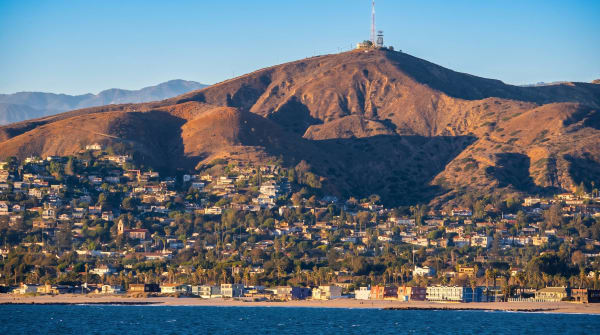
Central Coast / Central Valley
16 communities
Where California's wine coast meets its affordable heartland — Discover why retirees are choosing the Central Coast & Central Valley
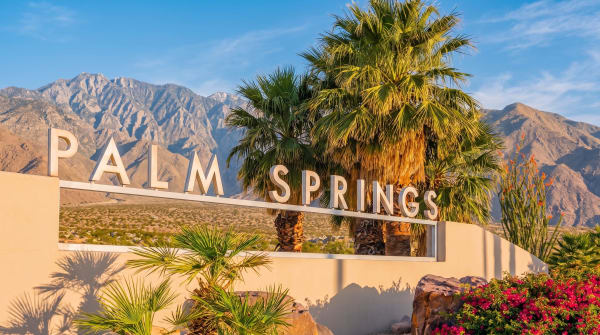
Coachella Valley / Palm Springs
13 communities
Golf Capital of the West & America's mid-century desert playground — See why retirees are choosing Coachella Valley and Palm Springs
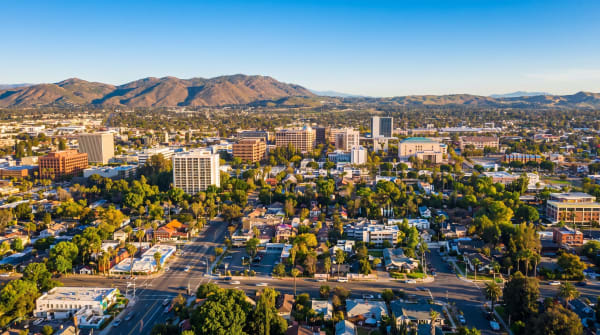
Inland Empire
22 communities
Southern California sunshine at inland prices, wine country to snow country in an hour — See why retirees are choosing the Inland Empire

Los Angeles / Ventura
13 communities
Iconic Southern California coast with world-class healthcare, beaches, and hills — See why retirees choose Los Angeles and Ventura

Orange County
11 communities
SoCal's coastal sweet spot — 42 miles of Pacific shoreline, 280+ sunny days, and California's deepest 55+ community lineup — See why retirees choose Orange County

Sacramento Area
26 communities
California's capital region — where Gold Country foothills, wine country, and Tahoe are all a short drive from your front door — See why retirees are choosing the Sacramento Area

San Diego Area
16 communities
Mediterranean coastal climate, world-class healthcare & 70 miles of Pacific shoreline — See why retirees are choosing the San Diego area

San Francisco Bay Area
8 communities
World-class healthcare, Mediterranean climate & Prop 13 protection for long-time owners — See why retirees are choosing the San Francisco Bay Area
Taxes for retirees in California
Let's be honest up front: California has the highest state income tax in the country. Nine graduated brackets run from 1% to 12.3%, and a 1% Mental Health Services surcharge on taxable income over $1 million brings the top effective rate to 13.3%. For retirees, the important detail is that pensions, 401(k) and traditional IRA withdrawals, and other retirement income are all fully taxed as ordinary income under those same brackets. If a large share of your income comes from tax-deferred accounts, model that bite carefully before you commit.
The bright spot is Social Security: California is one of the states that does not tax Social Security benefits at all, which meaningfully softens the picture for retirees who lean on that check. There is no state estate tax and no inheritance tax, so what you pass on is not eroded at the state level. And starting with the 2025 tax year, California added a partial military retirement exclusion of up to $20,000 for qualifying veterans under income thresholds — a first for the state.
Property taxes are where California surprises people. Thanks to Proposition 13, the base rate is capped at 1% of assessed value and annual increases are limited to 2%, giving longtime owners bills far below what today's market prices would suggest. The effective statewide property tax rate lands around 0.7%, below the national average. Even better for downsizers, Proposition 19 lets homeowners 55 and older transfer their existing (low) assessed value to a replacement home anywhere in California, up to three times in a lifetime, with a two-year window from the sale of the original home. For someone who has owned a Bay Area or coastal home for decades and wants to move into a Coachella Valley or Sacramento-area 55+ community, that portability can save thousands of dollars a year and is one of the strongest reasons retirees stay in California instead of leaving it.
On the other side of the ledger, California's base sales tax of 7.25% is the highest in the nation, and local add-ons routinely push combined rates to 9–10% — with parts of Los Angeles County at 10.25% or higher. Gas taxes are among the country's highest as well. Groceries and prescriptions are exempt, but everything else costs more at the register.
California climate & weather
California's climate is its signature draw, and it comes in several distinct flavors depending on which California you pick. Much of the state runs on a Mediterranean pattern of mild, modestly wet winters and warm, dry summers with abundant sunshine year-round. The coast, from San Diego through the Central Coast, delivers some of the most temperate weather in the country, rarely too hot or too cold. The desert around Palm Springs and Palm Desert is the opposite extreme: glorious, golf-perfect winters that fill the valley with snowbirds October through May, balanced against genuinely intense summer heat that regularly tops 110°F for weeks at a time. Inland and Central Valley areas land in between, with hotter summers and cooler, sometimes foggy winters that give a fuller sense of the seasons.
The honest caveat is wildfire, and it has escalated from a caveat to a central planning issue. The January 2025 wildfires around Los Angeles destroyed thousands of homes and reset how retirees, insurers, and lenders think about fire risk statewide. Parts of California — foothill communities, canyon edges, and wildland-urban interfaces — face real seasonal exposure that affects air quality, insurance availability, and cost. Risk varies enormously by micro-location, and most established 55+ communities sit in lower-exposure desert and valley settings that carriers still write, but any specific community and specific ZIP code deserves careful diligence before you buy.
Cost of living in California
There is no getting around it: California's cost of living runs roughly 40–42% above the national average, and housing is the main reason. The statewide typical home value sits near $775,000 and the California Association of Realtors' median stayed above $900,000 through mid-2026 — roughly double the national median. In the priciest coastal markets (the Bay Area, coastal San Diego, coastal LA), 55+ homes routinely trade above $1 million.
Read moreShow less
The crucial nuance is geography. Move inland to the Coachella Valley, the Inland Empire, or parts of the Central Valley and Sacramento Area, and 55+ product is available at price points that can run a third to half below comparable coastal homes. For value-minded retirees set on California, those regions are where the dollars actually stretch, and they are exactly where the largest concentration of active adult communities has been built.
Day-to-day costs also run above national norms. Gasoline is typically $0.50–$1.00 per gallon above the U.S. average because of California's unique fuel blend and taxes, groceries land about 15% above average, and utilities and healthcare each run roughly 20% higher. Build a realistic monthly budget rather than focusing on the purchase price alone.
The wild card retirees underestimated a few years ago is homeowners insurance. Average California premiums are up 84% since 2020 per Stanford research, several major carriers have paused new policies or narrowed underwriting, and enrollment in the state's FAIR Plan of last resort has nearly tripled to about 5% of homes. Even in a Coachella Valley 55+ community with modest fire exposure, expect insurance to be a larger line item than it would be in Texas or Arizona, and get carrier quotes before you sign a purchase contract, not after.
The compensating strength is healthcare. California has one of the deepest benches of nationally ranked hospitals in the country — Cedars-Sinai, UCLA Ronald Reagan, Stanford, UCSF, UC San Diego, and Scripps among them — plus strong regional systems like Sutter, Sharp, Kaiser Permanente, and Eisenhower Health in the desert. That access matters more with every passing decade of retirement, and it is a real part of the value equation even at California prices.
Pros of retiring in California
- World-class active adult resort communities clustered in the Coachella Valley, with Del Webb, Trilogy, and K. Hovnanian's Four Seasons all deeply represented
- California does not tax Social Security benefits
- Proposition 19 lets homeowners 55+ transfer their low Prop 13 assessed value to a new home anywhere in California, up to three times in a lifetime
- Proposition 13 caps the base property tax rate at 1% and limits assessment growth to 2% per year
- No state estate tax and no inheritance tax
- New partial military retirement exclusion up to $20,000 (2025 tax year and later)
- Effective property tax rate around 0.7%, below the national average
- Deep bench of nationally ranked hospitals: Cedars-Sinai, UCLA, Stanford, UCSF, UC San Diego, Scripps, and Eisenhower Health in the desert
- Unmatched climate variety: Mediterranean coast, dry desert, four-season Sierra foothills — pick your weather
- Abundant sunshine and outdoor recreation year-round: golf, pickleball, tennis, hiking, beaches, and mountains all within reach
- Dramatically more affordable inland and desert markets for buyers priced out of the coast
- Near-perfect coastal weather in San Diego and along the Central Coast
Things to consider
- Highest state income tax in the country: nine brackets from 1% to 12.3%, plus a 1% surcharge over $1 million bringing the top rate to 13.3%
- Pensions, 401(k), and IRA withdrawals are fully taxed as ordinary income
- Statewide cost of living runs roughly 40–42% above the national average
- Median home price near $900,000 statewide per CAR; coastal 55+ product routinely tops $1 million
- Homeowners insurance crisis: premiums up 84% since 2020, major carriers pulling back, FAIR Plan enrollment tripled
- January 2025 Los Angeles wildfires reset insurer and lender risk assumptions statewide
- Highest base sales tax in the nation at 7.25%, with combined local rates reaching 10.25–10.75% in parts of LA County
- Gas prices routinely $0.50–$1.00 per gallon above the national average
- Desert summer heat regularly tops 110°F for extended stretches in the Coachella Valley
- Wildfire risk affects air quality, insurability, and property values in foothill and canyon locations
Notable places in California
Airports, attractions, parks, and destinations retirees ask about across the state.
Lathrop Landing Community Park
Park / Nature
Large River Islands community park with a splash pad, playground, tennis and basketball courts, fitness equipment stations, picnic area, and direct access to the Benny and Joyce Gatto Historic Trail along the river.
Park / Nature
Well-maintained City of Indio neighborhood park with playground and water play features, tennis courts, basketball courts, softball fields, walking paths, shaded picnic areas with tables, barbecue areas, and restrooms.
Videos & guides about 55+ living in California
Tours, comparisons, and insights on retirement and active adult communities across California.

55+ communities in California: common questions
How many 55+ communities are in California?
There are 124 active adult and 55+ communities in California featured on Explore55Plus, with real photos, pricing, amenities, and resident insights for each.
How much do homes in 55+ communities in California cost?
Homes in retirement and active adult communities in California range from $100K to $1M, depending on the community, home type, and whether it's a new build or resale.
Are all 55+ communities in California age-restricted?
No. Of the 124 communities in California, 109 are age-restricted (typically one resident 55+) and 15 are open to all ages — so you can choose either an age-restricted or an all-ages active adult community.
Are there new-construction 55+ communities in California?
Yes — 37 of the 124 communities in California have new-construction homes available, alongside resale options in established neighborhoods.