
55+ Communities in Metro Detroit / Southeast Michigan
Michigan
Explore 6 active adult and retirement communities in Metro Detroit / Southeast Michigan, Michigan — with real photos, pricing, amenities, and resident insights for each.
Great Lakes retirement value with world-class healthcare, walkable downtowns & no tax on Social Security — See why retirees are choosing Metro Detroit
About Metro Detroit / Southeast Michigan
Metro Detroit hits a sweet spot for retirees who want big-city healthcare and cultural depth without coastal price tags. Home to 4.3 million people across Wayne, Oakland, Macomb, and Washtenaw counties, the region gives you six major hospital systems within a 25-minute drive of most suburbs — Henry Ford Health, Corewell Health (formerly Beaumont), the Detroit Medical Center, Trinity Health, Ascension, and University of Michigan Health in Ann Arbor. Corewell's William Beaumont University Hospital in Royal Oak is nationally ranked in nine adult specialties, and U of M in Ann Arbor is nationally ranked in eleven. For retirees making a healthcare-first decision, few metros match this concentration.
Read moreShow less
The 55+ community landscape is real and growing. Del Webb operates active-adult communities like Bridgewater and Kensington Ridge in the northern and western suburbs, and builders like Pulte are adding low-maintenance options in places like Plymouth-Canton, Novi, Northville, and Shelby Township. Oakland County is the affluent anchor — Bloomfield Hills, Troy, Rochester Hills, Birmingham, and Novi offer walkable downtowns, strong senior programming, and easy access to the Somerset Collection and Cranbrook. Wayne County's western suburbs (Livonia, Plymouth, Northville, Canton) trade some of that price premium for larger lots and mature tree canopy. If you want a walkable, restaurant-dense downtown, Royal Oak, Ferndale, and Rochester are the picks. Ann Arbor adds the college-town option 40 minutes west — U of M culture, sports, and healthcare in one package.
The financial story got materially better for retirees in 2026. Michigan's phase-out of the so-called "pension tax" is now complete, restoring the pre-2012 treatment: Social Security is fully exempt, military pensions are fully exempt, and eligible retirement and pension income can be deducted up to $67,610 for single filers or $135,220 for joint filers. The state's flat 4.25% income tax and Proposal A's cap on taxable-value increases (5% or CPI, whichever is less) mean long-term homeowners often lock in tax bills far below what a new buyer would pay next door. Property taxes are real, though — Wayne County's effective rate is 1.51%, Macomb 1.28%, and Oakland around 1.04-1.23% depending on the community.
The honest trade-off is winter, insurance, and the roads. Detroit isn't in Michigan's main lake-effect snowbelt (west Michigan takes the brunt), but the metro still averages 40+ inches of snow, and the 2025-26 season already logged 27 inches by late January. Auto insurance is a genuine sore point — Metro Detroit consistently posts the highest premiums in the nation, driven by Michigan's unique no-cap PIP requirement. Retirees who value walkable towns, four real seasons, Great Lakes summers, and world-class healthcare will find Metro Detroit hard to beat on value. Those chasing sunshine and low insurance premiums should look south.
Metro Detroit / Southeast Michigan's cities, ranked for retirees
how we rank →From our Best Places rankings of every U.S. retirement city — cost of living modeled for a typical buyer, weather from 20 years of hourly data.
| City | US rank | Cost of living | Weather | 55+ residents |
|---|---|---|---|---|
| Southfield | #196 | $3,303/mo | #758 of 858 | 36% |
| Rochester Hills | #205 | $3,617/mo | #773 of 858 | 31% |
| Farmington Hills | #206 | $3,634/mo | #769 of 858 | 35% |
| Livonia | #328 | $3,592/mo | #754 of 858 | 38% |
| Novi | #342 | $3,951/mo | #776 of 858 | 27% |
| Troy | #357 | $3,817/mo | #766 of 858 | 32% |
| Traverse City | #435 | $4,999/mo | #827 of 858 | 36% |
| Grand Rapids | #564 | $3,499/mo | #784 of 858 | 22% |
| Ann Arbor | #612 | $4,800/mo | #764 of 858 | 21% |
| Lansing | #683 | $3,163/mo | #777 of 858 | 25% |
| Detroit | #700 | $2,657/mo | #753 of 858 | 27% |
| Westland | #703 | $3,398/mo | #750 of 858 | 30% |
| Kalamazoo | #732 | $3,314/mo | #780 of 858 | 20% |
| Wyoming | #734 | $3,668/mo | #782 of 858 | 24% |
| Dearborn Heights | #764 | $3,446/mo | #736 of 858 | 29% |
| Dearborn | #778 | $3,699/mo | #740 of 858 | 24% |
| Taylor | #789 | $3,381/mo | #752 of 858 | 31% |
Re-rank these around your own budget and ideal temps on the Michigan rankings or across the entire US.
Browse 6 55+ communities in Metro Detroit / Southeast Michigan
Open in browser →Click any community for a quick preview, or open the full page.
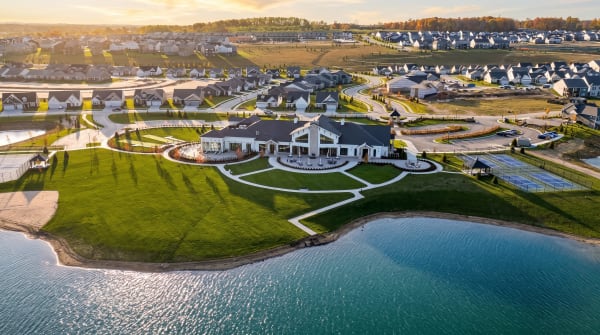 55+
55+Kensington Ridge by del Webb
Metro Detroit / Southeast Michigan
$350K – $700K
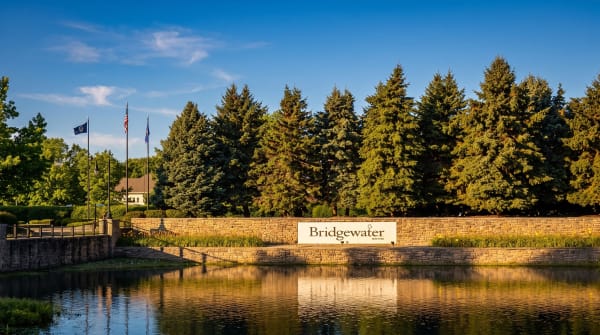 55+
55+Bridgewater
Metro Detroit / Southeast Michigan
$300K – $450K
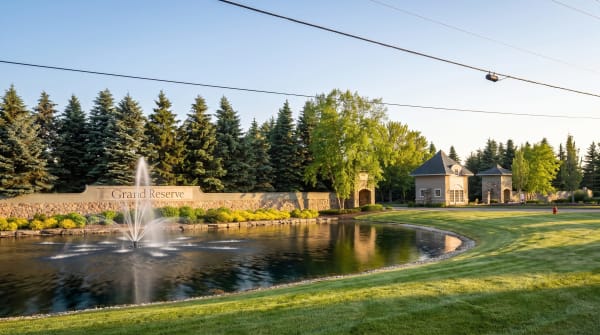 55+
55+Grand Reserve
Metro Detroit / Southeast Michigan
$350K – $450K
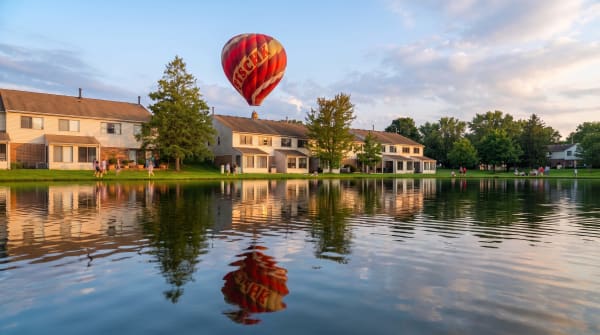 55+
55+Colonial Acres
Metro Detroit / Southeast Michigan
$50K – $200K
 55+
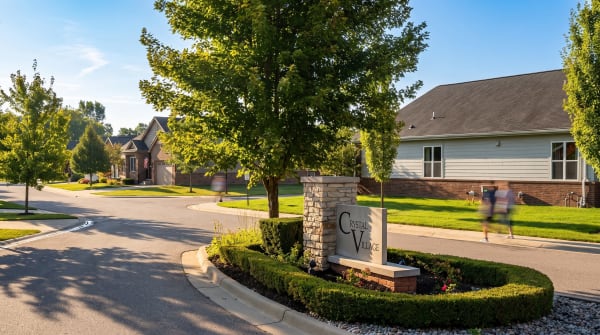
55+Crystal Village
Metro Detroit / Southeast Michigan
$300K – $550K
 55+
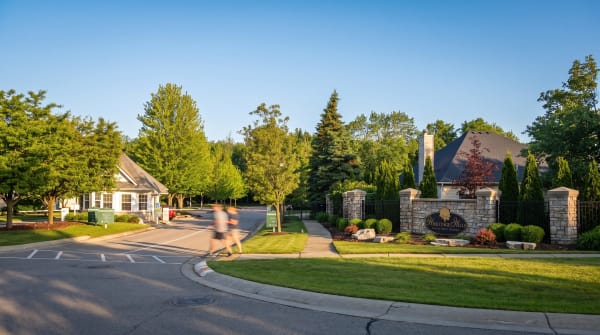
55+Heritage in the Hills
Metro Detroit / Southeast Michigan
$300K – $550K
Pros of retiring here
- No Michigan tax on Social Security
- Retirement/pension deduction up to $67,610 single / $135,220 joint (2026)
- Military pensions fully exempt from state tax
- Flat 4.25% state income tax
- Proposal A caps taxable value increases at 5% or CPI
- Principal Residence Exemption removes 18 mills of school operating tax
- Six major hospital systems including U of M Health & Corewell
- Detroit Metro Airport (DTW) — Delta hub, 139 nonstop destinations, 22 countries
- Deep 55+ community options in Oakland, Macomb, and western Wayne counties
- Walkable downtowns — Royal Oak, Rochester, Northville, Ferndale, Ann Arbor
- Great Lakes summers with boating, lakes, and Metroparks
- Strong arts scene — DIA, Detroit Symphony, Motown, Cranbrook
- Four major pro sports teams — Tigers, Lions, Pistons, Red Wings
- Ann Arbor college-town amenities within 40 minutes
- Canada border — Windsor day trips and international access
- Home prices well below coastal metros
Things to consider
- Highest auto insurance rates in the nation — Detroit averages ~$5,687/yr full coverage
- Real winter — 40+ inches of snow, wind chills below zero
- Property taxes rank high nationally — Wayne County effective rate 1.51%
- Roads and potholes are a running complaint
- Detroit city adds 2.4% resident income tax (suburbs do not)
- Proposal A "pop-up" — buying uncaps taxable value to market
- Gray, overcast winters — limited winter sun
- Uneven neighborhood quality inside Detroit proper
- Car-dependent — public transit is limited outside downtown
- Summer humidity and tornado risk (rare but real)
Cost of Living
Metro Detroit lands roughly at or just below the U.S. national average overall, with wide variation between the city and the affluent northern suburbs. The city of Detroit itself runs about 1% below to 3% above the national average depending on the index, while suburbs like Bloomfield Hills, Birmingham, and Northville run meaningfully above. Housing is the biggest lever: Detroit's average rent is roughly $1,104/month — about 33% below the national average of $1,636 — while median home prices across the metro stay well below coastal-metro benchmarks. Utilities run about 1% above the national average, groceries about 1% above, and healthcare about 4-6% above (a function of the region's dense hospital infrastructure). Transportation costs are elevated, driven almost entirely by auto insurance.
Retiree Specific: Michigan does not tax Social Security benefits, and as of the 2026 tax year the state's phase-out of the "pension tax" is complete — eligible retirement and pension income can be deducted up to $67,610 for single filers or $135,220 for joint filers. Military pensions and railroad retirement benefits remain fully exempt with no dollar cap. Michigan's flat individual income tax rate is 4.25%. Note: the city of Detroit levies an additional 2.4% resident income tax (1.2% for non-residents who work in the city) — suburban municipalities generally do not. Michigan has no estate tax and no inheritance tax. State sales tax is 6% with no local add-on, one of the more retiree-friendly sales tax structures in the Midwest. Property taxes matter here: Michigan's Principal Residence Exemption removes 18 mills of local school operating tax on your primary home (roughly a $1,800 annual savings on a $200,000 home), and Proposal A caps annual taxable value increases at 5% or CPI, whichever is less — a meaningful long-term hedge. The 2026 inflation multiplier is 1.027. Seniors may also qualify for the Homestead Property Tax Credit (up to ~$1,800 refundable) and, at age 62+, a summer property-tax deferment.
Additional Considerations: Auto insurance is the single biggest cost surprise for newcomers. Metro Detroit consistently ranks as the most expensive auto insurance market in the country — Detroit drivers average roughly $5,687/year for full coverage (about $342/month), driven by Michigan's uncapped Personal Injury Protection requirement, high uninsured-driver rates, and vehicle theft claims. Most suburbs run cheaper than the city core but still well above the national average — Metro Detroit suburb averages typically fall between $135-$171/month. Effective property tax rates vary meaningfully by county: Wayne County (Detroit) 1.51%, Macomb County 1.28%, Oakland County roughly 1.04-1.23%, and Washtenaw (Ann Arbor) around 1.81%. Under Proposal A, buying a home "uncaps" the taxable value to the current market — new buyers often pay materially more than the prior owner, so budget the post-purchase number, not the seller's bill. Winter heating bills add a real seasonal line item — expect higher gas/electric usage from November through March.
Other 55+ regions in Michigan
Where is Metro Detroit / Southeast Michigan?
- Cities:
- Detroit, Ann Arbor, Royal Oak, Troy, Bloomfield Hills, Birmingham, Farmington Hills, Novi, Canton, Plymouth, Northville, Rochester, Rochester Hills, Shelby Township, Sterling Heights, Warren, Southfield, Livonia, Dearborn, Ferndale, Grosse Pointe, Clawson, Beverly Hills, Auburn Hills, West Bloomfield
- Counties:
- Wayne County, Oakland County, Macomb County, Washtenaw County
- ZIP codes:
- 48201, 48202, 48203, 48204, 48205, 48206, 48207, 48208, 48209, 48210, 48211, 48213, 48214, 48215, 48216, 48217, 48219, 48221, 48224, 48226, 48228, 48103, 48104, 48105, 48108, 48067, 48073, 48084, 48098, 48301, 48302, 48304, 48009, 48334, 48335, 48375, 48377, 48187, 48170, 48167, 48168, 48309, 48307, 48306, 48316, 48317, 48314, 48310, 48312, 48313, 48038, 48044, 48042, 48043, 48088, 48089, 48091, 48092, 48093, 48127, 48128, 48120, 48124, 48125, 48126, 48150, 48152, 48154, 48237, 48220
55+ communities in Metro Detroit / Southeast Michigan: common questions
How many 55+ communities are in Metro Detroit / Southeast Michigan?
There are 6 active adult and 55+ communities in Metro Detroit / Southeast Michigan featured on Explore55Plus, with real photos, pricing, amenities, and resident insights for each.
How much do homes in 55+ communities in Metro Detroit / Southeast Michigan cost?
Homes in retirement and active adult communities in Metro Detroit / Southeast Michigan range from $50K to $700K, depending on the community, home type, and whether it's a new build or resale.
Are 55+ communities in Metro Detroit / Southeast Michigan age-restricted?
Yes — the 55+ communities in Metro Detroit / Southeast Michigan featured here are age-restricted, generally requiring at least one resident to be 55 or older.
Are there new-construction 55+ communities in Metro Detroit / Southeast Michigan?
Yes — 2 of the 6 communities in Metro Detroit / Southeast Michigan have new-construction homes available, alongside resale options in established neighborhoods.