The Best Places to Retire in Florida
80 cities ranked · 278 communities across 13 regions
Every Florida retirement city, scored on 20 years of hourly weather, an itemized cost of living, and a happiness index built from federal data — then re-ranked live around your budget and ideal temperatures. When a city clicks, explore the 55+ communities inside it.
Florida's cities, ranked for retirees
Updated August 25, 2026 · how we rank →
80 cities across Florida · ranked for a typical buyer · 52 demoted over your $375k home budget
Found a place you like?
Create a free account to explore the 55+ communities inside these cities — photos, pricing, amenities, and a matching quiz.
Retiring in Florida
Florida is the country's most-searched retirement destination, and the reasons are the ones everyone knows: no state income tax, a warm subtropical climate, and the deepest inventory of 55+ communities anywhere in the U.S. What surprises most newcomers is that "Florida" isn't one retirement experience — it's at least a dozen. The state runs from the Panhandle in the northwest down a 450-mile peninsula between the Gulf and the Atlantic, and where you land on that map decides your weather, your insurance bill, your budget, and your pace of life far more than the state-level headlines suggest.
Read moreShow less
The site organizes Florida into thirteen retirement regions, and picking among them is really the first question. Greater Orlando and the Space Coast anchor central Florida, inland and family-friendly, with a heavy concentration of large master-planned communities. Just north, The Villages / Ocala is the largest concentration of age-restricted living in the nation, built around golf carts, town squares, and a nearly full-time activity calendar. Tampa Bay and Sarasota / Bradenton offer Gulf beaches with real city amenities, while Southwest Florida (Naples, Fort Myers, Cape Coral) sits at the upscale golf-and-water end. Southeast Florida — the Palm Beach, Fort Lauderdale, and Miami corridor — is denser, pricier, and more cosmopolitan; the Treasure Coast just above it is quieter and more attainable. Along the Atlantic, Jacksonville / St. Augustine and Daytona Beach / Volusia feel more traditionally Southern, with milder summers and lower prices. Lakeland / Polk County splits the difference between Tampa and Orlando at inland prices, the Nature Coast north of Tampa Bay is Old Florida and rural, and the Panhandle / Northwest Florida has a four-season feel most of the peninsula lacks.
The 55+ lifestyle here is mature. Active adult communities range from a few hundred homes to sprawling resort hubs with multiple clubhouses, pools, pickleball complexes, golf, and hundreds of resident clubs. The state's 55+ housing market currently carries a median sale price around $350,000 with unusually deep inventory, so buyers have real leverage in most inland markets. Snowbirds and full-time residents mix comfortably, and communities are generally built to welcome both.
Florida is a good place to retire if you want sun, an outdoor and amenity-rich routine, tax-friendly retirement income, and plenty of company from peers making the same move. It's a harder fit if you dislike heat and humidity, want four real seasons, are anxious about hurricanes, or are on a tight fixed budget in the coastal markets — where home insurance alone can run $6,000 to $8,000 a year and reshape the math of the whole decision. For most people researching the best places to retire in Florida, the real question isn't whether the state fits, but which of these thirteen regions does.
Explore Florida by region
Dive into 55+ communities by region — each guide covers local amenities, pricing, and what makes the area a fit for retirees.

Daytona Beach / Volusia
7 communities
Cost of living in Daytona Beach, Florida runs near the national average, with no state income tax, a deep 55+ community bench, and ocean access at prices South Florida can't match

Greater Orlando
48 communities
Theme park capital of the world, centrally located between everything Florida has to offer, here's why retirees are choosing Orlando
Jacksonville / St. Augustine
21 communities
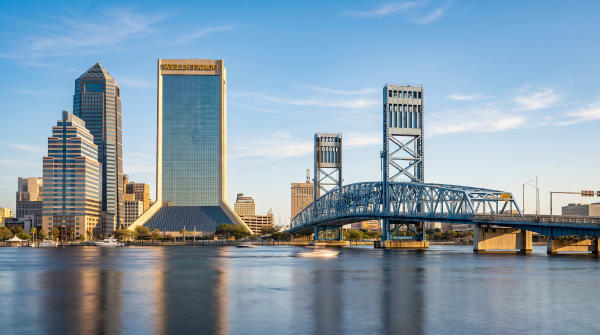
First Coast living: no state income tax, Mayo Clinic in Jacksonville, America's oldest city next door. See why retirees choose Jacksonville.
Lakeland / Polk County
8 communities
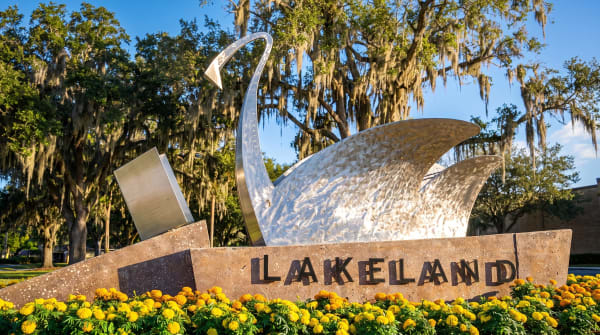
Central Florida's inland lake country — no coast, lower insurance, and 55+ living between Tampa and Orlando. See why retirees are choosing Lakeland & Polk County
Nature Coast
9 communities
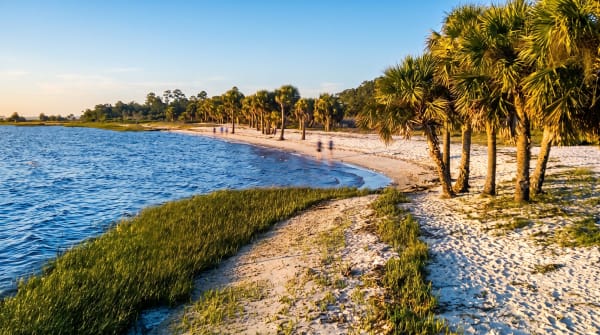
Old Florida wilds where you can swim with manatees and retire for less — See why Florida's Nature Coast is a value-driven retirement pick
Panhandle / Northwest Florida
5 communities
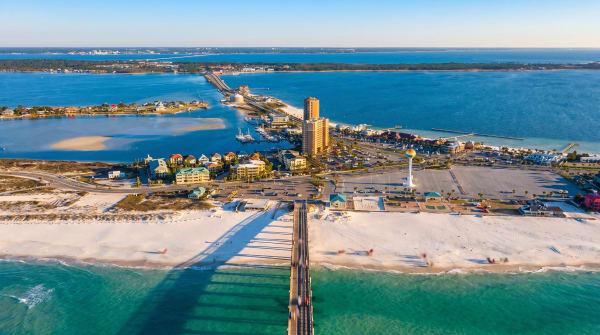
Emerald Coast beaches, military-town affordability & no state income tax — See why retirees are choosing Northwest Florida
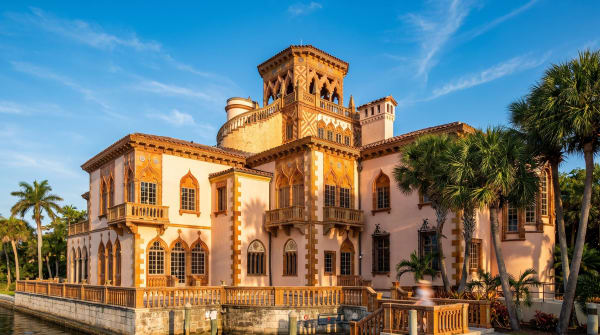
Sarasota / Bradenton
32 communities
Florida's Cultural Coast with Siesta Key's #1 beach & No. 4 U.S. retirement ranking — See why retirees are choosing Sarasota/Bradenton
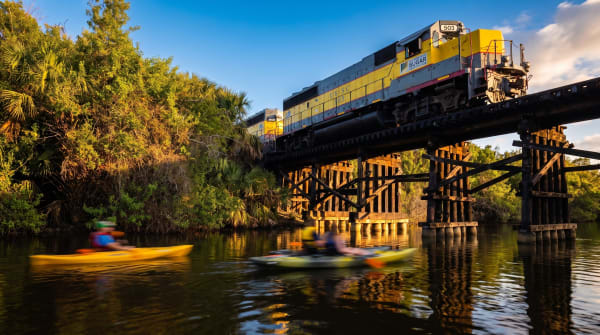
Southeast Florida
41 communities
Florida's Gold Coast — no state income tax, Atlantic beaches, and the deepest 55+ community bench in the country — See why retirees are choosing Southeast Florida
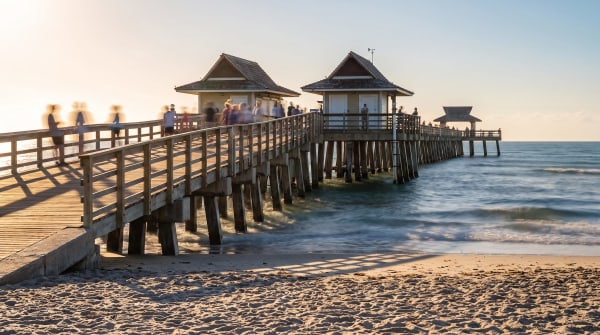
Southwest Florida
50 communities
Gulf-coast paradise blending Naples luxury, Fort Myers value, and Sanibel-adjacent beaches — See why retirees are choosing Southwest Florida
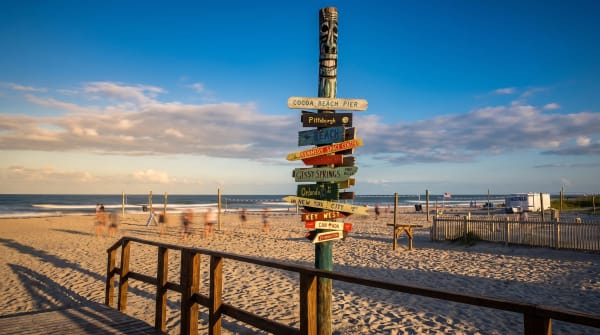
Space Coast
5 communities
Rocket launches from your backyard & 72 miles of Atlantic beach without South Florida prices — See why retirees are choosing the Space Coast

Tampa Bay Area
25 communities
Florida's Gulf Coast metro: beaches, bay views, golf-cart 55+ towns, why retirees are choosing the Tampa Bay Area

The Villages / Ocala
31 communities
Home to America's largest 55+ community and the Horse Capital of the World — See why retirees are choosing The Villages and Ocala retirement communities
Treasure Coast
16 communities
Uncrowded beaches, world-class golf & Cleveland Clinic healthcare — see why retirees are choosing the Treasure Coast
Taxes for retirees in Florida
Florida is one of the most tax-friendly states for retirees, starting with the fact that it has no state income tax. Social Security, pensions, IRA and 401(k) withdrawals, annuity income, and investment income are all untaxed at the state level, which is the single biggest reason people move here from high-tax northern states. Florida also has no state estate tax and no inheritance tax.
Property taxes are where the picture gets more nuanced. Florida funds local government heavily through property taxes and rates vary by county, though the statewide median effective rate lands around 0.82% — slightly below the national average of about 0.90%, with a median annual bill near $2,400. The standard homestead exemption removes up to $50,000 of assessed value from a primary residence, and the "Save Our Homes" provision caps annual assessed-value increases on a homesteaded property at 3% or the change in the Consumer Price Index, whichever is lower. Over time that cap can meaningfully limit tax growth for long-term owners, though it resets toward market value when the home changes hands — a real cost shock for buyers of a home that's been in one family for decades. Many counties also offer an additional senior homestead exemption of up to $50,000 for residents 65 and older whose household adjusted gross income falls below an inflation-indexed limit (set at $38,686 for the 2026 tax year), and a separate long-term-resident exemption exists for seniors who've lived in the same homestead for 25 or more years. Both are county options, so check with the local property appraiser.
Sales tax is 6% at the state level, and most counties add a discretionary surtax that brings the combined rate to around 7% (a handful of counties reach 7.5% or 8%). Groceries and prescription medications are exempt. On balance, the no-income-tax, no-estate-tax combination is the headline Florida taxes for retirees story — and it's a genuine and durable advantage — but property tax and home insurance together should be modeled honestly before you buy.
Florida climate & weather
Florida's climate is the whole pitch: warm to hot most of the year, abundant sunshine, and short, mild winters that pull retirees out of the Northeast and Midwest by the hundreds of thousands. The trade-off is humidity and a long, intense summer. From roughly June through September, daytime highs sit in the 90s, dew points stay tropical, and near-daily afternoon thunderstorms are the rule; summer life leans heavily on air conditioning, early-morning golf, and indoor amenities. Fall through spring is the payoff — dry, sunny, comfortable months when the outdoor lifestyle actually delivers.
Regional differences are real. North Florida and the Panhandle have a more traditional four-season feel with winters that can dip near freezing. Central Florida is hot and humid but inland and away from coastal storm surge. South Florida is the warmest and most tropical, rarely cold but most exposed to hurricanes. Hurricane season runs June through November and is a genuine statewide consideration: coastal areas face wind and storm surge, and inland communities can see heavy rain, flooding, and multi-day power outages. Recent seasons — Ian in 2022, Helene and Milton in 2024 — reshaped both the insurance market and how retirees think about roof age, elevation, and wind mitigation. Most established 55+ communities are built to modern codes; residents generally factor preparedness, shutters, and insurance into the cost of the lifestyle rather than pretending the risk isn't there.
Cost of living in Florida
Florida's overall cost of living is close to the national average — recent measures place it between roughly 1% below and 3% above the U.S. line — but the statewide number hides a very wide range. Inland and northern markets like Ocala, Gainesville, and Lakeland run well below average; the Naples, Sarasota, Palm Beach, and Miami coastal markets run well above.
Read moreShow less
Housing follows the same pattern. The statewide median home price sits around $378,000–$412,000 depending on the source and month, but that spans everything from Ocala at roughly $275,000 to Miami at about $655,000. In 55+ communities specifically, the current median sale price is near $350,000 with inventory up sharply from the previous year — meaning buyers have more room to negotiate in most inland markets than they've had in years. HOA fees in resort-style active-adult communities commonly run $400 to $600 a month, sometimes higher where the amenity package is bigger, and CDD assessments are a normal feature of many newer master-planned developments in central Florida.
Home insurance is the line item that deserves the most honest attention. Florida homeowners pay the highest property insurance premiums in the country by a wide margin — the statewide average, including wind coverage, was reported at $3,815 in late 2025 by the Office of Insurance Regulation, while other industry sources put the true average closer to $6,000, and coastal, high-risk zips routinely see $7,000 to $8,000+ annually. Separate hurricane deductibles (typically 2%–5% of dwelling coverage) apply per named storm on nearly all Florida policies. Multiple carriers exited the state after 2022, Citizens Property Insurance (the state-backed insurer of last resort) grew dramatically, and rate stabilization is only now beginning after legal reforms. Wind mitigation inspections and impact-rated roofs and windows drive the biggest available discounts. For retirees, insurance should be quoted specifically for the exact address before making an offer — not budgeted off a state average.
Can you retire in Florida on $3,000 a month? Honestly, only in specific lower-cost markets — smaller inland cities and parts of the Panhandle, in a modestly priced home you own outright, with disciplined healthcare and insurance planning. In coastal or resort-style 55+ communities, a realistic all-in monthly nut for one person runs closer to $4,000–$5,000 once housing, insurance, HOA, healthcare, and utilities are counted.
Healthcare is generally a strength: the state's large retiree population supports an extensive network of hospitals, specialists, and senior-focused providers, and most established 55+ communities sit within reasonable reach of major systems (BayCare, AdventHealth, Cleveland Clinic Florida, Baptist Health, Lee Health, and others). Medicare Advantage plan options are among the deepest in the country, though rural counties and smaller markets have thinner networks — worth verifying before committing to a specific town.
Pros of retiring in Florida
- No state income tax on Social Security, pensions, IRA/401(k) withdrawals, or investment income
- No state estate tax and no inheritance tax
- Warm, sunny weather and short, mild winters that support an outdoor lifestyle nearly year-round
- The deepest selection of 55+ and active adult communities in the country, at every price point
- Homestead exemption up to $50,000 plus Save Our Homes 3% cap on annual assessed-value increases
- Additional senior homestead exemption of up to $50,000 for income-qualified residents 65+ in many counties (2026 income limit $38,686)
- Statewide effective property tax rate around 0.82%, slightly below the national average
- Extensive, retiree-focused healthcare network with deep Medicare Advantage plan choice
- Miles of Gulf and Atlantic coastline, hundreds of golf courses, and year-round outdoor recreation
- Large, social communities where meeting peers and joining clubs is easy
- Groceries and prescription medications exempt from sales tax
- Major international airports across the state for visiting family and traveling
- Both seasonal snowbirds and full-time residents welcome in most communities
- Thirteen distinct retirement regions to choose from, from affordable inland golf towns to upscale coastal enclaves
Things to consider
- Long, hot, humid summers with near-daily afternoon thunderstorms and heavy reliance on air conditioning
- Hurricane season June through November — real wind, storm surge, and flooding risk, especially near the coast
- The highest home insurance premiums in the country: statewide averages of $3,800 to $6,000+, with coastal properties reaching $7,000–$8,000+ annually
- Separate 2%–5% hurricane deductibles apply per named storm on most policies
- Property tax reassessment to market value at sale can shock buyers of homes that have been in one family for decades
- Crowding and traffic in popular metros, worse when snowbirds arrive November through April
- High home prices in desirable coastal markets — Miami, Naples, Sarasota, Palm Beach all well above the national median
- HOA fees in resort-style 55+ communities commonly $400–$600/month, plus CDD assessments in many newer developments
- Few distinct seasons, which disappoints people who miss fall and winter
- Bugs, intense sun, and a hot-weather routine that takes real adjustment
- Rapid growth and development has changed the character of once-quiet areas
- Distance from family who remain in northern home states
Notable places in Florida
Airports, attractions, parks, and destinations retirees ask about across the state.
Transportation
Florida's busiest airport with 1,000+ daily flights to 170+ destinations on 40+ airlines — the single biggest reason Central Florida 55+ communities are so easy for family and grandkids to fly in and visit.
Park / Nature
1,920-acre coastal park with a rare coastal dune lake, sugar-white beach, and two hiking trails through pines and dune ecosystems. A quiet, uncrowded alternative to the busier 30A beach accesses, open 8 a.m. to sunset.
Attraction
Sprawling 25,000-acre resort with four theme parks, two water parks, 25+ on-site hotels, and Disney Springs — the world's most-visited vacation destination and the reason grandkids will happily visit Central Florida every year.
Sports Venue
Spring training home of the Tampa Bay Rays and the Rays' Florida Complex League team, with a 360-degree concourse, outfield berms, tiki bar, and approximately 7,000 seats. Also hosts concerts, festivals, and community events year-round.
Recreation
10-acre Legacy Trail trailhead park with paved paths, picnic shelters, ponds attracting whistling ducks, ospreys, and sandhill cranes, plus free parking and portable restroom.
Education
Small public library and member of the Polk County Library Cooperative, offering free computer use, interlibrary loan, and community programs in downtown Polk City.
Park / Nature
Waterfront park on 60-acre Lake Avalon with one of Collier County's only freshwater beaches, a paved 1.5-mile fitness/walking trail around the lake, butterfly garden, picnic pavilions, and free admission. Sailing and water-skiing programs are offered on-site.
Culverhouse Nature Park (Legacy Trail Trailhead)
Recreation
Small natural-area county park with shaded hiking trails, a community garden, and a major trailhead access point to the paved 18.5-mile Legacy Trail connecting Sarasota to Venice.
Florida Polytechnic University
Education
Florida's newest public university and the state's only public polytechnic, focused entirely on STEM education on a 170-acre campus near I-4 exit 38. Features the striking Santiago Calatrava-designed Innovation, Science and Technology Building and hosts public lectures, tours, and events.
Park / Nature
Scenic city park in downtown Bonita Springs along the Imperial River, with a bandshell, picnic shelters, butterfly garden, fountain, and a giant banyan tree. Hosts community events including Celebrate Bonita, Movies in the Park, and seasonal concerts.
Recreation
Paved 45+ mile rail-trail running from St. Petersburg through Palm Harbor to Tarpon Springs. Passes through downtown Palm Harbor and Dunedin, connecting parks, breweries, and waterfront restaurants for walking, biking, and jogging.
Education
Historic Catholic Benedictine university founded in 1889, one of the fifteen largest Catholic colleges in the US. The lakeside campus hosts community events, athletics, and lifelong-learning programs just minutes from Mirada.
Six Mile Cypress Slough Preserve
Park / Nature
3,500-acre Lee County wetland preserve with a 1.4-mile wheelchair-accessible boardwalk loop through a cypress strand. Home to alligators, turtles, otters, and wading birds; includes an interpretive center, picnic area, and restrooms. Parking is $1/hour or $5/day.
Recreation
Protected 300-acre city park with roughly 5 miles of grass-covered trails through salt marshes and hydric hammock. Walking, biking, and birdwatching (200+ species recorded) — alligators, marsh rabbits, and wading birds are common sightings.
Split Oak Forest Wildlife and Environmental Area
Park / Nature
Nearly 2,000-acre conservation area with about 7.7 miles of named trails through pine flatwoods, oak hammocks, marshes, and prairie. Home to gopher tortoises, sandhill cranes, and a famous 200-year-old split live oak. Hiking, birding, and wildlife viewing; no bikes or dogs.
Recreation
Historic 806-foot fishing pier opened in 1928, the centerpiece of Flagler Beach's laid-back A1A shoreline. Popular for fishing, walking, surfing views, and sunrise strolls; a bait shop and the Funky Pelican restaurant sit at the entrance.
Park / Nature
Downtown Bonita Springs gathering park along the Imperial River, home to the historic Liles Hotel, artist cottages, a bandshell for live music, butterfly garden, and most city festivals including Celebrate Bonita.
Recreation
Paved multi-use trail circling Lake Jackson for approximately 10 miles, popular for walking, jogging, and cycling with lake views the entire way.
Videos & guides about 55+ living in Florida
Tours, comparisons, and insights on retirement and active adult communities across Florida.

Cresswind at Lake Harris: Lakefront 55+ Living in Tavares, FL
Cresswind at Lake Harris in Tavares, FL offers the only new 55+ community with direct boat dock access to the Lake Harris Chain of Lakes. Here's what to expect.

Del Webb Lakehaven: 55+ Living in Florida's Wellness Way
Del Webb Lakehaven is a new 55+ community in Central Florida's Wellness Way with lake views, Olympus Town Center access, and homes from the low $400s.

Sanctuary at Wellness Ridge: Affordable 55+ Living in Clermont, FL
Sanctuary at Wellness Ridge is Lennar's new 55+ community in Clermont, FL — with homes from $299,999, resort amenities, and a location near Orlando.

Del Webb Minneola: Views, Amenities & Everything You Need to Know
Del Webb Minneola in Lake County, FL offers 55+ buyers elevated views, resort amenities, and quick access to Orlando. Here's everything you need to know.

Central Florida 55+ Communities: Wish List Wars with Tammy & Kelly
Cousins Tammy and Kelly tested The Palms at Serenoa, Four Seasons, and Solivita in Central Florida's $450K-$500K range. Here's what each community offered and which one they picked.

Wish List Wars: Best 55+ Homes in Central Florida Under $450K
Trilogy Orlando, Royal Highlands, or Heritage Hills, which Central Florida 55+ community wins for an artsy couple? See how all three stack up under $450K.
55+ communities in Florida: common questions
How many 55+ communities are in Florida?
There are 278 active adult and 55+ communities in Florida featured on Explore55Plus, with real photos, pricing, amenities, and resident insights for each.
How much do homes in 55+ communities in Florida cost?
Homes in retirement and active adult communities in Florida range from $50K to $1M, depending on the community, home type, and whether it's a new build or resale.
Are all 55+ communities in Florida age-restricted?
No. Of the 278 communities in Florida, 158 are age-restricted (typically one resident 55+) and 120 are open to all ages — so you can choose either an age-restricted or an all-ages active adult community.
Are there new-construction 55+ communities in Florida?
Yes — 134 of the 278 communities in Florida have new-construction homes available, alongside resale options in established neighborhoods.