
The Best Places to Retire in New Jersey
14 cities ranked · 154 communities across 6 regions
Every New Jersey retirement city, scored on 20 years of hourly weather, an itemized cost of living, and a happiness index built from federal data — then re-ranked live around your budget and ideal temperatures. When a city clicks, explore the 55+ communities inside it.
New Jersey's cities, ranked for retirees
Updated August 25, 2026 · how we rank →
14 cities across New Jersey · ranked for a typical buyer · 10 demoted over your $375k home budget
Found a place you like?
Create a free account to explore the 55+ communities inside these cities — photos, pricing, amenities, and a matching quiz.
Retiring in New Jersey
New Jersey packs an enormous amount of variety into a small footprint, and that's a large part of why it has one of the deepest benches of 55+ communities in the country. In a two-hour drive you can go from the transit-connected suburbs of North Jersey and the rolling hills of Northwest Jersey, through the Central Jersey towns anchored by Princeton and Route 1, out to the beaches of the Jersey Shore (North and South), and into the wide coastal plain of South Jersey that tilts toward Philadelphia. For retirees, the question is rarely which state. It's which of those six regions puts you near the family, hospital, and shoreline you already know.
Read moreShow less
The gravitational center of active adult living here is Ocean County, especially the Toms River, Manchester, and Whiting corridor. This is one of the densest clusters of age-restricted communities in the nation. Long-established Leisure Village, Crestwood, Holiday City, and Greenbriar neighborhoods sit alongside newer Del Webb, Lennar, and K. Hovnanian builds at Lake Ridge, Venue at Woodlands, and Four Seasons. Just north, Monmouth County and the North Shore run a more upscale, water-oriented version of the same idea, while Burlington, Gloucester, Mercer, and Somerset fill in with golf-course and clubhouse communities within easy reach of Princeton or Philadelphia. If you want to know where the best places to retire in New Jersey are, you're really asking which of those regions fits, and the answer is in the Area pages, not any single town.
The active adult lifestyle here is genuinely mature. Because New Jersey has been building age-restricted communities for four decades, buyers get real choice: gated golf communities, low-maintenance villa neighborhoods, mid-rise condo buildings, and large master-planned developments with indoor pools, pickleball, tennis, and packed activity calendars. Single-level and first-floor-primary homes are common, and HOAs that handle lawn care and snow removal let residents stay active without the upkeep of a traditional house. Adult-community resale homes typically list well below the state's single-family median, which is one of the quieter reasons the 55+ math still works here despite the state's tax reputation.
New Jersey suits the retiree who doesn't want to move far, who values being a short drive from grandchildren, top-tier hospitals, the boardwalk, and two major metros. Whether it's a good place to retire depends on the property tax bill you can absorb and how much you weigh Northeast access against the lower-tax states people compare it with. If staying near the family and doctors you already have matters more than chasing the cheapest bottom line, the retirement communities in New Jersey deserve a serious look.
Explore New Jersey by region
Dive into 55+ communities by region — each guide covers local amenities, pricing, and what makes the area a fit for retirees.
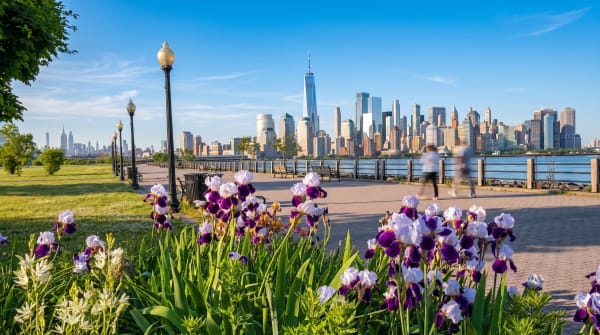
Central Jersey
41 communities
Ivy League culture, farmland, and one-hour trains to NYC or Philly — See why retirees are choosing Central Jersey
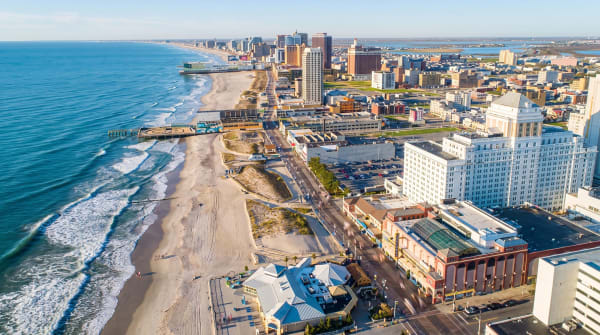
Jersey Shore - North
52 communities
Classic Jersey Shore towns, boardwalks & 40+ 55+ communities within a short drive of Manhattan — See why retirees are choosing the North Jersey Shore
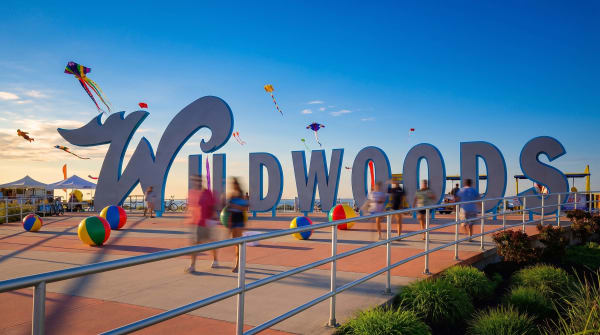
Jersey Shore - South
18 communities
Boardwalks, bayfront living & Victorian Cape May charm — See why retirees are choosing the South Jersey Shore

North Jersey
12 communities
Mountains, lakes & Manhattan skyline views without leaving the Garden State — See why retirees are choosing North Jersey

Northwest Jersey
13 communities
Rolling countryside, historic river towns & the Delaware Water Gap at your doorstep — See why retirees are choosing Northwest Jersey
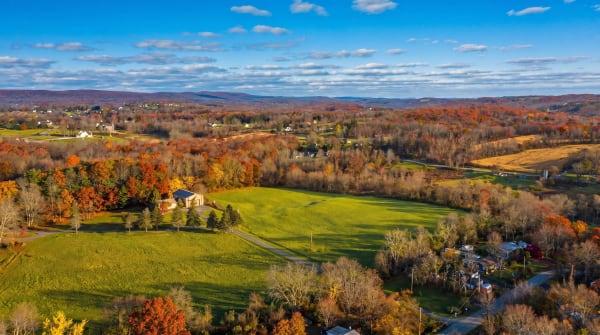
South Jersey
19 communities
Philadelphia-adjacent suburbs with walkable downtowns, Pine Barrens quiet & shore points within an hour — See why retirees are choosing South Jersey
Taxes for retirees in New Jersey
New Jersey has a progressive state income tax, and it hits high earners hard, but the code has meaningful carve-outs for retirees. Social Security benefits are not taxed by the state at all. The Retirement Income Exclusion lets residents 62 and older (or those meeting Social Security disability rules) exclude a substantial share of pension, annuity, 401(k), and IRA income: up to $100,000 for married joint filers, $75,000 for single filers, and $50,000 for married filing separately, provided total gross income stays at or below $100,000. Between $100,001 and $150,000 the exclusion phases down in tranches, and above $150,000 it disappears entirely, a hard cliff that makes withdrawal timing genuinely important. Legislation has been introduced to soften that cliff for higher-income retirees, but as of 2026 the $150,000 ceiling still governs.
The estate tax was repealed in 2018 and no longer applies. New Jersey still levies an inheritance tax on non-immediate-family heirs: Class A (spouses, children, grandchildren, parents, stepchildren) pays nothing; Class C (siblings, in-laws) gets a $25,000 exemption and then 11-16% on amounts above; Class D (nieces, nephews, cousins, friends, unmarried partners) has no exemption and pays 15% on the first $700,000 and 16% above. Life insurance paid to a named beneficiary is generally exempt.
The honest headline is property taxes. New Jersey has the highest average property tax bill in the country: the statewide average hit $10,570 in 2025, and it's the only state where the average tops $10,000. The effective rate averages around 2.23%, meaning a $400,000 home carries roughly $8,920 a year before any relief. On a typical 55+ resale that bill is often lower, but this is still the single largest line item most New Jersey retirees will budget for.
Offsetting that is a serious stack of senior property-tax relief programs, all filed through one combined application, the PAS-1, as of 2025. Stay NJ, the newest, reimburses eligible homeowners 65 and older up to 50% of their property tax bill, capped at $6,500 for the 2025 benefit year, for households with income under $500,000 (the state expects to pay Stay NJ money to roughly 430,000 residents this cycle). The Senior Freeze locks in your property-tax base once you qualify. ANCHOR provides broader rebates for homeowners at lower income tiers. The three programs stack, and a qualifying senior can meaningfully lower the effective bill, but each has its own income and residency rules, and the state budget re-authorizes benefit levels every year, so verify current numbers before you rely on them. Sales tax sits at 6.625%, with clothing and most groceries exempt.
New Jersey climate & weather
New Jersey has four real seasons. Summers are warm and humid. The shore counties stay a few degrees cooler with a reliable ocean breeze that many retirees specifically move for, while inland Central and South Jersey get sticky in July and August. Spring and fall are the standouts: mild temperatures, low humidity, and a long, colorful autumn that makes the state's parks, golf courses, and Delaware River towns especially pleasant.
Winters are cold and bring real snow, with the heaviest accumulations across North and Northwest Jersey and milder, wetter conditions along the southern coast. Nor'easters and occasional coastal storms are the hazard to plan around. Since Sandy, insurance and elevation requirements along the shore have tightened considerably. For active adult buyers, one practical advantage of a maintenance-included community is that the HOA typically handles snow removal, so a heavy January doesn't have to mean shoveling the driveway.
Cost of living in New Jersey
New Jersey's cost of living runs roughly 14-20% above the national average, driven by housing and property taxes. The statewide median home price sat around $580,000-$600,000 in 2026, up mid-single digits year-over-year, but the range within the state is enormous: Bergen County medians push past $625,000 while Cumberland County sits closer to $280,000. Adult-community resale homes typically list around $375,000 statewide, well below the single-family median, which is a large part of what keeps the 55+ math workable.
Read moreShow less
By region, Ocean County's active-adult belt still has the most attainable single-level homes and villas; shore-adjacent Monmouth and North Jersey suburbs climb sharply; and inland South Jersey (Burlington, Gloucester, Camden counties) offers some of the best value in the state. Average electric bills of $180-$190 a month rank in the national top five, and grocery costs run modestly below the national average. Rent statewide averages around $2,300-$2,500. Closing costs are high. Expect 1.7-5% of the purchase price, in part because New Jersey uses attorneys for real estate closings rather than title-only escrow.
For retirees specifically, private independent-living communities run above the national norm: roughly $4,500-$6,500 a month depending on region and services, with the shore and North Jersey at the top of that range. Homeownership in an age-restricted community typically pencils out lower on a monthly basis once you factor in property-tax relief programs, but HOAs at established Ocean County communities commonly run $150-$400 a month, and newer amenity-heavy builds can go higher.
What you get in return is access. Healthcare is a genuine strength: Hackensack Meridian, RWJBarnabas, Atlantic Health, Cooper, and Jefferson systems put highly regarded hospitals and specialists within reach of most communities, plus quick connections to top-tier care in New York and Philadelphia. The realistic picture is a higher overall budget balanced against excellent medical access, three international airports, and the convenience of staying in the Northeast.
Pros of retiring in New Jersey
- One of the deepest benches of 55+ and active adult communities in the country, concentrated in Ocean County
- Jersey Shore beaches and boardwalks within easy reach of nearly every community
- Close to both New York City and Philadelphia for culture, travel, and family, plus Newark, LaGuardia, JFK, and Philadelphia International airports
- Excellent healthcare with Hackensack Meridian, RWJBarnabas, Atlantic Health, Cooper, and Jefferson systems statewide
- Social Security income is not taxed by the state
- Generous retirement income exclusion: up to $100,000 for married couples filing jointly with income at or below $100,000
- Estate tax was repealed in 2018
- Three stacking senior property tax relief programs (Stay NJ, Senior Freeze, ANCHOR) filed through one combined PAS-1 application
- Mature, established active adult lifestyle with full amenity packages and packed activity calendars
- Adult-community resale prices typically well below the state's single-family median
- Maintenance-included living that handles lawn care and snow removal
- Many single-level and first-floor-primary home options
- Walkable downtowns and NJ Transit rail access in much of the state
- Four real seasons, with a long colorful fall
Things to consider
- Highest average property tax bill in the nation: statewide average hit $10,570 in 2025 and 10 New Jersey counties averaged over $10,000
- Effective property tax rate around 2.23%, roughly double the national average
- Overall cost of living runs 14-20% above the national average
- Cold winters with real snow, especially in North and Northwest Jersey
- Retirement income exclusion phases out entirely above $150,000 gross income, a sharp cliff that catches unprepared retirees
- New Jersey still levies inheritance tax on siblings, in-laws, nieces, nephews, friends, and unmarried partners at 11-16%
- Traffic and density are heavy near the metros and along the shore in summer
- Shore and North Jersey pricing puts waterfront and metro-close communities out of reach for many budgets
- Summers are notably humid inland, away from the ocean breeze
- Electric bills among the top five highest in the country
- High closing costs and attorney-review requirement on real estate transactions
55+ communities in New Jersey: common questions
How many 55+ communities are in New Jersey?
There are 154 active adult and 55+ communities in New Jersey featured on Explore55Plus, with real photos, pricing, amenities, and resident insights for each.
How much do homes in 55+ communities in New Jersey cost?
Homes in retirement and active adult communities in New Jersey range from $50K to $1M, depending on the community, home type, and whether it's a new build or resale.
Are all 55+ communities in New Jersey age-restricted?
No. Of the 154 communities in New Jersey, 153 are age-restricted (typically one resident 55+) and 1 is open to all ages — so you can choose either an age-restricted or an all-ages active adult community.
Are there new-construction 55+ communities in New Jersey?
Yes — 20 of the 154 communities in New Jersey have new-construction homes available, alongside resale options in established neighborhoods.