
The Best Places to Retire in Texas
69 cities ranked · 50 communities across 4 regions
Every Texas retirement city, scored on 20 years of hourly weather, an itemized cost of living, and a happiness index built from federal data — then re-ranked live around your budget and ideal temperatures. When a city clicks, explore the 55+ communities inside it.
Texas's cities, ranked for retirees
Updated August 25, 2026 · how we rank →
69 cities across Texas · ranked for a typical buyer · 12 demoted over your $375k home budget
Found a place you like?
Create a free account to explore the 55+ communities inside these cities — photos, pricing, amenities, and a matching quiz.
Retiring in Texas
Texas is one of the most-searched states in the country for retirement, and the pitch is easy to see: no state income tax, a lower cost of living than Florida or the coasts, warm winters, and one of the biggest lineups of 55+ communities in America. The catch is that "retiring in Texas" means very different things depending on which corner you land in, so most of the decision comes down to picking a metro.
Read moreShow less
Four regions do the heavy lifting for retirees, and they are the natural next click. Dallas / Fort Worth in the north offers big-city amenities, major airports, and a dense band of master-planned 55+ suburbs (Frisco, McKinney, Denton, Mansfield). The Houston Area pairs the Texas Medical Center — the largest medical complex in the world — with affordable housing and a humid, green Gulf Coast feel. The Austin Area draws buyers who want Hill Country scenery, lakes, and live music, and it is home to Sun City Texas in Georgetown, still the state's flagship active adult community. San Antonio / Hill Country is the value play, with lower home prices, a strong military-retiree presence, and quick access to the Hill Country wine and lake country. Further south, the Rio Grande Valley has been the country's original Winter Texan hub since the 1950s, with more than 200 RV and mobile-home resorts built specifically for snowbirds chasing 70-degree Januaries.
The money story is the reason people move here. There is no state income tax on Social Security, pensions, 401(k) or IRA withdrawals, and — as of January 1, 2026 — the general homestead exemption is $140,000 with an additional $60,000 for homeowners 65 and older, for $200,000 of a home's value shielded from school district taxes plus a permanent school-tax freeze. Statewide median home prices sit around $345,000 (well under the national median), so a dollar goes further here than it does in Florida, Arizona, or the Carolinas.
The honest trade-off is the weather-and-property-tax combination. Summers are long and genuinely hot, effective property tax rates run roughly 1.6% (about double Florida's), and homeowners insurance is now the fifth most expensive in the country. So is Texas a good place to retire? Yes — if you want your dollar to stretch, prefer big metros with world-class healthcare and airports, and can tolerate August. It is an especially strong fit for working retirees and second-career folks, since the DFW, Austin, and Houston job markets are among the deepest in the country.
Explore Texas by region
Dive into 55+ communities by region — each guide covers local amenities, pricing, and what makes the area a fit for retirees.
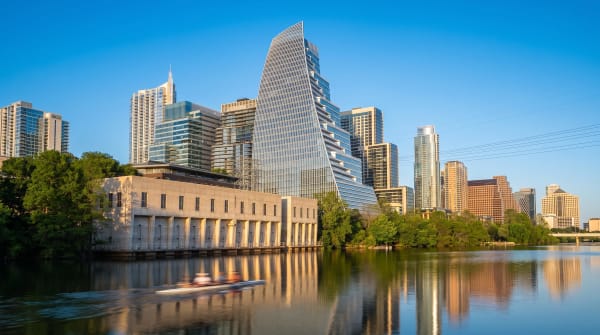
Austin Area
6 communities
Live Music Capital, tech hub, and Hill Country lakes with no state income tax — See why retirees are choosing the Austin Area

Dallas / Fort Worth
19 communities
No state income tax, world-class healthcare & 55+ communities from Frisco to Fort Worth — See why retirees are choosing Dallas / Fort Worth
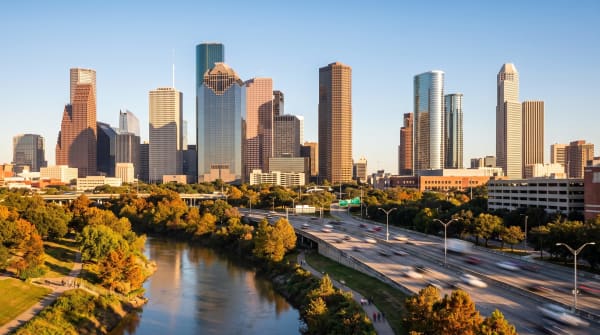
Houston Area
19 communities
Home to the world's largest medical center & no state income tax — See why retirees are choosing the Houston Area
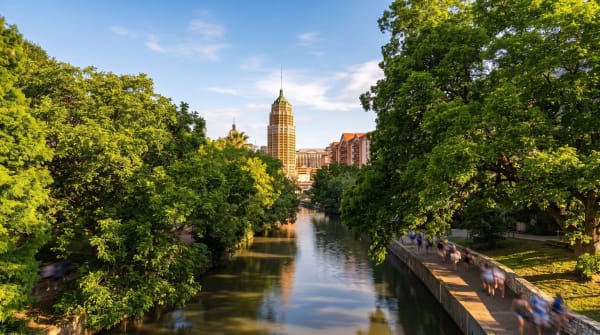
San Antonio / Hill Country
12 communities
Military City USA meets Texas Hill Country wine trails and no state income tax — See why retirees are choosing San Antonio
Taxes for retirees in Texas
Texas taxes for retirees start with the biggest single draw: there is no state income tax of any kind. Social Security, pensions, 401(k) and IRA withdrawals, and annuity income are all untaxed at the state level, and Texas has no estate tax and no inheritance tax, so what you leave to heirs is not reduced by the state.
The honest trade-off is property tax, which is high and pays for the missing income tax. Effective rates average around 1.6% of home value — roughly double Florida's — which is why property taxes get more airtime in Texas retirement planning than anywhere else. The relief for seniors, however, is genuinely substantial and was expanded again for the 2026 tax year. Every Texas homeowner now gets a $140,000 general homestead exemption on school district taxes, and homeowners 65 and older get an additional $60,000 exemption on top of that, for a combined $200,000 of a home's value shielded from school taxes. Just as importantly, once you turn 65 and claim the exemption, your school district tax bill (the largest piece of most Texas tax bills) is frozen at that year's amount — your appraised value can keep rising, but the school portion of your bill generally cannot. Many counties and cities layer additional over-65 exemptions on top: Travis County adds another $143,220 and the City of Austin adds $98,500, for example. It is worth confirming the local stack with your specific appraisal district.
Sales tax is moderate: 6.25% state plus local add-ons that push the combined rate to about 8.2% in most metros. Groceries and prescription medicines are exempt. Unlike Florida, Texas has no annual cap on how much your home's appraised value can rise year to year (Florida's Save Our Homes caps it at 3%), so understanding the over-65 school-tax freeze is central to running the retirement math here.
Texas climate & weather
Texas climate means hot summers and mild winters, which is exactly what most 55+ buyers are shopping for. Summers are long and genuinely hot — 100°F stretches through July and August are normal across most of the state — while winters are short and gentle, with plenty of days you can spend on the golf course or the pickleball court. That mild-winter pattern is why the Rio Grande Valley draws so many Winter Texans: daytime highs there run 60–80°F all winter with freezing weather rare.
Regional variety is real. The Gulf Coast around Houston is humid and green; the Hill Country around Austin and San Antonio sits higher and drier with rolling terrain; West Texas is high desert; and North Texas around DFW gets sharper temperature swings and occasional ice. Severe weather is the other side of the coin. Texas leads the nation in hail damage, gets tornadoes across the northern half, faces Gulf hurricanes along the coast, and — as the February 2021 winter storm proved — is not immune to disruptive freezes. The state's electric grid took real reputational damage from that event, and reliability during weather extremes remains a legitimate question buyers ask.
Cost of living in Texas
Overall cost of living in Texas runs at or slightly below the national average, and that is a meaningful part of the appeal. The statewide median home price sits around $345,000 as of mid-2026 (per TRERC and Redfin), well under the U.S. median near $411,000. Outside of Austin, home prices in the major metros are reasonable, and you can find well-appointed homes in resort-style 55+ communities for considerably less than in comparable Florida or Arizona builds.
Read moreShow less
Regional variation is the whole story. Austin metro is the outlier at roughly $450,000 median (the city proper runs over $600,000), and much of the Hill Country has followed it up. Dallas / Fort Worth runs around $370,000 with the outer suburbs cheaper. Houston, San Antonio, and Corpus Christi all sit well below the state median — San Antonio around $275,000, Corpus Christi near $235,000 — and the Rio Grande Valley is cheaper still. A retired couple in San Antonio can live comfortably on roughly $55,000–$65,000 per year according to recent retirement affordability analyses.
Retiree-specific costs: healthcare is a genuine strength in the metros, with the Texas Medical Center in Houston, UT Southwestern in Dallas, and major systems across San Antonio and Austin all within easy reach. Sales tax averages about 8.2% combined, with groceries and prescriptions exempt. Property tax is the line item to run carefully — the over-65 exemption stack ($200,000 in school-district relief plus the school-tax ceiling freeze) blunts most of it, but city, county, and MUD/PID levies still apply, and 55+ master-planned communities often carry HOA and CDD-style fees on top.
The cost most retirees underestimate is homeowners insurance. Texas is now the fifth most expensive state in the country for home insurance, with statewide averages running $3,300–$4,900 per year — 60–90% above the national average — and rates rose another 18–28% in 2026 on top of double-digit jumps in 2024 and 2025. Coastal counties are far worse: Galveston averages near $8,000, Houston near $6,400, and windstorm coverage on the coast is often a separate policy. El Paso, by contrast, averages around $2,000. Ask for a real insurance quote before you fall in love with a specific ZIP code.
Pros of retiring in Texas
- No state income tax — Social Security, pensions, 401(k) and IRA withdrawals are all untaxed at the state level
- No state estate tax and no inheritance tax
- Statewide median home price around $345,000, well below the national median
- Over-65 property tax relief that is genuinely substantial: $200,000 in combined school-district exemptions plus a permanent school tax freeze
- Home to Sun City Texas in Georgetown, one of the largest 55+ communities in the country
- Major active-adult builders operate statewide, including Del Webb and Robson Ranch
- Mild, short winters that make year-round pickleball, golf, and walking easy
- World-class healthcare in every major metro, anchored by the Texas Medical Center in Houston
- Strong job markets in DFW, Austin, and Houston for working retirees and second-career folks
- Groceries and prescription medicines exempt from sales tax
- The Rio Grande Valley is the country's original snowbird hub, with 200+ RV and mobile-home resorts built for Winter Texans
- Wide regional variety — Gulf Coast, Hill Country, high desert, and Piney Woods all within one state
Things to consider
- Effective property tax rates around 1.6% — roughly double Florida's — even with the senior exemptions
- Homeowners insurance is the fifth most expensive in the country, averaging $3,300–$4,900 per year and up another 18–28% in 2026
- Coastal counties (Galveston, Corpus Christi, Houston) carry insurance premiums two to three times the state average, often with a separate windstorm policy
- Summers are long and genuinely hot, with 100°F stretches normal in July and August
- Severe weather is real: national leader in hail, tornadoes across the north, Gulf hurricanes on the coast, and disruptive winter storms (see February 2021)
- Ongoing questions about electric grid reliability during weather extremes
- No annual cap on appraised value increases like Florida's Save Our Homes — makes the over-65 freeze critical to lock in
- Big metros mean sprawl, long drives, and heavy traffic
- Austin and much of the Hill Country have become expensive enough to erase the no-income-tax advantage for higher-priced buyers
- Rapid population growth has pushed up prices and congestion in the popular suburbs
55+ communities in Texas: common questions
How many 55+ communities are in Texas?
There are 50 active adult and 55+ communities in Texas featured on Explore55Plus, with real photos, pricing, amenities, and resident insights for each.
How much do homes in 55+ communities in Texas cost?
Homes in retirement and active adult communities in Texas range from $100K to $1M, depending on the community, home type, and whether it's a new build or resale.
Are all 55+ communities in Texas age-restricted?
No. Of the 50 communities in Texas, 41 are age-restricted (typically one resident 55+) and 9 are open to all ages — so you can choose either an age-restricted or an all-ages active adult community.
Are there new-construction 55+ communities in Texas?
Yes — 28 of the 50 communities in Texas have new-construction homes available, alongside resale options in established neighborhoods.