
The Best Places to Retire in South Carolina
11 cities ranked · 57 communities across 5 regions
Every South Carolina retirement city, scored on 20 years of hourly weather, an itemized cost of living, and a happiness index built from federal data — then re-ranked live around your budget and ideal temperatures. When a city clicks, explore the 55+ communities inside it.
South Carolina's cities, ranked for retirees
Updated August 25, 2026 · how we rank →
11 cities across South Carolina · ranked for a typical buyer · 5 demoted over your $375k home budget
Found a place you like?
Create a free account to explore the 55+ communities inside these cities — photos, pricing, amenities, and a matching quiz.
Retiring in South Carolina
South Carolina has quietly become one of the Southeast's most-searched retirement destinations, and the reasons hold up under scrutiny. The state stretches 187 miles along the Atlantic and rolls inland through Piedmont farmland to the Blue Ridge foothills, so retirees can pick their setting rather than settle for one. Most people asking whether South Carolina is a good place to retire end up circling five regions the site covers in depth: the Charleston Area and the Lowcountry; the Hilton Head / Beaufort corridor; the Myrtle Beach / Grand Strand; Columbia / Midlands SC on Lake Murray; and Greenville / Upstate SC in the foothills. Each has its own price point, pace, and personality.
Read moreShow less
The coast is where much of the 55+ energy lives. The Grand Strand pairs beach access with an enormous concentration of golf, dining, and entertainment, and it draws buyers who want amenities close at hand — median home prices there sit around $315,000–$323,000, well below the state median. Further south, the Hilton Head / Beaufort area is anchored by Sun City Hilton Head, a Del Webb community that ranks among the largest active-adult communities in the country. The Charleston Area is the price outlier: median sale prices run $615,000 and up, with Mount Pleasant well above that, so budget-focused retirees often look at Summerville or the inland suburbs instead.
Inland, the appeal shifts toward value. Columbia and the Lake Murray midlands offer some of the state's most affordable home prices — Zillow puts the city median near $231,000 — plus central access to the whole state. Greenville and the Upstate pair a nationally recognized revitalized downtown, four real seasons, and mountain proximity with median prices in the $340,000–$380,000 range. Buyers who prioritize healthcare access, walkable town centers, or being closer to the mountains than the beach frequently land in the Upstate.
South Carolina suits a wide spectrum of 55+ buyers — golfers and beach lovers, snowbirds putting down full-time roots, and budget-conscious retirees who want Sun Belt warmth without Florida's price tags or insurance crisis. Between the 2026 income tax cut, no tax on Social Security, one of the country's lowest property tax burdens, and a deep bench of active-adult communities, it belongs on any serious retirement short list.
Explore South Carolina by region
Dive into 55+ communities by region — each guide covers local amenities, pricing, and what makes the area a fit for retirees.
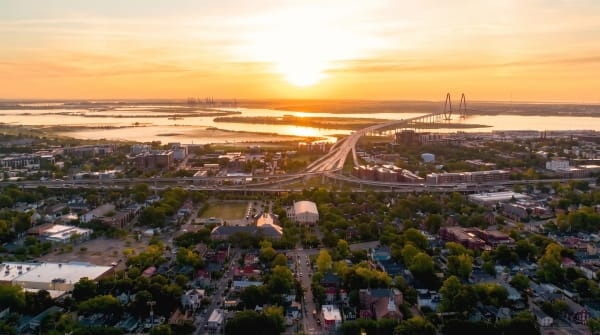
Charleston Area
9 communities
Historic Holy City charm, Lowcountry beaches & tax-friendly retirement — See why retirees are choosing the Charleston Area

Columbia / Midlands SC
13 communities
South Carolina's capital on Lake Murray — see why retirees are choosing Columbia and the Midlands for tax-friendly, lake-country living
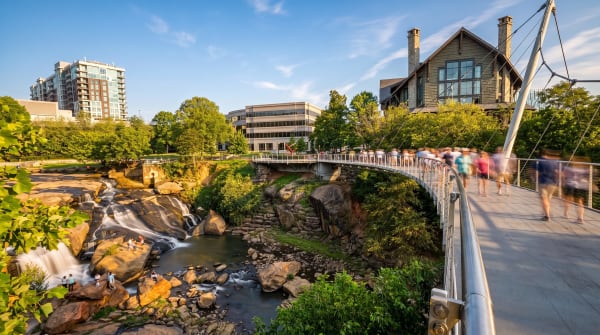
Greenville / Upstate SC
2 communities
Blue Ridge foothills setting with a walkable downtown, no tax on Social Security & lakes at the doorstep — See why retirees are choosing Greenville and the Upstate
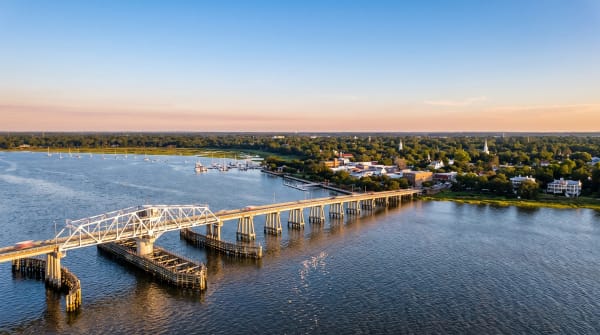
Hilton Head / Beaufort
9 communities
Lowcountry beaches, championship golf & Southern charm without Florida's crowds — See why retirees are choosing Hilton Head and Beaufort
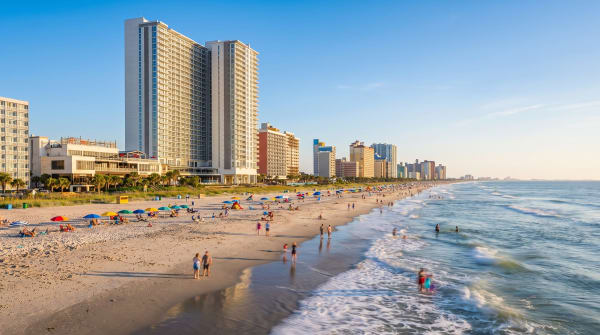
Myrtle Beach / Grand Strand
23 communities
60 miles of Atlantic coastline, 100+ golf courses & no tax on Social Security — See why retirees are choosing the Grand Strand
Taxes for retirees in South Carolina
South Carolina is one of the more retiree-friendly states in the country on taxes, and the 2026 reform made it meaningfully better. Under H.4216, signed in spring 2026, the state collapsed a six-bracket structure into two: 1.99% on the first $30,000 of taxable income and 5.21% on the amount above that, down from a 6% top rate the year before. Additional cuts are triggered by state revenue growth in future years. Crucially, South Carolina does not tax Social Security or railroad retirement benefits at all, regardless of income, and there are no local income taxes anywhere in the state.
The standout benefit is the retiree deduction stack. Taxpayers can claim up to $10,000 of qualified retirement income (pension, IRA, 401(k)), and at age 65 a separate deduction of up to $15,000 against any type of income kicks in — but the two are coordinated, so they don't simply add to $25,000. For a married couple both 65+ drawing $75,000 in combined pension and IRA income, the deductions can shelter roughly $30,000 from state tax entirely. Military retirement pay is 100% exempt on top of that.
Property taxes are the other headline. South Carolina's effective property tax rate runs around 0.57%, one of the lowest in the country, and owner-occupied primary residences are assessed at a 4% ratio rather than the 6% used for second homes and rentals — the 4% status also triggers automatic exemption from school operating taxes under Act 388. Homeowners 65 and older who have lived in the state for at least a year qualify for a $50,000 Homestead Exemption on top of that, applied to the first $50,000 of fair market value; a pending bill (S.768) would expand it to $150,000 for long-term residents. There is no estate tax and no inheritance tax, so what you build stays with your heirs. The statewide sales tax is 6% with groceries exempt at the state level (local add-ons apply).
South Carolina climate & weather
South Carolina has a humid subtropical climate, which means hot, sticky summers and short, mild winters across most of the state. Coastal areas like Myrtle Beach, Charleston, and Hilton Head are tempered by ocean breezes but carry high humidity through summer, while the Upstate around Greenville sits at higher elevation with slightly cooler summers, crisper falls, and the occasional light winter snow. Spring and fall are the standout seasons nearly everywhere — long stretches of comfortable, golf-perfect weather that a lot of Northeast transplants cite as the closing argument.
The trade-off on the coast is hurricane season, which runs June through November across all 187 miles of Atlantic shoreline. Storms don't make landfall every year, but coastal buyers should plan for the possibility, factor in stronger building standards near the water, and understand that evacuation routes, wind coverage, and flood insurance are part of life closer to the Atlantic. Inland areas trade hurricane exposure for occasional severe thunderstorms, hail, and the tail end of tropical systems.
Cost of living in South Carolina
South Carolina's overall cost of living sits at or just below the national average — many sources put it around 10–12% below — and housing does most of the work. The statewide median home price runs $309,000 to $360,000 depending on the source and month, with mortgage rates in the low-6% range through 2026. Combined with property taxes among the lowest in the country, retirement dollars stretch further here than in much of Florida or the Northeast.
Read moreShow less
Pricing varies sharply by region. Charleston is the premium market at roughly $615,000–$710,000 median, and Mount Pleasant runs even higher. The Grand Strand around Myrtle Beach sits around $315,000–$323,000, and prices have softened slightly year-over-year as inventory built up. Greenville and the Upstate come in around $340,000–$380,000, while Columbia and the Midlands are the affordability leader at roughly $231,000. In most 55+ and active-adult communities, buyers find a broad range — from attainable attached and ranch-style homes to higher-end golf and waterfront properties.
Retiree-specific costs: A comfortable retirement in South Carolina runs about $74,500 a year for a couple and $52,900 for a single retiree, according to Investopedia's analysis — meaning most couples need a nest egg near $920,000 after Social Security, and singles closer to $729,000. Healthcare access is strong in and around the major hubs, with well-regarded systems including MUSC in Charleston, Prisma Health across Columbia and Greenville, and Tidelands and McLeod on the coast; the picture thins out in rural stretches between the metros, so buyers with specialized medical needs should confirm proximity to the specialists they rely on before settling on a location.
The honest caveat is insurance. South Carolina home insurance averages roughly $2,974–$3,100 per year — above the national average — and rates rose nearly 10% in 2025, almost double the national pace. Coastal ZIPs in Charleston, Beaufort, and the Grand Strand pay a meaningful premium on top of that, some carriers have stopped writing new coverage on larger coastal homes, and the state-run SC Wind and Hail Underwriting Association is the backstop for homeowners who can't find coverage in the standard market. Flood insurance through NFIP is a separate line item near the water.
Pros of retiring in South Carolina
- No state tax on Social Security or railroad retirement benefits
- 2026 tax reform dropped the top income rate to 5.21% (down from 6%), with the first $30,000 of taxable income at just 1.99%
- Up to $10,000 retirement-income deduction plus a separate $15,000 age-65 deduction against any income
- Military retirement pay 100% exempt from state income tax
- Property tax effective rate around 0.57% — among the lowest in the nation
- $50,000 senior Homestead Exemption plus 4% owner-occupied assessment ratio for legal residences
- No estate tax and no inheritance tax
- No local income taxes anywhere in the state
- Mild winters and a long, golf-friendly outdoor season
- 187 miles of Atlantic coastline and one of the highest concentrations of golf courses in the country
- Sun City Hilton Head — one of the largest active-adult communities in the U.S. — plus deep 55+ inventory statewide
- Cost of living roughly 10–12% below the national average
- Real geographic variety, from beach to lake country to Blue Ridge foothills
- Strong hospital systems: MUSC in Charleston, Prisma Health across Columbia and Greenville, Tidelands and McLeod on the coast
- Walkable, revitalized downtowns in Greenville and Charleston
Things to consider
- Hot, humid summers that can run long and intense
- Hurricane season June through November along the entire 187-mile coast
- Home insurance averages roughly $2,974–$3,100 per year, above the national average, and rose nearly 10% in 2025
- Some carriers no longer write new coastal policies; the SC Wind and Hail pool is often the backstop
- Separate flood insurance is essentially mandatory near the water
- Charleston is a premium market at $615K+ median, with Mount Pleasant well above that
- Healthcare access thins out in rural stretches between the metros
- Popular beach and resort areas get crowded and traffic-heavy in peak season
- Summer heat and humidity may not suit everyone's comfort or health needs
- Retirement deductions are coordinated (not fully additive), so the tax benefit is smaller than it first appears
55+ communities in South Carolina: common questions
How many 55+ communities are in South Carolina?
There are 57 active adult and 55+ communities in South Carolina featured on Explore55Plus, with real photos, pricing, amenities, and resident insights for each.
How much do homes in 55+ communities in South Carolina cost?
Homes in retirement and active adult communities in South Carolina range from $50K to $1M, depending on the community, home type, and whether it's a new build or resale.
Are all 55+ communities in South Carolina age-restricted?
No. Of the 57 communities in South Carolina, 32 are age-restricted (typically one resident 55+) and 25 are open to all ages — so you can choose either an age-restricted or an all-ages active adult community.
Are there new-construction 55+ communities in South Carolina?
Yes — 31 of the 57 communities in South Carolina have new-construction homes available, alongside resale options in established neighborhoods.