
The Best Places to Retire in Colorado
19 cities ranked · 19 communities across 3 regions
Every Colorado retirement city, scored on 20 years of hourly weather, an itemized cost of living, and a happiness index built from federal data — then re-ranked live around your budget and ideal temperatures. When a city clicks, explore the 55+ communities inside it.
Colorado's cities, ranked for retirees
Updated August 25, 2026 · how we rank →
19 cities across Colorado · ranked for a typical buyer · 16 demoted over your $375k home budget
Found a place you like?
Create a free account to explore the 55+ communities inside these cities — photos, pricing, amenities, and a matching quiz.
Retiring in Colorado
Colorado runs from the eastern plains up into the Rockies, and almost everyone who retires here settles along the Front Range — the north-south corridor where the plains meet the foothills. The site organizes the state into three retirement regions, and they map cleanly to where most retirees actually go. Greater Denver and the northern Front Range is the center of gravity, home to the majority of active-adult communities, big-hospital healthcare, and Denver International Airport. Colorado Springs and Southern Colorado sits an hour south under Pikes Peak, drawing buyers who want a slightly milder, sunnier climate and noticeably lower home prices than Denver. And across the divide, the Western Slope around Grand Junction offers a warmer, drier, more affordable alternative with red-rock scenery, an emerging wine country, and easy access to the desert Southwest.
Read moreShow less
The national active-adult builders are well represented. Del Webb has several Front Range communities and Lennar's Heritage brand has been active around Denver, alongside a healthy mix of regional builders and smaller age-restricted neighborhoods. Fits range from big amenity-heavy resort-style 55+ communities to quieter low-maintenance enclaves, so the right choice depends on how much clubhouse-and-pickleball energy you want versus a simpler lock-and-leave home near the trails.
What ties Colorado together for retirees is the lifestyle. This is an outdoors-first state with a famously sunny, dry climate — hiking, golf, skiing, cycling, fishing, and just being outside in high mountain air. It suits the active, healthy 55+ buyer who values recreation and scenery over a low cost of living. Add in genuinely favorable retirement-income tax treatment (a full Social Security subtraction at 65 and up, a pension-and-annuity subtraction that expands in 2026, low effective property taxes), and Colorado is a stronger financial fit than its reputation suggests.
It is a less natural fit if your priorities are cheap housing, a warm winter, or staying near sea level. Home prices, homeowners insurance, and altitude all ask more of you than a Sun Belt alternative, and Colorado is now — for the first time in decades — losing more residents to other states than it gains, largely on cost of living. The trade-off is a four-season, high-energy version of retirement in one of the most scenic states in the country, and for a lot of buyers that trade still lands on the right side of the ledger.
Explore Colorado by region
Dive into 55+ communities by region — each guide covers local amenities, pricing, and what makes the area a fit for retirees.
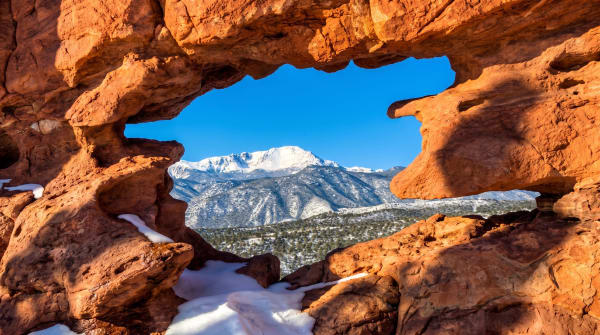
Colorado Springs / Southern CO
10 communities
Pikes Peak views, 300 days of sun & a huge military-retiree community — See why retirees are choosing Colorado Springs
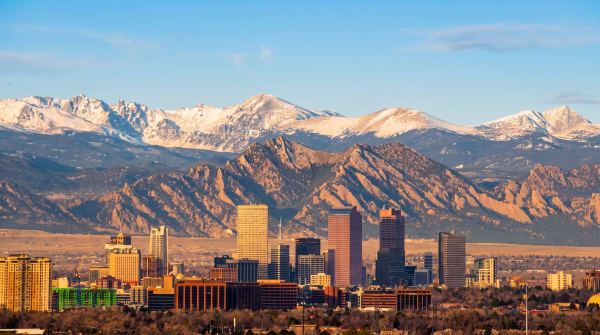
Denver / Front Range
17 communities
Mile-high living with 300+ days of sunshine and the Rockies out your window — See why retirees are choosing the Denver / Front Range
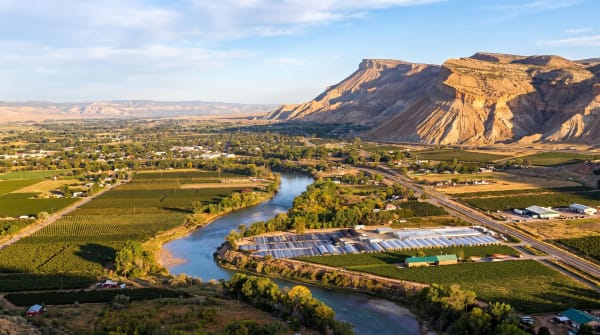
Western Slope / Grand Junction
1 community
High-desert wine country at the foot of Colorado National Monument — see why retirees are choosing Grand Junction and the Western Slope
Taxes for retirees in Colorado
Colorado is meaningfully more retiree-friendly than its overall cost reputation suggests, largely because of how it treats retirement income. The state levies a single flat income tax of 4.4%, and the starting point for a Colorado return is federal taxable income, which means the state's generous subtractions do the real work. Taxpayers 65 and older can subtract the full amount of Social Security benefits included in their federal income, with no dollar cap. Beginning with tax year 2025, that same full Social Security break extends to residents 55 to 64 whose adjusted gross income stays at or below $75,000 single / $95,000 joint. On top of that, Colorado allows a separate pension-and-annuity subtraction — up to $24,000 for age 65+ and $20,000 for age 55–64 — and legislation passed in 2025 (SB25-136) removes those pension caps starting in tax year 2026, so a large share of typical retirement income can come off the state return.
Property taxes are Colorado's quiet advantage. The effective residential rate sits around 0.5% — among the lowest in the country — and long-time owners get an added break through the Senior Homestead Exemption, which shields 50% of the first $200,000 of a primary residence's actual value (a maximum of $100,000 in exempted value) for owners 65 and older who have lived in the home for at least ten consecutive years. A newer program, the Qualified Senior Primary Residence Classification, lets seniors who previously qualified but then moved carry the benefit to a new primary residence for tax years 2025 and 2026, softening the ten-year cliff that used to punish downsizers.
Sales tax is where the picture gets mixed. The statewide rate is a low 2.9%, but home-rule cities and counties stack on top of it, so combined rates in some towns climb well above the state base — worth checking at the address level before you buy. On the estate side the news is clean: Colorado has no estate tax and no inheritance tax. Tax rules do change, so confirm current-year specifics with a Colorado tax professional before you make a move based on them.
Colorado climate & weather
Colorado's climate is high, sunny, and dry, with four distinct seasons and a lot more blue sky than most people expect — Front Range cities log roughly 245 to 300 sunny days a year depending on how you count. Winters are cold and can deliver real snow, especially in the foothills and mountains, but the snow often melts fast under bright sun, and Denver and Colorado Springs see frequent mild, clear stretches between storms. Summers are warm rather than hot, with low humidity and cool evenings that make the heat easy to take, though afternoon mountain thunderstorms are a near-daily summer ritual — and along the Front Range, so is severe hail. Colorado consistently posts some of the highest hail-loss numbers in the country, and it shows up in your insurance bill.
The other big adjustment is altitude. Front Range cities sit around a mile above sea level, and mountain towns higher still, which means thinner air, stronger UV, and quick dehydration if you are not careful. Most newcomers acclimate within a few weeks, but plan for the first season, keep water close, and be honest about heart or lung conditions before you commit — high elevation is not for everyone.
Cost of living in Colorado
Colorado's overall cost of living runs modestly above the national average — most indexes place the state around 3% to 6% higher — but housing and homeowners insurance are where the real bite lands. The statewide median sale price sits around $563,000, well above the U.S. median, with Boulder over $900,000, the Denver metro in the $600,000s, Colorado Springs around $450,000–$500,000, and Pueblo the state's most affordable major market at roughly 7% below the national average. For 55+ and active-adult homes, expect mid-range pricing in Pueblo, Grand Junction, and outlying Colorado Springs neighborhoods, with a meaningful step up around Denver and Boulder where new resort-style communities command a premium.
Read moreShow less
Homeowners insurance is the line item no one warns you about. Colorado is now the sixth-costliest state in the country for homeowners insurance, with average premiums around $4,000 to $4,300 a year — up roughly 58% from 2018 to 2023 and still climbing. Hail is the biggest driver, wildfire the second, and both come with separate, often percentage-based deductibles. If you buy in or near the wildland-urban interface, expect a wildfire risk score to shape your rate and, in some cases, your ability to get a standard policy at all — the state's FAIR plan of last resort now exists precisely because of that.
On the offsetting side, Colorado is one of the healthier states and has strong hospital systems concentrated along the Front Range — UCHealth, Intermountain Health (formerly SCL Health), Centura, and Kaiser Permanente all run major networks — which matters as you plan for the years ahead. Utilities are typically a bit below the national average, groceries a touch above, and property taxes among the lowest in the country before the senior homestead break even kicks in.
The honest summary: you pay more to live in Colorado than in a Sun Belt alternative, and insurance in particular has become a real drag on the total housing cost. For many buyers the outdoor lifestyle, the tax treatment of retirement income, and the property-tax math make that trade worth it. For others, it is exactly why more middle-income retirees are now leaving Colorado for Texas, Arizona, and Idaho than moving in.
Pros of retiring in Colorado
- Flat 4.4% state income tax with a full Social Security subtraction at 65+ (and for many 55–64 under income limits)
- Generous pension-and-annuity subtraction, with the caps removed starting in tax year 2026
- Effective residential property tax rate around 0.5% — among the lowest in the country
- Senior Homestead Exemption shields up to $100,000 of home value for long-time owner-occupants 65+
- No state estate tax and no inheritance tax
- Roughly 245 to 300 sunny days a year depending on the city
- World-class outdoor recreation: hiking, golf, skiing, cycling, fishing
- Low humidity and comfortable, cool-evening summers
- Strong healthcare and high overall health rankings, with UCHealth, Intermountain, Centura, and Kaiser all present on the Front Range
- Four real seasons without brutal heat
- Well-established active-adult builders including Del Webb and Heritage by Lennar
- Three distinct retirement regions on this site to choose from: Denver/Front Range, Colorado Springs/Southern CO, and the Western Slope
Things to consider
- Housing costs are high and sit well above the national average, especially in Denver and Boulder
- Homeowners insurance is now among the highest in the nation at roughly $4,000+ a year and rising, driven by hail and wildfire risk
- Wildfire exposure limits coverage options and inflates premiums in and near the wildland-urban interface
- Severe hail is a near-annual event along the Front Range, often with 1–5% percentage deductibles on wind and hail claims
- Altitude takes real adjustment and can be a problem for some heart and lung conditions
- Dry air and strong UV at elevation require more attention to hydration, skin, and sun
- Winters bring cold and real snow, particularly in the foothills and mountains
- Local sales taxes can stack well above the low 2.9% state base in home-rule cities
- Middle-income retirees are net leaving Colorado — mostly for Texas, Arizona, and Idaho — largely on cost
- Less of a fit for buyers wanting a warm, snow-free winter or a low overall cost of living
55+ communities in Colorado: common questions
How many 55+ communities are in Colorado?
There are 19 active adult and 55+ communities in Colorado featured on Explore55Plus, with real photos, pricing, amenities, and resident insights for each.
How much do homes in 55+ communities in Colorado cost?
Homes in retirement and active adult communities in Colorado range from $100K to $1M, depending on the community, home type, and whether it's a new build or resale.
Are all 55+ communities in Colorado age-restricted?
No. Of the 19 communities in Colorado, 15 are age-restricted (typically one resident 55+) and 4 are open to all ages — so you can choose either an age-restricted or an all-ages active adult community.
Are there new-construction 55+ communities in Colorado?
Yes — 9 of the 19 communities in Colorado have new-construction homes available, alongside resale options in established neighborhoods.