55+ Communities in Western Slope / Grand Junction
Colorado
Explore 1 active adult and retirement community in Western Slope / Grand Junction, Colorado — with real photos, pricing, amenities, and resident insights for each.
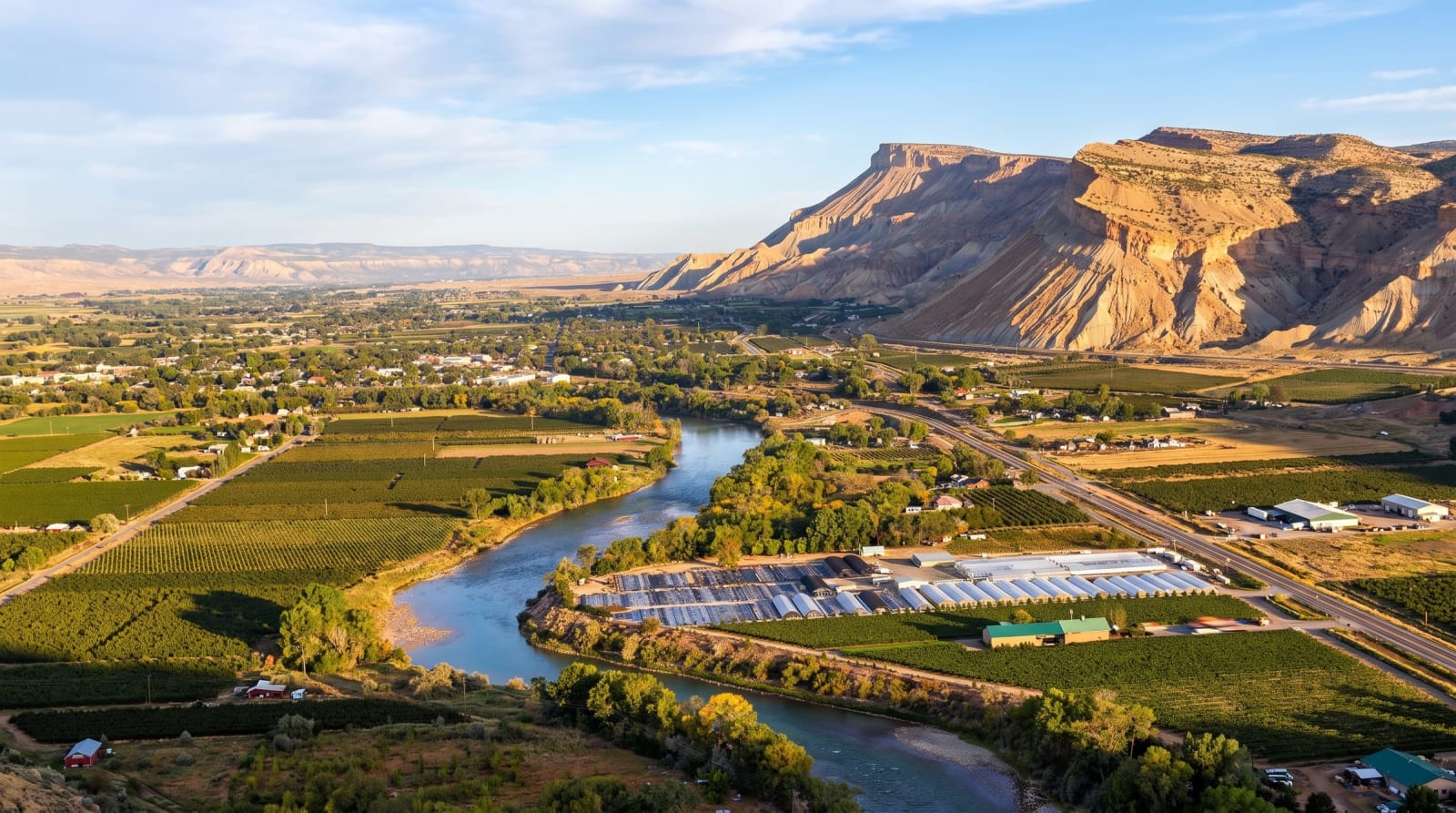
High-desert wine country at the foot of Colorado National Monument — see why retirees are choosing Grand Junction and the Western Slope
About Western Slope / Grand Junction
Grand Junction is the largest city west of the Rockies in Colorado — a regional hub of about 65,000 people sitting at 4,586 feet on the high desert. Its sphere stretches south and east through Delta and Montrose counties, encompassing farming towns, orchards, vineyards, and red-rock mesas pressed up against the Uncompahgre Plateau and the Colorado National Monument. This is Colorado's high desert: crisp mornings, clear skies, and four real seasons — without the heavy snow that defines Denver or the mountain resort towns. For retirees weighing whether Grand Junction is a good place to retire, the Western Slope hits a rare middle ground — Colorado's tax climate and lifestyle without Front Range prices or mountain-town extremes.
Read moreShow less
With roughly 250 sunny days a year and relatively mild winters, the area is built for active outdoor living. Colorado National Monument sits on the city's western doorstep, with Rim Rock Drive, Independence Monument, and 43 miles of canyon trails. Grand Mesa — the largest flat-topped mountain in the world — climbs east of town for fishing, hiking, and skiing at Powderhorn Resort about 45 minutes away. The Black Canyon of the Gunnison is roughly 90 minutes south. Mountain biking is a culture here: Lunch Loops near Fruita, the Kokopelli Trail, and dozens of canyon networks attract enthusiasts from around the country. Ski weekends to Telluride or Aspen are 2 to 2.5 hours away when residents want bigger mountains.
The region is also Colorado's wine country. Palisade peaches and the surrounding vineyards produce more than 80% of the state's wine, and the wine-tourism scene has matured into tasting rooms, farm-to-table restaurants, and weekend festivals across the valley. Downtown Grand Junction has revitalized into a walkable arts district with galleries, breweries, and a strong farmers market scene. Colorado Mesa University adds cultural and educational presence — lectures, theater, athletics, and continuing-education programs. On cost of living, Grand Junction now runs close to the national average overall — housing spiked post-COVID with median home prices around $425K–$450K — but property taxes in Mesa County remain among the lower in the state at roughly 0.47–0.55% effective, and Colorado's retiree tax treatment does a lot of the heavy lifting on annual budgets.
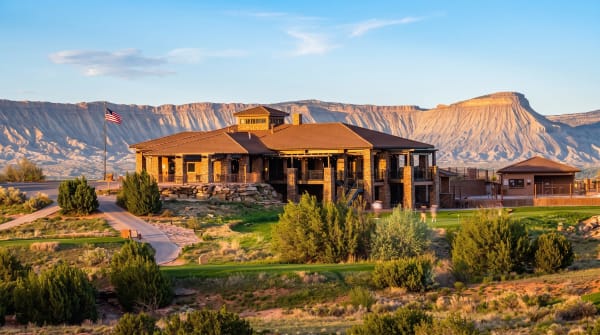
Healthcare is anchored by St. Mary's Medical Center — a regional 200+ bed hospital — supported by Community Hospital and Family Health West in Fruita. Specialty care occasionally requires a trip to Denver, but Grand Junction Regional Airport (GJT) makes that easy with direct flights to Denver, Phoenix, Dallas, and Las Vegas. The 55+ market is smaller than the Front Range but growing: Redlands Mesa, Tiara Rado, and a handful of newer master-planned developments anchor the active-adult presence, with custom-home and patio-home options across the valley for buyers who want low-maintenance Colorado living without the Front Range price tag.
Western Slope / Grand Junction's cities, ranked for retirees
how we rank →From our Best Places rankings of every U.S. retirement city — cost of living modeled for a typical buyer, weather from 20 years of hourly data.
| City | US rank | Cost of living | Weather | 55+ residents |
|---|---|---|---|---|
| Grand Junction | #36 | $3,616/mo | #267 of 858 | 33% |
Re-rank these around your own budget and ideal temps on the Colorado rankings or across the entire US.
Browse 1 55+ communities in Western Slope / Grand Junction
Open in browser →Click any community for a quick preview, or open the full page.
Pros of retiring here
- 250+ sunny days a year
- High-desert four-season climate without heavy mountain snow
- Colorado wine country — Palisade peaches, 80%+ of state's wine
- World-class outdoor recreation — Colorado National Monument, Grand Mesa, Black Canyon, Lunch Loops
- Cost of living well below Denver and Colorado Springs
- Commercial airport (GJT) with direct flights to Denver, Phoenix, Dallas, Vegas
- Strong regional healthcare anchored by St. Mary's Medical Center
- Dramatic red-rock and canyon scenery
- Ski access — Powderhorn 45 min, Telluride and Aspen 2 hr
- Walkable, revitalized downtown Grand Junction
- Growing wine, food, and arts scene
- Far less traffic and congestion than Denver or Colorado Springs
- Lower property taxes (~0.47–0.55% effective in Mesa County)
- Colorado Mesa University adds cultural and educational depth
- Social Security fully exempt from Colorado state income tax at 65+
- Up to $24,000 pension/annuity subtraction at 65+
- No state estate or inheritance tax
Things to consider
- Smaller 55+ market than Denver suburbs or Colorado Springs
- Hot summer days in the 90s–low 100s (low humidity helps)
- Wildfire and smoke season in late summer–early fall
- Drought and water-availability concerns over the long term
- Wind during spring and fall shoulder seasons
- Limited direct flight options vs. major hubs
- Long drives (4+ hr) to Denver for specialty medical care
- Fewer big-box and specialty retail options than larger metros
- Car-dependent — limited public transit
- Home prices have spiked post-COVID — no longer meaningfully below national average
- Colorado is now the 4th most expensive state for homeowners insurance
- Home appreciation and resale liquidity lower than Front Range markets
Cost of Living
Grand Junction's cost of living now runs roughly at or slightly above the national average — a meaningful shift from a decade ago, driven by a post-COVID housing spike. Recent indices place the overall COL anywhere from about 6% below to 9% above the national baseline depending on the source (BestPlaces, PayScale, RentCafe, Relocation Genius). Median home prices in Grand Junction have settled in the $425K–$450K range as of late 2025 / early 2026 — about 15–25% below Denver metro and roughly in line with Colorado Springs, but no longer the bargain the Western Slope used to be.
Housing is the biggest variable: single-family home prices run near or slightly above the national median, while condos remain relatively affordable (~$185K–$200K). Utilities run about 8% below the national average — dry desert air keeps cooling costs down. Groceries and transportation hover within a few percent of the national average. Healthcare services run modestly above average locally, and specialty travel to Denver can add cost.
Retiree Specific Colorado state income tax is a flat 4.4% for 2025 (a temporary 4.25% rate applied for 2024 under TABOR refunds) Social Security is fully exempt from Colorado state income tax for filers 65 and older; ages 55–64 receive a partial exemption Colorado allows a pension and annuity subtraction of up to $24,000 per person 65+ ($20,000 for 55–64), covering PERA, IRA, 401(k), and other qualified retirement income With the SS exemption and pension subtraction stacked, many Grand Junction retirees pay near-zero Colorado state income tax No Colorado estate or inheritance tax Mesa County effective property tax rate is roughly 0.47–0.55% — among the lower county rates in Colorado (state average ~0.50%), and well below the U.S. median of ~1.02% Colorado's Senior Property Tax Exemption removes 50% of the first $200,000 of assessed value for owners 65+ who have owned and lived in the home 10+ consecutive years Combined sales tax in Mesa County is around 7.65% (2.9% state + local)
Additional Considerations Homeowners insurance is a real headwind: Colorado is now the 4th most expensive state in the nation for homeowners insurance, averaging around $5,984/year. Wildfire risk in some pockets can add further premium Water rates can be higher than the eastern slope; drought-aware landscaping is the norm Utility costs are very reasonable overall, especially compared to mountain ski-town markets HOA and metro-district fees in newer developments can add $50–$300+/month — always check the district's mill levy on top of the base county rate
Other 55+ regions in Colorado
Where is Western Slope / Grand Junction?
- Cities:
- Grand Junction, Fruita, Palisade, Clifton, Orchard Mesa, Redlands, Delta, Montrose, Cedaredge, Paonia, Hotchkiss, Olathe, Crawford, Ridgway, Ouray
- Counties:
- Mesa County, Delta County, Montrose County, Ouray County
- ZIP codes:
- 81501, 81502, 81503, 81504, 81505, 81506, 81507, 81520, 81521, 81525, 81526, 81416, 81401, 81403, 81413, 81428, 81419, 81425, 81415, 81432, 81427
55+ communities in Western Slope / Grand Junction: common questions
How many 55+ communities are in Western Slope / Grand Junction?
There is 1 active adult and 55+ community in Western Slope / Grand Junction featured on Explore55Plus, with real photos, pricing, amenities, and resident insights for each.
How much do homes in 55+ communities in Western Slope / Grand Junction cost?
Homes in retirement and active adult communities in Western Slope / Grand Junction range from $550K to $1M, depending on the community, home type, and whether it's a new build or resale.
Are there new-construction 55+ communities in Western Slope / Grand Junction?
Yes — 1 of the 1 communities in Western Slope / Grand Junction has new-construction homes available, alongside resale options in established neighborhoods.