
55+ Communities in Tulsa Metro
Oklahoma
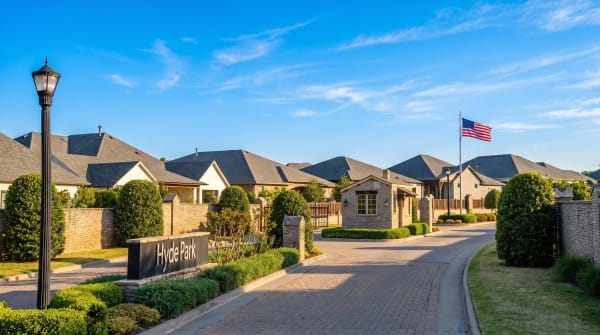
Explore 1 active adult and retirement community in Tulsa Metro, Oklahoma — with real photos, pricing, amenities, and resident insights for each.
Green Country hub on the Arkansas River — Discover why retirees are choosing Tulsa Metro for low taxes, real seasons, and easy Midwest living
About Tulsa Metro
Tulsa Metro is Oklahoma's northeastern anchor — a seven-county region of just over 1 million people centered on the city of Tulsa along the Arkansas River, with a ring of well-established suburbs (Broken Arrow, Owasso, Bixby, Jenks, Sand Springs, Sapulpa) that most retirees end up choosing between. Locals call it Green Country for a reason: rolling, wooded terrain sits at the edge of the Ozarks rather than the flat plains most people picture when they hear "Oklahoma," and the metro is threaded with lakes, rivers, and state parks that reward an active outdoor retirement.
Read moreShow less
The financial case is the headline. Oklahoma fully exempts Social Security from state income tax, plus a per-person exclusion on other retirement income and full exemptions for military and federal Civil Service pensions — and the state has no estate or inheritance tax. Property taxes are among the lowest in the country: the statewide median is about $1,672 a year against a national median above $3,200, and seniors 65+ who meet income limits can freeze their home's assessed value. Housing itself is the other big lever — Tulsa's median sale price runs in the $250K range, roughly a third below the national average, which means retirees relocating from the coasts or the Sun Belt can often downsize into a newer home outright and bank the difference.
Healthcare is deeper than most metros this size. Saint Francis Health System anchors the region with its 1,100-bed flagship on South Yale (U.S. News' top-ranked hospital in Oklahoma) and satellite hospitals in South Tulsa, Broken Arrow, Muskogee, and Glenpool; Ascension St. John Medical Center in midtown and its Broken Arrow and Owasso campuses give the metro a second full network; Hillcrest and OSU Medical Center round it out. Tulsa International Airport keeps family visits reasonable, and the metro's grid of highways makes the drive to Dallas (about four hours) or Kansas City straightforward. The retirement-community landscape is mature — Aberdeen Heights, University Village, Town Village, Baptist Village of Broken Arrow, Covenant Living of Bixby, and Saint Simeon's are among the established names, concentrated in South Tulsa and the Broken Arrow / Bixby / Jenks corridor.
The trade-off is weather that has real teeth. Summers are hot and humid with stretches in the 90s, winters are mild but bring occasional ice storms, and the metro sits squarely inside Tornado Alley — thunderstorm and tornado awareness is a genuine part of life here, not a rare event. For a retiree who wants four real seasons, a mid-sized city with a legitimate arts and food scene (the Philbrook, Gilcrease, Gathering Place riverfront park, and Tulsa's stake as the "Capital of Route 66"), and dollars that stretch dramatically further than they would in Florida, Arizona, or the Carolinas, Tulsa Metro is one of the most underrated retirement values in the country.
Tulsa Metro's cities, ranked for retirees
how we rank →From our Best Places rankings of every U.S. retirement city — cost of living modeled for a typical buyer, weather from 20 years of hourly data.
| City | US rank | Cost of living | Weather | 55+ residents |
|---|---|---|---|---|
| Moore | #89 | $3,185/mo | #327 of 858 | 23% |
| Norman | #93 | $3,274/mo | #336 of 858 | 25% |
| Broken Arrow | #123 | $3,131/mo | #437 of 858 | 28% |
| Edmond | #127 | $3,408/mo | #344 of 858 | 28% |
| Oklahoma City | #152 | $3,241/mo | #334 of 858 | 24% |
| Tulsa | #263 | $3,052/mo | #434 of 858 | 26% |
| Lawton | #467 | $2,780/mo | #294 of 858 | 23% |
Re-rank these around your own budget and ideal temps on the Oklahoma rankings or across the entire US.
Browse 1 55+ communities in Tulsa Metro
Open in browser →Click any community for a quick preview, or open the full page.
Pros of retiring here
- No state tax on Social Security
- Military and federal CSRS pensions fully exempt
- Low property taxes — statewide median around $1,672/year
- Senior valuation freeze for qualifying homeowners 65+
- No state estate or inheritance tax
- Median home price roughly a third below the national average
- Cost of living 7–15% below national average
- Saint Francis, Ascension St. John, and Hillcrest anchor deep healthcare options
- Tulsa International Airport (TUL) for direct family travel
- Green Country landscape — lakes, rivers, and the Ozark foothills
- Four real seasons without punishing northern winters
- Strong 55+ and CCRC community options in South Tulsa, Broken Arrow, Bixby, Jenks
- Philbrook, Gilcrease, Gathering Place, and "Capital of Route 66" cultural anchors
- Dallas and Kansas City reachable by car for weekend trips
Things to consider
- Tornado Alley — the metro is a high-risk area for tornadoes
- Severe thunderstorms and occasional damaging hail through spring and summer
- Occasional winter ice storms that snarl travel
- Hot, humid summers with stretches in the 90s
- High combined sales tax — state 4.5% plus local can push totals near 9–11%
- Retirement income beyond Social Security is only partially exempt ($10,000 per person)
- No direct ocean or mountain access — you're driving to reach either
- Smaller nonstop flight network than a Dallas or Denver hub
- Groceries and clothing are taxed at the full sales-tax rate
Cost of Living
Tulsa Metro lands roughly 7% to 17% below the national average overall, depending on which index you use (Council for Community and Economic Research puts Tulsa at about 7% below national; Redfin and RentCafe put it closer to 17% below). Either way, it's one of the more affordable mid-sized metros in the country, and the gap widens further for homeowners.
Housing is the biggest lever. The median sale price of a home in the city of Tulsa was around $252,000 as of late 2025 — well below the roughly $360,000 national median home value — and category indexes put housing anywhere from 14% to 36% below the national average. Utilities run about 1–2% below national, groceries 2–5% below, transportation 12–17% below, and healthcare tracks within a couple of points of the U.S. average (slightly cheaper on some indexes, marginally higher on others). A typical Tulsa energy bill runs around $213/month.
Retiree Specific: Oklahoma fully exempts Social Security benefits from state income tax at any income level. Beyond Social Security, the state allows a $10,000 per-person exclusion on qualifying retirement income (pensions, 401(k), traditional IRA distributions) — income above that is taxed at Oklahoma's graduated rates topping out at 4.75%. Military retirement pay and federal Civil Service (CSRS) benefits are fully exempt; FERS is not. There is no state estate tax and no inheritance tax.
Property taxes are among the lowest in the country. The statewide effective rate is roughly 0.75%, and the median annual property tax bill is about $1,672 — roughly half the national median. Homeowners 65 and older who meet income limits (household income no more than $89,500 for tax year 2025) can apply for the senior valuation freeze, which locks in the home's assessed value against future increases; lower-income seniors can also qualify for an additional $2,000 homestead-style exemption by filing Form 994 with the county assessor.
Sales tax is where the tax story tightens. Oklahoma's state sales tax is 4.5%, but county and city add-ons push the combined rate to roughly 8–9% in most of the metro and up to 11% in some jurisdictions — one of the higher combined rates in the country. Prescription drugs are exempt, but groceries and clothing are not, which affects a fixed-income budget more than headline income-tax rates do.
Additional Considerations: Tulsa's insurance market is meaningfully shaped by tornado, hail, and severe-storm exposure — homeowners' premiums and deductibles for wind/hail are notably higher than in a lower-hazard state, and many retirees factor in the cost of a storm shelter or safe room. HOA fees in the newer master-planned communities in Bixby, Jenks, and South Broken Arrow tend to be modest by national standards but should be verified per community. Vehicle registration includes a 3.25% excise tax on new titles.
Where is Tulsa Metro?
- Cities:
- Tulsa, Broken Arrow, Owasso, Bixby, Jenks, Sand Springs, Sapulpa, Claremore, Glenpool, Collinsville, Skiatook, Catoosa, Coweta, Wagoner
- Counties:
- Tulsa, Rogers, Wagoner, Creek, Osage, Okmulgee, Pawnee
- ZIP codes:
- 74008, 74011, 74012, 74013, 74014, 74015, 74017, 74019, 74021, 74033, 74037, 74055, 74063, 74066, 74070, 74073, 74103, 74104, 74105, 74106, 74107, 74108, 74110, 74112, 74114, 74115, 74116, 74117, 74119, 74120, 74126, 74127, 74128, 74129, 74130, 74131, 74132, 74133, 74134, 74135, 74136, 74137, 74145, 74146, 74403, 74429, 74447, 74467
55+ communities in Tulsa Metro: common questions
How many 55+ communities are in Tulsa Metro?
There is 1 active adult and 55+ community in Tulsa Metro featured on Explore55Plus, with real photos, pricing, amenities, and resident insights for each.
How much do homes in 55+ communities in Tulsa Metro cost?
Homes in retirement and active adult communities in Tulsa Metro range from $400K to $900K, depending on the community, home type, and whether it's a new build or resale.
Are 55+ communities in Tulsa Metro age-restricted?
Yes — the 55+ communities in Tulsa Metro featured here are age-restricted, generally requiring at least one resident to be 55 or older.
Are there new-construction 55+ communities in Tulsa Metro?
Yes — 1 of the 1 communities in Tulsa Metro has new-construction homes available, alongside resale options in established neighborhoods.