
The Best Places to Retire in Pennsylvania
16 cities ranked · 77 communities across 6 regions
Every Pennsylvania retirement city, scored on 20 years of hourly weather, an itemized cost of living, and a happiness index built from federal data — then re-ranked live around your budget and ideal temperatures. When a city clicks, explore the 55+ communities inside it.
Pennsylvania's cities, ranked for retirees
Updated August 25, 2026 · how we rank →
16 cities across Pennsylvania · ranked for a typical buyer · 1 demoted over your $375k home budget
Found a place you like?
Create a free account to explore the 55+ communities inside these cities — photos, pricing, amenities, and a matching quiz.
Retiring in Pennsylvania
Pennsylvania is one of the most tax-friendly states in the country for retirees, and that fact alone puts it on the shortlist for anyone weighing whether to stay in the Northeast or head for Florida. Social Security, pension income (once you meet your plan's retirement age), and 401(k) and IRA withdrawals are all fully exempt from Pennsylvania's flat 3.07% state income tax. A retiree living on Social Security plus retirement-account draws can genuinely owe $0 in state income tax, the kind of math that makes people rethink a Sun Belt move.
Read moreShow less
The state is also a study in trade-offs. Property taxes run above the national average (roughly 1.26% effective statewide, and higher in eastern counties like Delaware, York, and Berks), and Pennsylvania is one of the few states left with a true inheritance tax: 4.5% to children, 12% to siblings, 15% to non-relatives. Winters are real, cold, snowy, and expensive to heat, more so in the western half and the mountains than in the southeast. The upside is a housing market still meaningfully cheaper than the national median, world-class healthcare in both Philadelphia and Pittsburgh, and enough regional variety that most retirees can find a version of Pennsylvania that fits.
The state's retirement geography breaks into a handful of regions with distinct personalities. The Philadelphia Suburbs and Bucks County offer historic small towns, Main Line polish, and quick access to Penn Medicine and Jefferson, at the state's highest housing prices. Lancaster, York, and Harrisburg are the affordability-plus-amenities sweet spot; U.S. News has ranked all three among the top ten places to retire in the country, and Lancaster General and Penn State Hershey anchor the healthcare. The Lehigh Valley (Allentown, Bethlehem, Easton) is a Forbes retirement pick with strong hospitals and easy runs to both Philadelphia and New York. Pittsburgh retirees get UPMC and AHN, one of the country's deeper big-city healthcare markets, at Midwest-like home prices. The Poconos and Northeast PA deliver lakes, mountains, and lower entry prices, with harder winters as the price of admission.
Pennsylvania makes sense if the tax exemption on retirement income matters more to you than year-round warmth, and if you want to stay within a day's drive of adult children in the Northeast corridor. It's a harder sell if you dread shoveling or if a large estate passing to nieces, nephews, or unmarried partners will take a 15% inheritance-tax hit.
Explore Pennsylvania by region
Dive into 55+ communities by region — each guide covers local amenities, pricing, and what makes the area a fit for retirees.
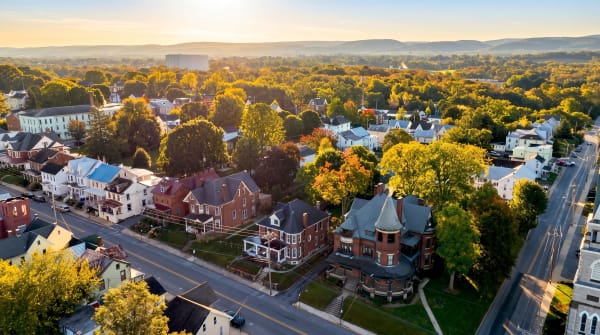
Bucks County
11 communities
Philadelphia's countryside — historic river towns, museum-lined main streets & tax-friendly PA — See why retirees choose Bucks County
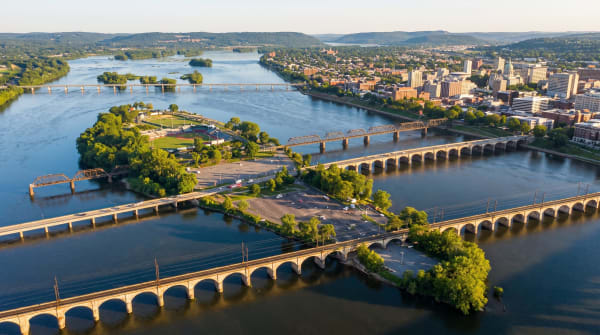
Lancaster / York / Harrisburg
22 communities
Pennsylvania Dutch Country & the state capital region — See why retirees are choosing Lancaster, York and Harrisburg
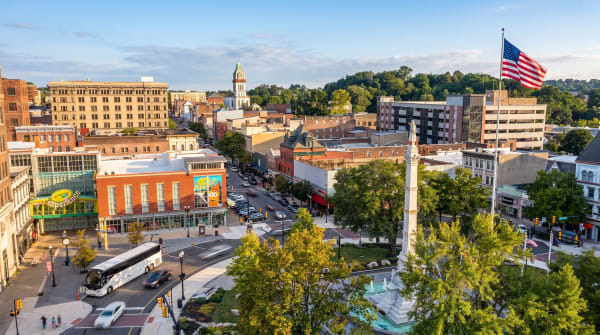
Lehigh Valley
9 communities
Four-season Pennsylvania living with world-class healthcare, no tax on retirement income & NYC/Philly at arm's length — See why retirees are choosing the Lehigh Valley
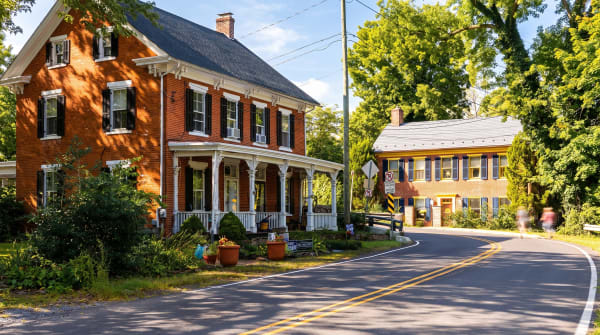
Philadelphia Suburbs
31 communities
Historic Main Line charm, world-class hospitals & PA's retiree-friendly tax code — See why retirees are choosing the Philadelphia Suburbs

Pittsburgh Area
4 communities
Three-river city of bridges with world-class UPMC healthcare & PA's retiree tax breaks — See why retirees are choosing the Pittsburgh Area
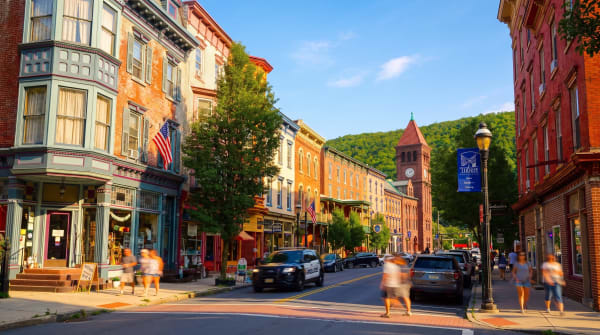
Poconos / Northeast PA
1 community
Four-season mountain living with no state tax on retirement income — See why retirees are choosing the Poconos & Northeast PA
Taxes for retirees in Pennsylvania
Pennsylvania is one of the most retiree-friendly income tax states in the country, which is the single biggest reason it keeps landing on best-places-to-retire lists. The state has a flat 3.07% income tax, the lowest flat rate in the U.S., but virtually all common retirement income is exempt from it. Social Security is 100% exempt at the state level regardless of how much you receive. Pension income is exempt once you meet your plan's age or service requirements, typically age 60. Distributions from 401(k), 403(b), and traditional and Roth IRA accounts taken after you meet your plan's retirement age are also tax-free at the state level, with no dollar cap on the exemption. A retiree living on Social Security, a pension, and 401(k)/IRA withdrawals can realistically owe $0 in Pennsylvania income tax, which is why pennsylvania taxes for retirees look so attractive on paper.
The 3.07% still applies to things retirees sometimes have: wages from part-time work, interest, dividends, capital gains from a taxable brokerage account, and rental income. Early withdrawals taken before you meet your plan's retirement conditions can be taxed as compensation, so timing matters. Sales tax is 6% statewide (7% in Allegheny County, 8% in Philadelphia), but the exemption list is unusually broad. Groceries, most everyday clothing and footwear, prescription drugs, and residential heating fuel are all tax-free, which meaningfully lowers the effective sales-tax burden compared to states that tax those categories.
Two catches to know. First, property taxes: Pennsylvania's effective rate runs around 1.26% of home value statewide, ranking roughly 12th to 14th in the country, and it's higher in the eastern counties (Delaware County around 1.72%, York and Berks near 1.48%) than in the west. The state's Property Tax/Rent Rebate program softens the blow for lower-income seniors: up to $1,000 back for homeowners and renters age 65 and older (or widowed 50 and older) with household income at or below $46,520 for the 2025 program year, and half of Social Security is excluded from the income test. Second, and this is the field-tilter for estate planning: Pennsylvania has no state estate tax, but it does levy an inheritance tax based on the heir's relationship to the deceased: 0% to a surviving spouse or minor child, 4.5% to lineal descendants, 12% to siblings, and 15% to everyone else including nieces, nephews, and unmarried partners. Life insurance paid to a named beneficiary is exempt. If your estate plan involves leaving assets to non-spouse, non-child heirs, that 12 to 15% is a real number to plan around.
Pennsylvania climate & weather
Pennsylvania has a four-season humid continental climate with hot, humid summers and genuinely cold, snowy winters, and meaningful variation from one end of the state to the other. Statewide average snowfall is about 37 inches, but that number hides a huge range. The southeastern corner around Philadelphia sees closer to 20 inches in a typical winter and has a humid subtropical tilt with milder winters and longer growing seasons. The Allegheny Plateau, the ridges of the Laurel Highlands, and the Lake Erie shore can pick up 60 to over 100 inches, with lake-effect bands that occasionally dump two feet in a single event. Nor'easters coming off the Atlantic drive much of the snow in central and eastern PA; Great Lakes moisture drives the snow in the west.
Summers are warm and humid statewide, with July highs generally in the 80s and occasional stretches into the 90s in the southeast. Winter is where retirees make the real trade-off: January average highs around 38°F with lows near 20°F in the Philadelphia region, colder and snowier as you move west or into the mountains. Spring and fall are the payoffs, mild, colorful, and long enough that outdoor season stretches from April through October across most of the state. Weather hazards are modest compared to hurricane or wildfire states: winter storms, ice, and occasional flooding from spring snowmelt or heavy summer thunderstorms are the main things to plan for.
Cost of living in Pennsylvania
Pennsylvania's overall cost of living lands near the national average, cheaper than the Northeast corridor states around it, but not a bargain-basement Sun Belt alternative. The state's biggest affordability advantage is housing.
Read moreShow less
Housing. Pennsylvania's median home price sits in the $295,000 to $339,000 range depending on which tracker you use (Zillow around $294,000; Redfin about $339,000 as of mid-2026), well below the national median. Average rent runs roughly $1,490 to $1,530 for a typical apartment, meaningfully under the national average. Prices vary sharply within the state: Pittsburgh and its outer suburbs, most of central PA, and the Poconos are notably cheaper than Bucks County, the Philadelphia Main Line, and the Lehigh Valley, where competition with New Jersey and New York commuters keeps prices up.
Property taxes. This is the offset to the low home prices. Pennsylvania's effective property tax rate averages around 1.26% statewide, ranking around 12th to 14th nationally, with wide county variation. Delaware County (1.72%), York County (1.49%), and Berks County (1.48%) sit at the high end; Philadelphia County (0.83%), Somerset, and Mercer at the low end. On a $300,000 home, that's roughly $3,800 a year at the state average, more in the higher-tax eastern counties. Budget for it.
Everyday costs. Sales tax is 6% (7% in Allegheny County, 8% in Philadelphia), but groceries, most clothing, prescription drugs, and residential heating fuel are exempt, a real ongoing savings compared to states without those carve-outs. Utilities tend to run modestly above the national average, driven mostly by winter heating costs, which are higher in the northern and western parts of the state. Gasoline is a genuine sore spot: Pennsylvania's gas tax is 58.7 cents per gallon, among the highest in the country.
Retiree specifics. Once you're at retirement age, the state income tax exemption on Social Security, pensions, and 401(k)/IRA withdrawals is worth thousands of dollars a year versus most surrounding states. The Property Tax/Rent Rebate program returns up to $1,000 to homeowners and renters 65 and older with household income at or below $46,520 (indexed annually; half of Social Security is excluded from the income test), which offsets a meaningful chunk of the property-tax bill for lower-income retirees. Healthcare costs are broadly in line with national averages and buy access to one of the best hospital markets in the country.
Honest caveats. Property tax bills are set by school district and can vary enormously within a single county, so always check the millage for the specific municipality before you buy. Home insurance is relatively affordable statewide compared to the coastal Southeast, but flood risk in the Susquehanna and Delaware River valleys is real and can require separate NFIP coverage. Pennsylvania's inheritance tax means a large estate passing to non-spouse, non-child beneficiaries can lose 12 to 15% at death, a factor to build into estate planning and not just cost-of-living math.
Pros of retiring in Pennsylvania
- No state tax on Social Security, pensions, or 401(k)/IRA withdrawals once you reach retirement age, one of the most retiree-friendly income tax structures in the country
- Flat 3.07% income tax is the lowest flat rate in the U.S. and only touches non-retirement income like wages, interest, and capital gains
- Median home prices meaningfully below the national average, especially in Pittsburgh, central PA, and the Poconos
- Groceries, most clothing, prescription drugs, and residential heating fuel are exempt from the 6% state sales tax
- Property Tax/Rent Rebate program returns up to $1,000 to homeowners and renters 65 and older with income up to $46,520, with half of Social Security excluded from the income test
- World-class healthcare on both sides of the state: Penn Medicine (Hospital of the University of Pennsylvania is on the U.S. News Honor Roll), Jefferson Health, and CHOP in the east; UPMC Presbyterian Shadyside and Allegheny Health Network in the west; Penn State Hershey and Lancaster General in the middle
- No state estate tax, and a surviving spouse pays 0% inheritance tax
- U.S. News has ranked multiple PA metros (Lancaster, Harrisburg, York, Allentown, Reading) among the top ten places to retire in the country
- Strong four-season climate with genuine spring and fall, and a summer that isn't Florida-hot
- Amtrak's Keystone and Pennsylvanian lines connect Harrisburg, Lancaster, Philadelphia, Pittsburgh, and New York for car-free travel
- Within a day's drive of the Jersey Shore, New York City, Washington D.C., and the Finger Lakes
- Deep 55+ community inventory, especially in Bucks County, Lancaster, and the Philadelphia suburbs
- Six distinct retirement regions (Bucks, Lancaster/York/Harrisburg, Lehigh Valley, Philadelphia Suburbs, Pittsburgh, Poconos) with very different price points and personalities
Things to consider
- Pennsylvania is one of only a handful of states that still levies an inheritance tax: 4.5% to children and grandchildren, 12% to siblings, 15% to non-relatives including nieces, nephews, and unmarried partners
- Property taxes are above the national average (roughly 1.26% effective statewide, ranking around 12th to 14th) and much higher in some eastern counties (Delaware County around 1.72%, York and Berks around 1.48%)
- Cold, snowy winters: 20 inches of snow in Philadelphia, 60 to 100-plus inches in Erie and the mountains, plus real heating bills
- No statewide senior property-tax freeze; the state Constitution's uniformity clause has been read to prohibit one, so relief comes through the rebate program rather than an assessment cap
- Gas tax of 58.7 cents per gallon is among the highest in the country
- Property-tax bills vary dramatically by school district, so cheap Pennsylvania and expensive Pennsylvania can be five miles apart
- Overall state-and-local tax burden ranks in the top five nationally when income, sales, property, and gas taxes are combined
- Summer humidity is real, especially in the southeast
- Slower population growth than Sun Belt retirement destinations
- Retirement-account withdrawals taken before you meet your plan's retirement age can be taxable at the state level, so early-retiree timing matters
Notable places in Pennsylvania
Airports, attractions, parks, and destinations retirees ask about across the state.
Park / Nature
21.5-acre Lansdale park of natural woodlands and wetlands with a 1-acre pond and fountain, nature trail, labyrinth, gazebo, and playground. The pond is a favorite for family fishing.
Park / Nature
Fenced off-leash dog park with separate small-dog area, shade trees, benches, waste stations, and water fountains for dogs and humans. Free and open dawn to dusk.
Park / Nature
Hatfield Township's flagship community park with paved walking paths, playgrounds, sports fields, and pavilions. An accessible place for daily walks, picnics, and community events, located along N. Chestnut Street.
55+ communities in Pennsylvania: common questions
How many 55+ communities are in Pennsylvania?
There are 77 active adult and 55+ communities in Pennsylvania featured on Explore55Plus, with real photos, pricing, amenities, and resident insights for each.
How much do homes in 55+ communities in Pennsylvania cost?
Homes in retirement and active adult communities in Pennsylvania range from $100K to $1M, depending on the community, home type, and whether it's a new build or resale.
Are all 55+ communities in Pennsylvania age-restricted?
No. Of the 77 communities in Pennsylvania, 72 are age-restricted (typically one resident 55+) and 5 are open to all ages — so you can choose either an age-restricted or an all-ages active adult community.
Are there new-construction 55+ communities in Pennsylvania?
Yes — 27 of the 77 communities in Pennsylvania have new-construction homes available, alongside resale options in established neighborhoods.