
The Best Places to Retire in New York
26 cities ranked · 28 communities across 2 regions
Every New York retirement city, scored on 20 years of hourly weather, an itemized cost of living, and a happiness index built from federal data — then re-ranked live around your budget and ideal temperatures. When a city clicks, explore the 55+ communities inside it.
New York's cities, ranked for retirees
Updated August 25, 2026 · how we rank →
26 cities across New York · ranked for a typical buyer · 11 demoted over your $375k home budget
Found a place you like?
Create a free account to explore the 55+ communities inside these cities — photos, pricing, amenities, and a matching quiz.
Retiring in New York
New York is one of the most misunderstood retirement states in the country. The reputation is high taxes and cold winters, and both are partly true, but the state quietly gives retirees three separate income-tax breaks that can leave a Social Security-plus-government-pension household paying almost nothing in state income tax. What you're really choosing in New York is not a tax posture but a geography: the state contains at least half a dozen distinct retirement worlds, and the right answer depends entirely on which one fits.
Read moreShow less
The two regions this site covers are the natural starting points for anyone researching retirement communities in New York. The Hudson Valley and Upstate NY covers everything from Westchester up through the historic river towns of Rhinebeck, Hudson, and Cold Spring, past the Catskills to Saratoga Springs, the Finger Lakes college towns of Ithaca and Geneva, and out to Buffalo and Rochester. That's where retirees find walkable downtowns, four-season beauty, famous fall foliage, and, outside a few premium markets like Saratoga, housing that's genuinely affordable by Northeast standards. The New York Metro and Long Island region is the opposite bet: high cost, extraordinary healthcare and cultural density, and the option to age in place without ever driving. Long Island holds a large share of the state's 55+ communities; the Manhattan and outer-borough option centers on NORC programs and the Life Plan communities the city is increasingly known for.
The money story is simple to state and hard to internalize. New York does not tax Social Security. Government pensions, federal, military, New York State and local, are fully exempt at any age. Private retirement income (IRA, 401(k), corporate pension) gets a $20,000-per-person exclusion at 59½. Property taxes, though, rank among the highest in the country, the sales tax averages 8.54%, and the state estate tax carries a $7.16 million exemption with a notorious cliff that can consume the entire exemption if you exceed it by more than 5%. The climate is equally split: Long Island and NYC get modest snow and hot, sticky summers; the Hudson Valley gets classic four seasons; Upstate near the Great Lakes gets buried.
So is New York worth it? For retirees with a government pension who want real seasons, walkable towns, and top-tier medicine, it's an excellent choice, even if it means trading Sunbelt cheapness for depth of place. It's a poor fit if your retirement income is heavily IRA-based, your estate sits in the $7 to $15 million range, or you have no tolerance for winter. Start with the region, then the town. The tax math and lifestyle follow from there.
Explore New York by region
Dive into 55+ communities by region — each guide covers local amenities, pricing, and what makes the area a fit for retirees.
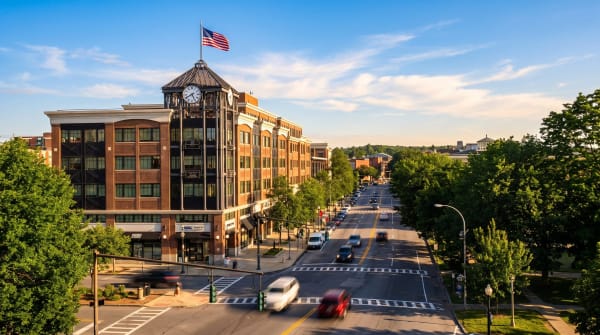
Hudson Valley / Upstate NY
20 communities
Hudson River scenery, four-season charm & a real Capital Region — See why retirees are choosing the Hudson Valley & Upstate NY
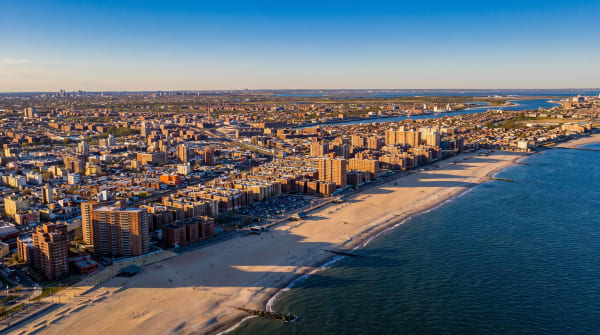
New York Metro / Long Island
8 communities
Nationally acclaimed beaches, world-class wineries, and top-tier hospitals just outside NYC — See why retirees are choosing New York Metro & Long Island
Taxes for retirees in New York
New York's tax picture for retirees is a paradox: the income-tax side is unexpectedly friendly, and everything else is not. Social Security benefits are fully exempt from state income tax, and pensions from New York State, local governments, the federal government, and the military are 100% exempt at any age with no dollar cap. Residents 59½ and older can also exclude up to $20,000 per person of private pension, IRA, and 401(k) income from state tax, so a married couple can shield roughly $40,000 of private retirement income before New York taxes a dime. A retiree living on Social Security plus a government pension often owes $0 in state income tax. Above the $20,000 private-income exclusion, graduated brackets run from 4% to 10.9%, and NYC residents pay an additional 3.078% to 3.876% city income tax on top.
The pain shows up in property, sales, and estate taxes. New York's effective property tax rate averages about 1.30% statewide, 11th-highest in the country, with median annual bills around $6,500 and rates that climb above 2% in Monroe, Erie, and much of Upstate. The combined state and local sales tax averages 8.54%, though clothing and footwear under $110 per item and unprepared groceries are exempt. New York is also one of only a dozen or so states with its own estate tax: the 2025 exemption is $7.16 million per person (rising to $7.35 million in 2026), and rates run from 3.06% to 16%. Watch the cliff: an estate that exceeds the exemption by more than 5% loses the entire exemption and is taxed from the first dollar. There is no separate inheritance tax.
Retirees do get relief programs. The Enhanced STAR exemption cuts school property taxes for homeowners 65 and older with combined incomes under about $107,300. The Senior Citizen Homeowners' Exemption (SCHE, Section 467) can reduce assessed value by up to 50% for low-income seniors 65 and older, and localities may now offer up to 65% under 2025 legislation signed by Governor Hochul. Enhanced STAR and the senior citizens exemption can be combined. The bottom line: if your retirement income is mostly Social Security and a government pension, New York can be a genuinely low-tax state. If it's IRA withdrawals and a large estate, it's one of the more expensive.
New York climate & weather
New York is a four-season, humid-continental state, and where you retire dictates how hard winter hits you. Downstate, meaning New York City, Long Island, and the Lower Hudson Valley, sees the warmest year-round temperatures and the least snow, typically under 25 inches annually, because the Atlantic moderates the cold and the interior mountains block lake-effect storms. Summers there are hot and sticky, with long stretches of high temperatures and dew points in the 80s and 90s. The Mid-Hudson Valley, Catskills, and Central New York sit in the middle: winter highs in the 30s, cold but not frigid nights, humid summers averaging 80 to 85°F, and reliable snow cover from mid-December through mid-March. Upstate near Lakes Erie and Ontario is a different climate entirely. Buffalo, Watertown, and the Tug Hill Plateau routinely see 100 to 150-plus inches of lake-effect snow each winter.
Precipitation averages around 40 inches statewide and is spread evenly across the year, which keeps the Hudson Valley and Finger Lakes green but also means gray, wet stretches in spring and fall. Fall is New York's showcase season: cool, dry, and famous for foliage from late September through October. Hazards are real but manageable. Nor'easters bring heavy coastal snow and flooding, ice storms are common in the interior, and remnants of tropical systems occasionally reach New York City and Long Island (Sandy in 2012, Ida in 2021). Wildfire and hurricane risk are low compared to the Sunbelt, but heating bills and winter maintenance are the trade-off.
Cost of living in New York
New York is expensive, but the range inside the state is enormous, and the choice of city matters more here than the choice of state. Statewide, the cost of living runs roughly 26 to 78% above the national average depending on the index used, driven almost entirely by housing. The median home value statewide is about $488,000 (Zillow, July 2025), making New York the 11th most expensive state for housing.
Read moreShow less
In New York City the median home value is around $745,000 to $752,000, more than double the national median, and the overall cost of living index sits at roughly 155 to 187 depending on borough. Manhattan runs about 139% above the national average. Long Island and Westchester carry similar premiums. Upstate is a completely different market: Buffalo, Rochester, Syracuse, and small cities like Ilion, Elmira, and Massena run at or below the national average, with median home prices in the $150,000 to $300,000 range. Saratoga Springs is a notable exception, a high-demand retirement town where the median home price now approaches $750,000. Ithaca sits around $470,000.
Property taxes: effective rates average 1.30% statewide, with median annual bills near $6,500. Nassau and Westchester counties post some of the highest dollar bills in the country, frequently $12,000 to $20,000 and up. Upstate counties like Monroe and St. Lawrence have the highest effective rates (2.3 to 2.4%), but on lower home values.
Utilities run about 15 to 16% above the national average. Cold winters mean real heating bills, especially Upstate. Groceries run 14 to 18% above the national average, healthcare services run 14% above, and gasoline carries a 24.18-cent-per-gallon state tax.
A retired couple on Social Security plus a government pension can live well Upstate on a modest budget once housing is secured, because New York's income-tax breaks neutralize the biggest recurring cost most retirees worry about. What eats budgets here is property tax, home heating, and, for anyone with an estate above about $7 million, the state estate tax cliff. If you're moving from New Jersey, Connecticut, or Massachusetts, Upstate New York can actually feel cheaper. Moving from Florida or the Carolinas, expect sticker shock.
Pros of retiring in New York
- Social Security fully exempt from state income tax
- All federal, military, and New York state/local government pensions 100% exempt with no cap
- $20,000 per-person exclusion on IRA, 401(k), and private pension income at age 59½ and older
- Enhanced STAR and Section 467 senior property-tax exemptions stack to meaningfully cut property tax bills
- World-class healthcare: Mount Sinai, NewYork-Presbyterian, NYU Langone, and Northwell Health rank among the nation's top hospitals for geriatric and specialty care
- Genuine four-season climate with famous fall foliage in the Hudson Valley, Catskills, and Adirondacks
- Extraordinary range of retirement lifestyles inside one state: Manhattan condo, Long Island beach town, Hudson Valley village, Finger Lakes college town, or Adirondack lakeside
- Rich cultural infrastructure: SPAC in Saratoga, the Metropolitan Museum, Broadway, Cornell and Ithaca lectures open to the public, and countless historic downtowns
- Walkable small cities, including Saratoga Springs, Ithaca, Rhinebeck, and Cooperstown, with real downtowns and solid senior services
- Extensive public transit (Metro-North, LIRR, NYC subway, Amtrak on the Hudson) makes aging without driving genuinely possible
- Abundant outdoor recreation: Adirondack and Catskill state parks, Finger Lakes wineries, Long Island beaches, Hudson River trails
- Strong Naturally Occurring Retirement Communities (NORC) programs in NYC and county Offices for the Aging provide real services for aging in place
- Upstate housing remains genuinely affordable, with median home prices in Buffalo, Rochester, and small cities well below the national median
- Proximity to family for retirees whose adult children live in the Northeast corridor
Things to consider
- Overall cost of living runs 26 to 78% above the national average, with NYC pushing well past that
- Property taxes rank among the highest in the country: median bill around $6,500, with Nassau, Westchester, and parts of Long Island frequently topping $15,000 to $20,000
- State income tax brackets top out at 10.9%, and NYC adds another 3.078% to 3.876% on residents
- State estate tax with a $7.16 million exemption (2025) and a punishing cliff: exceed the exemption by more than 5% and the entire estate becomes taxable from dollar one
- Upstate winters are long, gray, and snowy. Buffalo and the Tug Hill Plateau can see 100 to 150-plus inches of lake-effect snow
- Home heating costs are substantial; utilities run 15 to 16% above the national average
- Sales tax averages 8.54% statewide and 8.875% in NYC
- Housing supply in desirable retirement towns like Saratoga Springs is tight and prices are climbing
- Out-migration of working-age residents has left some Upstate communities with thinning services and shrinking tax bases
- Many 55+ communities are concentrated on Long Island, where property taxes and HOA fees add up quickly
Videos & guides about 55+ living in New York
Tours, comparisons, and insights on retirement and active adult communities across New York.

55+ communities in New York: common questions
How many 55+ communities are in New York?
There are 28 active adult and 55+ communities in New York featured on Explore55Plus, with real photos, pricing, amenities, and resident insights for each.
How much do homes in 55+ communities in New York cost?
Homes in retirement and active adult communities in New York range from $100K to $1M, depending on the community, home type, and whether it's a new build or resale.
Are all 55+ communities in New York age-restricted?
No. Of the 28 communities in New York, 26 are age-restricted (typically one resident 55+) and 2 are open to all ages — so you can choose either an age-restricted or an all-ages active adult community.
Are there new-construction 55+ communities in New York?
Yes — 3 of the 28 communities in New York have new-construction homes available, alongside resale options in established neighborhoods.