
The Best Places to Retire in Delaware
2 cities ranked · 33 communities across 2 regions
Every Delaware retirement city, scored on 20 years of hourly weather, an itemized cost of living, and a happiness index built from federal data — then re-ranked live around your budget and ideal temperatures. When a city clicks, explore the 55+ communities inside it.
Delaware's cities, ranked for retirees
Updated August 25, 2026 · how we rank →
2 cities across Delaware · ranked for a typical buyer
Found a place you like?
Create a free account to explore the 55+ communities inside these cities — photos, pricing, amenities, and a matching quiz.
Retiring in Delaware
Delaware is the quiet answer to a question a lot of East Coast retirees are actually asking: how do I get milder winters, low taxes, and a beach without moving 1,200 miles to Florida? The First State packs a genuine coastal retirement scene into a two-hour drive from Philadelphia, Baltimore, and Washington. Close enough to keep the grandkids visiting, far enough for Sussex County to feel like a different pace of life entirely.
Read moreShow less
Two regions are worth knowing by name. Northern Delaware runs from Wilmington south through Newark and Middletown. It sits closer to major hospitals like ChristianaCare (the state's only Level I trauma center), the Amtrak Northeast Corridor, and Philadelphia's airport, with a suburban feel and easy city access. Southern Delaware and the beaches (Sussex County) is where the retiree migration has concentrated: Lewes, Rehoboth Beach, Bethany, Millsboro, Milton, and dozens of retirement communities in Delaware like Independence, Heritage Shores, Four Seasons at Scenic Harbor, and Bay Crossing. Nearly 1 in 4 Delawareans is now 60 or older, and Sussex County alone is projected to have close to 77,000 residents age 65+.
The tax picture is the real draw. No sales tax at all. Social Security goes untaxed. A $12,500-per-person retirement income exclusion at 60+ shields pensions and IRA withdrawals. Property tax bills often stay under $1,500 a year even on homes worth $350,000+, thanks to a statewide effective rate near 0.54% and Sussex County closer to 0.31%. No estate tax, no inheritance tax. For a couple leaving New Jersey, New York, or Pennsylvania, the annual savings can be substantial.
The honest trade-offs: summers along the coast bring heavy tourist traffic and Route 1 gridlock, beach-town home prices have climbed sharply, coastal flood and wind insurance costs are real, and the Senior School Property Tax Credit requires 10 years of Delaware residency for anyone who moved in on or after January 1, 2018. For retirees who want four mild seasons, an actual ocean, small-town walkability, and one of the most retiree-friendly tax codes in the country, Delaware delivers.
Explore Delaware by region
Dive into 55+ communities by region — each guide covers local amenities, pricing, and what makes the area a fit for retirees.

Northern Delaware
10 communities
Chateau Country estates & Amtrak Northeast Corridor access with zero sales tax — See why retirees are choosing Northern Delaware
Southern Delaware / Beaches
23 communities
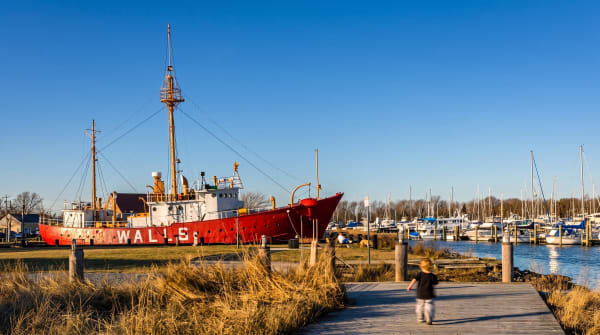
No sales tax, no Social Security tax & Atlantic beach towns from Lewes to Fenwick — See why retirees choose Southern Delaware
Taxes for retirees in Delaware
Delaware is among the most retiree-friendly tax states in the country, and the numbers support that. Social Security and Railroad Retirement benefits are fully exempt from state income tax at any income level. Residents 60 and older can also exclude up to $12,500 per person of qualified retirement income (pensions, 401(k) withdrawals, IRA distributions, annuities) from state taxable income. A married couple both over 60 can shield up to $25,000 combined before the state's graduated income tax, which runs from 2.2% up to 6.6% on income above $60,000, applies. Military retirees get the $12,500 exclusion at any age, with legislation phasing that cap higher in coming years.
Property taxes are Delaware's other headline advantage. The statewide average effective rate is roughly 0.54%, one of the lowest in the country. Sussex County (where most retirees settle) runs closer to 0.31% to 0.35% on market value, and median annual bills often come in under $1,500 even on homes valued above $350,000. Homeowners 65 and older can claim the Senior School Property Tax Credit: 50% of regular school property tax up to $500, with pending legislation to raise that cap to $1,000 starting in 2026. One catch worth knowing: retirees who moved to Delaware on or after January 1, 2018 must be a resident for 10 consecutive years before qualifying for that credit. Sussex, New Castle, and Kent counties recently completed court-ordered reassessments (their first in decades), so assessed values on many bills have shifted significantly even as counties rolled back millage rates to keep revenue roughly neutral.
The sales tax line is the one out-of-staters usually notice first: Delaware has no state or local sales tax. That alone shifts the math on cars, appliances, furniture, and everyday shopping. Delaware also repealed its estate tax in 2018 and has no inheritance tax, so wealth transfers to heirs carry no state-level tax. The main tax retirees still pay in full is capital gains outside retirement accounts, which Delaware taxes as ordinary income.
Delaware climate & weather
Delaware sits in a humid subtropical zone with four distinct seasons. It is milder than New England and cooler than the Carolinas. Summers are warm and humid, with July highs in the mid to upper 80s; coastal ocean breezes take the edge off along the Atlantic. Winters are cool rather than harsh: January lows around the low 20s in the north, a little warmer near the coast, with snow possible from late November through March but rarely accumulating heavily. Spring and fall are the quiet-favorite seasons, dry, temperate, and long enough that outdoor life doesn't shut down for months at a stretch.
The trade-off is coastal weather risk. Delaware lies in the Atlantic hurricane path from June through November, and while direct hurricane hits are rare, tropical systems and nor'easters regularly bring high winds, heavy rain, and coastal flooding to Sussex County beach towns like Rehoboth, Lewes, and Bethany. Sea-level rise and flood-zone maps are worth checking parcel by parcel before buying anywhere east of Route 1. Summer thunderstorms are common statewide, and severe wind events are the dominant natural hazard along the coast.
Cost of living in Delaware
Delaware runs slightly above the national average overall. Most indexes place the state between 100.8 and 103.5, so roughly 1% to 4% higher than the U.S. baseline. The picture varies sharply by region. Dover comes in around 1% below the national average and is one of the cheapest places to live in the state. Wilmington and the northern suburbs sit modestly above. Rehoboth Beach and the immediate coast run 8%+ higher, driven almost entirely by housing.
Read moreShow less
Housing is the swing factor. The statewide median list price is around $450,000, but that number hides enormous spread: Dover medians are near $300,000, Wilmington under $230,000, Middletown around $465,000, Lewes near $815,000, and Rehoboth Beach well over $1 million and still rising. Sussex County's overall median sale price sits just under the national average, but coastal ZIP codes are a different market. Property taxes stay low across the board (often $1,000 to $2,500 a year on a mid-priced home) because Delaware's effective rates remain well below the U.S. median of 1.02% even after recent reassessments.
Utilities and everyday expenses land near the national average. Electric rates run about 16.5 cents per kWh, average residential bills are around $138 to $152 a month, and groceries track about 2% above average. Auto insurance is a notable outlier. Delaware averages around $1,388 a year versus a $1,258 national average, partly because the state has dense traffic corridors throughout.
For retirees, the state's tax structure often more than offsets the modestly above-average cost of living. No sales tax alone saves a typical household $1,500 to $2,500 a year versus most neighboring states. Social Security going untaxed, the $12,500-per-person retirement income exclusion, and low property tax bills mean a couple in their 60s in Sussex County can plausibly keep their combined state and local tax burden well below what they'd pay in New Jersey, Maryland, or New York. Two honest caveats: many newer 55+ developments in Sussex carry HOA fees of $150 to $400+ monthly, and coastal homeowners' insurance is meaningfully more expensive than inland, especially when a lender requires separate wind and flood coverage.
Pros of retiring in Delaware
- No state or local sales tax, one of only five states with this benefit
- Social Security and Railroad Retirement benefits fully exempt from state income tax
- $12,500-per-person retirement income exclusion at age 60+ shields pensions, 401(k) and IRA withdrawals
- Property taxes among the lowest in the country, statewide effective rate around 0.54%, roughly 0.31% in Sussex County
- No estate tax and no inheritance tax
- Senior School Property Tax Credit worth up to $500 for homeowners 65+ (pending increase to $1,000 in 2026)
- Coastal lifestyle at a fraction of the cost of comparable Florida or New Jersey beach towns
- Charming small beach towns. Lewes, Rehoboth, Bethany, Fenwick Island, with walkable downtowns and historic character
- Strong regional healthcare: ChristianaCare (Delaware's only Level I trauma center), Beebe Healthcare in Lewes, Bayhealth in Dover, and TidalHealth in Seaford
- Within a 2- to 3-hour drive of Philadelphia, Baltimore, Washington D.C., and their major airports, medical centers, and cultural amenities
- Mild four-season climate, winters cooler than the Carolinas but nothing like New England
- Active retirement communities in Delaware market with 50+ age-restricted developments concentrated around Lewes, Millsboro, Milton, and Middletown
- Easy access to Cape Henlopen State Park, Delaware Seashore State Park, Prime Hook wildlife refuge, and miles of beach and bay
Things to consider
- Summer traffic on Route 1 and the beach corridors is a serious quality-of-life issue, day-trippers and second-homeowners pour in from Philly, Baltimore, and D.C. from Memorial Day through Labor Day
- Coastal storm and flood risk, hurricanes are rare but nor'easters, tropical systems, and rising sea levels drive up insurance costs in beach ZIP codes
- Most retirement income beyond the $12,500 exclusion is taxed at rates up to 6.6%, retirees with large pensions or heavy IRA draws still pay meaningful state income tax
- Property tax exemption for seniors requires 10 years of Delaware residency if you moved here on or after January 1, 2018, new arrivals wait a decade
- Homeowners insurance and flood coverage near the coast can be significantly more expensive than inland
- Healthcare capacity in fast-growing Sussex County is stretched. Beebe, Bayhealth, and ChristianaCare are all expanding, but wait times for specialists can be long
- Limited public transit. Delaware is essentially a driving state, and even Wilmington's transit options are thin
- HOA and community fees in the newer 55+ developments can run $150 to $400+ per month
- Beach-town home prices have climbed sharply. Rehoboth Beach medians now well over $1 million
- Recent countywide reassessments have shifted property tax bills significantly for some homeowners even as rates were rolled back
55+ communities in Delaware: common questions
How many 55+ communities are in Delaware?
There are 33 active adult and 55+ communities in Delaware featured on Explore55Plus, with real photos, pricing, amenities, and resident insights for each.
How much do homes in 55+ communities in Delaware cost?
Homes in retirement and active adult communities in Delaware range from $200K to $800K, depending on the community, home type, and whether it's a new build or resale.
Are all 55+ communities in Delaware age-restricted?
No. Of the 33 communities in Delaware, 31 are age-restricted (typically one resident 55+) and 2 are open to all ages — so you can choose either an age-restricted or an all-ages active adult community.
Are there new-construction 55+ communities in Delaware?
Yes — 18 of the 33 communities in Delaware have new-construction homes available, alongside resale options in established neighborhoods.