
The Best Places to Retire in Arkansas
9 cities ranked · 2 communities across 2 regions
Every Arkansas retirement city, scored on 20 years of hourly weather, an itemized cost of living, and a happiness index built from federal data — then re-ranked live around your budget and ideal temperatures. When a city clicks, explore the 55+ communities inside it.
Arkansas's cities, ranked for retirees
Updated August 25, 2026 · how we rank →
9 cities across Arkansas · ranked for a typical buyer · 2 demoted over your $375k home budget
Found a place you like?
Create a free account to explore the 55+ communities inside these cities — photos, pricing, amenities, and a matching quiz.
Retiring in Arkansas
Arkansas is one of the South's quietest retirement secrets, and that's exactly why the 55+ buyers we work with keep landing here. You get genuine four-season scenery, forested hills, and a string of clear lakes, all paired with some of the lowest home prices and property taxes in the country. If you're weighing whether Arkansas is a good place to retire, the answer usually comes down to this: your dollar goes further here than almost anywhere else in the U.S., and you don't have to give up beauty or seasons to make it happen. U.S. News named Arkansas the most affordable state in 2025, and the median home price sits around $250,000 versus roughly $435,000 nationally.
Read moreShow less
Retirement communities in Arkansas cluster in two very different regions, and each is worth knowing by name. Northwest Arkansas (anchored by Bentonville, Fayetteville, Rogers, and Springdale) is the fastest-growing, most amenity-rich corner of the state. It has expanded alongside Walmart, Tyson, and the University of Arkansas, bringing serious healthcare (Mercy, Washington Regional, and the new Alice L. Walton School of Medicine), the Crystal Bridges Museum of American Art, hundreds of miles of paved and mountain-biking trails, and a dining scene that keeps surprising newcomers. Right in the middle sits Bella Vista, a large, long-established retirement community with thousands of homes, multiple golf courses, and lakes.
The Hot Springs and Central Arkansas region, about an hour southwest of Little Rock, is the other major draw. Just outside the resort town of Hot Springs sits Hot Springs Village, one of the largest gated communities in the United States: tens of thousands of acres, nine golf courses, eleven lakes, marinas, and a full calendar of clubs. Little Rock adds a conventional metro option with UAMS (the state's academic medical center), an international airport, and 55+ housing in suburbs like Conway, Benton, and Maumelle. Out in the Ozarks, smaller towns and lake communities suit buyers who want a slower pace.
Retirees often compare Arkansas with Missouri. The two states share Ozark scenery, low prices, and mild winters, but Arkansas pulls ahead on taxes: a full Social Security exemption, a 65+ property-tax freeze, and no estate or inheritance tax. Whether you're after a full-amenity gated community, a lake home, or a golf-course cottage, retiring in Arkansas tends to deliver more space, more nature, and a lower cost of entry than most of the country.
Explore Arkansas by region
Dive into 55+ communities by region — each guide covers local amenities, pricing, and what makes the area a fit for retirees.
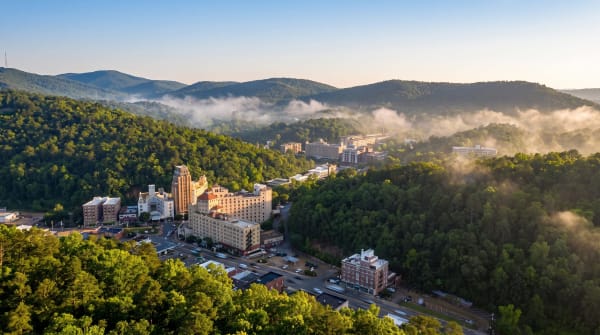
Hot Springs / Central Arkansas
1 community
Thermal springs, mountain lakes & America's most affordable capital city — See why retirees are choosing Hot Springs & Central Arkansas
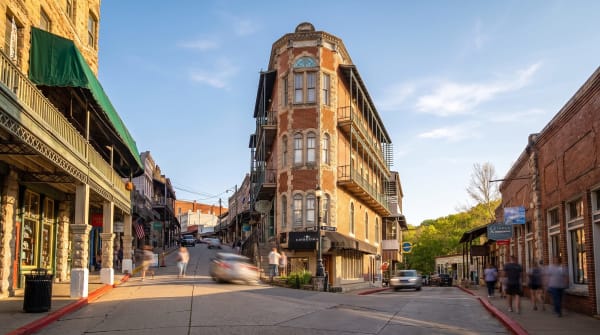
Northwest Arkansas
1 community
Ozark hills, no tax on Social Security & the Mountain Biking Capital of the World — See why retirees are choosing Northwest Arkansas
Taxes for retirees in Arkansas
Arkansas has gotten noticeably friendlier to retirees over the last few years, and the tax picture is now one of the strongest reasons people move here. The state uses a graduated income tax, with the top rate cut to 3.9% for the 2025 tax year and headed lower for 2026, and the first several thousand dollars of taxable income taxed at 0%. Social Security is fully exempt from Arkansas income tax, as is military retirement pay (including survivor benefits). Arkansas also allows a $6,000-per-person exemption on income from private pensions, employer plans, and traditional IRA distributions once you're 59½ or older, meaning a couple can shelter up to $12,000 of that income before the graduated rates even apply.
Property taxes are where Arkansas really stands out. The average effective rate runs about 0.56%, among the lowest in the nation, and Amendment 79 adds three more protections. There's a homestead property tax credit worth up to $500 on 2025 bills and $600 on 2026 bills (with legislation authorizing up to $675 going forward), a 5% annual cap on how fast taxable value can rise on any homestead, and an assessed-value freeze that kicks in when you turn 65. Together, they mean your homestead tax bill largely stops climbing the year you qualify, even if the market around you keeps appreciating.
Arkansas has no estate tax and no inheritance tax. The one honest offset: combined state and local sales taxes rank among the highest in the country. The state rate is 6.5%, and localities can add over 6% on top. That said, Arkansas has fully eliminated the state sales tax on groceries, which softens the blow on day-to-day spending. Confirm current numbers with a local tax professional before you plan around them.
Arkansas climate & weather
Arkansas has a real four-season climate, mild enough that outdoor life runs year-round, but with genuine spring and fall color you don't get further south. Summers are hot and humid, with July highs averaging in the low 90s and stretches of triple-digit heat in July and August. Winters are mild by most standards: January averages a low of 29°F and a high of 49°F, snow is infrequent (typically two to five light events a year), and outdoor days are common even in December.
The real weather trade-off is severe storms. Arkansas sits on the eastern edge of Tornado Alley, and spring (roughly late March through May) is the primary tornado and hail season, with a secondary uptick in November. Ice storms are the winter hazard to plan for, especially in Central Arkansas, where a significant event every few years can knock out power for a day or two. The payoff is the scenery: the Ozark and Ouachita Mountains, roughly 50 inches of rainfall spread across the year, and a landscape of lakes, rivers, and forests that make spring and fall the standout seasons on the trails, the golf courses, and the water.
Cost of living in Arkansas
Arkansas consistently ranks as one of the most affordable states in the country. RentCafe puts the overall cost of living about 11% below the national average, and U.S. News named Arkansas the most affordable state in 2025. Housing is the headline: the statewide median home price sits in the mid-$200,000s (roughly $250,000 to $270,000 depending on the source and month) versus a U.S. median north of $430,000, and property taxes average around 0.56% of assessed value, a fraction of what buyers coming from the Northeast or Midwest are used to.
Read moreShow less
The picture shifts by region. Northwest Arkansas has become its own market thanks to the Walmart and Tyson corridor, with the NWA median hovering in the upper $300,000s and Bentonville often above that. Central Arkansas around Little Rock and Conway runs closer to the state median in the high $200,000s. Hot Springs Village and the surrounding lake communities remain some of the best value-per-square-foot options in the state, with newer construction still available well under national norms. Utilities run about 5 to 8% below the national average, groceries 4 to 5% lower, and Arkansas has eliminated the state sales tax on groceries, a genuine savings given the state's otherwise high combined sales tax rate.
For retirees, the math gets better still. Social Security isn't taxed, the $6,000-per-person retirement income exemption shelters a chunk of pension and IRA withdrawals, and the Amendment 79 senior freeze locks in your homestead's taxable value at 65. Healthcare costs run near the national average, with solid options at UAMS in Little Rock and across the growing Northwest Arkansas hospital systems, but noticeably thinner coverage in rural areas, worth weighing when you choose a community. Homeowners insurance is also worth pricing early: Arkansas's tornado and hail exposure has pushed premiums up meaningfully in recent years, and buyers are increasingly surprised by that line on the closing statement.
Pros of retiring in Arkansas
- One of the most affordable states in the country. U.S. News ranked Arkansas #1 for affordability in 2025
- Median home price around $250,000, well below the national median
- Social Security is not taxed, plus a $6,000-per-person retirement and pension income exemption
- Military retirement pay is fully exempt from state income tax
- Very low property taxes (about 0.56% average effective rate)
- Amendment 79 homestead credit, up to $600 on 2026 bills, with $675 authorized going forward
- Assessed-value freeze at age 65 protects long-term homeowners from rising tax bills
- No estate tax and no inheritance tax
- State sales tax on groceries has been eliminated
- Lakes, mountains, and Ozark scenery with year-round outdoor recreation
- Large, established active-adult communities like Bella Vista and Hot Springs Village
- Mild winters with only occasional light snow
- Growing, amenity-rich Northwest Arkansas with strong healthcare, Crystal Bridges, and an expanding trail network
- Four real seasons with beautiful spring and fall color
- Your dollar stretches further on housing, golf, and lake living than in Florida, Arizona, or the Carolinas
Things to consider
- Summers are hot and humid, with stretches of 100°F-plus heat in July and August
- Arkansas sits on the eastern edge of Tornado Alley, so spring severe weather and occasional ice storms are real
- Homeowners insurance premiums have risen meaningfully with the storm risk
- Healthcare access thins out quickly in rural areas outside Little Rock and Northwest Arkansas
- Combined state and local sales taxes are among the highest in the nation, even with groceries now exempt from the state portion
- Fewer luxury-tier active adult communities than larger retirement states
- Public transit is minimal, so you'll rely on a car almost everywhere
- Smaller commercial airports outside XNA (Northwest Arkansas) and Little Rock often require a connecting flight
- Not the pick for buyers who want big-city density or a beach within reach
55+ communities in Arkansas: common questions
How many 55+ communities are in Arkansas?
There are 2 active adult and 55+ communities in Arkansas featured on Explore55Plus, with real photos, pricing, amenities, and resident insights for each.
How much do homes in 55+ communities in Arkansas cost?
Homes in retirement and active adult communities in Arkansas range from $100K to $1M, depending on the community, home type, and whether it's a new build or resale.
Are there new-construction 55+ communities in Arkansas?
Yes — 2 of the 2 communities in Arkansas have new-construction homes available, alongside resale options in established neighborhoods.